Managing Wastewater From Washed Coffee Mills With Eco-Friendly Bioreactors
You can manage washed coffee wastewater with eco-friendly bioreactors that use natural microbes to break down organic sludge, cutting pollution by up to 90%-like at Finca El Limon in Costa Rica. These systems reduce chemical use, save space, and work year-round. They also produce biogas for energy and digestate for fertilizer. Fixed-film models are durable and low-maintenance. Proper setup guarantees stable performance even under fluctuating loads. You’ll find practical steps and real-world insights next.
Notable Insights
- Eco-friendly bioreactors use natural microbial processes to break down high-organic coffee wastewater without harsh chemicals.
- Fixed-film bioreactors offer durable, low-maintenance treatment ideal for small to large coffee processing facilities.
- Bioreactors reduce pollution by converting sugars and pectins into carbon dioxide, water, and biogas.
- Anaerobic digestion in bioreactors produces methane-rich biogas that can power on-site energy needs.
- Modular bioreactor systems save space and cost compared to lagoons, with faster installation and year-round efficiency.
The Wastewater Problem in Washed Coffee Processing
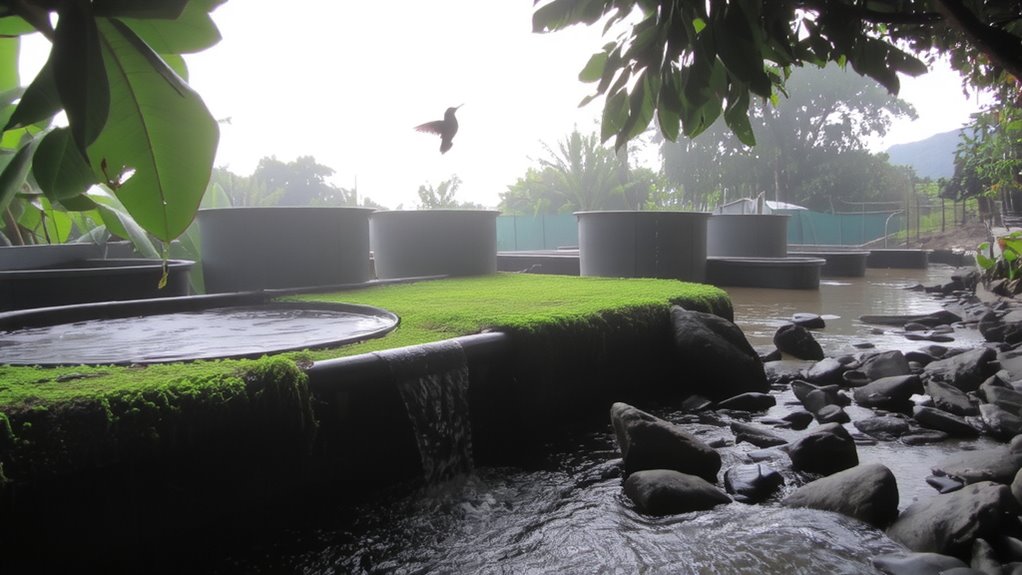
While washed coffee processing delivers clean, bright flavors prized by roasters and drinkers alike, it comes with a serious downside: wastewater. You’re dealing with mucilage-heavy runoff that’s high in organic load, capable of polluting waterways if released untreated. This means you’ll need a reliable method to treat it before disposal. Common solutions include chemical treatment, which adjusts pH and removes solids but adds costs and potential environmental risks. Mechanical filtration helps physically separate debris and pulp, reducing load before further treatment. You’ll often see drum filters or screw presses used on medium to large mills for this step. Relying only on these methods, though, can be inefficient and resource-heavy. They require regular maintenance, skilled oversight, and ongoing input-chemicals, energy, spare parts. Without proper handling, you’re still at risk of runoff damage. For now, combining both approaches may be your best practical option, but know the limitations.
How Bioreactors Clean Coffee Wastewater Naturally
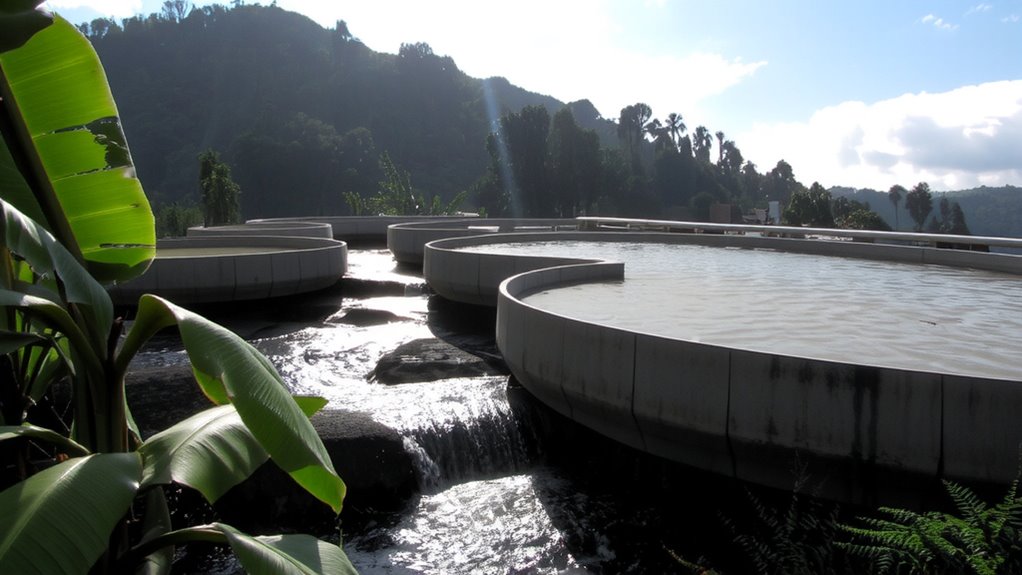
Because they rely on natural microbial processes, bioreactors offer a sustainable way to treat coffee wastewater without heavy chemical use. You’ll find that these systems use microbial diversity to break down organic pollutants common in coffee runoff, like sugars and pectins. The microbes-bacteria and fungi-colonize surfaces inside the reactor and consume contaminants as food, turning them into harmless byproducts like carbon dioxide and water. This process supports nutrient cycling, converting waste into usable forms that can be reused or safely released. Since bioreactors work at ambient temperatures and pressures, they’re energy-efficient compared to chemical treatments. They do require monitoring to keep microbes healthy, though. If flow rates vary or loading spikes, the system can stall. But with consistent feed and proper design, they handle high-strength wastewater effectively, making them a practical choice for medium- to large-scale mills aiming for environmental compliance.
Eco-Friendly Bioreactors for Coffee Mills
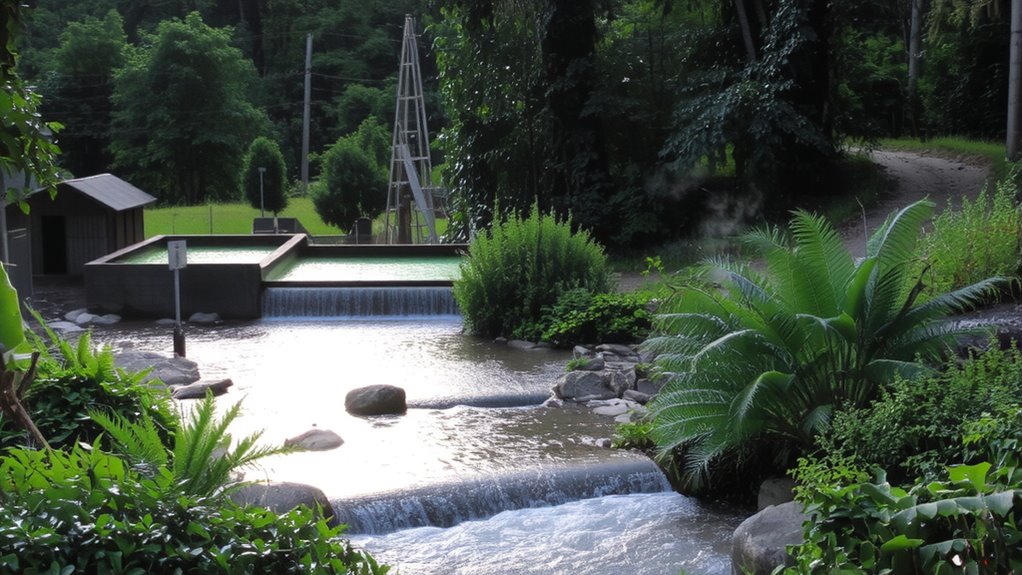
If you’re looking to reduce environmental impact without sacrificing efficiency, eco-friendly bioreactors are a solid choice for treating wastewater at coffee mills. These systems use natural microbial processes to break down organic pollutants, relying on robust microbial diversity to handle the varying loads of coffee wastewater. You’ll find that bioreactor scalability makes them suitable for both small farms and large processing facilities-modular units can expand as your production grows. Unlike traditional tanks, modern bioreactors require less space and maintain consistent performance under fluctuating conditions. They work best when temperature and pH are monitored, ensuring microbes stay active. Compared to open lagoons, they cut odor and prevent groundwater contamination. With proper setup, you get reliable treatment without constant oversight. Many Latin American mills now use fixed-film bioreactors for their durability and low maintenance.
Reduce Pollution and Costs With Bioreactors
When properly maintained, bioreactors don’t just cut pollution-they also trim operating costs over time. You’ll see lower energy bills and fewer chemical treatments because the system breaks down organic matter efficiently. With consistent biogas monitoring, you catch performance issues early, avoiding costly downtime. It’s not just about emissions; accurate data helps optimize the whole process. Good sludge management means less buildup in tanks, reducing maintenance frequency and disposal expenses. Unlike traditional lagoons, bioreactors handle high-strength coffee wastewater without overflowing or releasing foul odors. They need some technical oversight, but the payoff comes in reliability and savings. Compared to open ponds, they take up less space and perform better year-round, especially in cooler climates. For medium to large coffee mills, investing in a bioreactor pays off through cleaner outputs and lower long-term costs, especially when you prioritize simple, durable designs with automated monitoring.
Turn Waste Into Biogas and Useful Byproducts
Biogas is the real prize hiding in your coffee mill’s wastewater. You can turn that pollution into power through anaerobic digestion, a process that breaks down organic matter and delivers serious energy recovery. The methane-rich biogas produced can fuel generators, boilers, or stoves, cutting your reliance on costly external energy. It’s not just about power-nutrient recycling matters too. The leftover digestate is packed with nitrogen and phosphorus, making it a valuable biofertilizer for coffee farms or nearby crops. This closes the loop, reducing waste while boosting soil health. Compared to releasing sludge into waterways, this is a smarter, cleaner move. You’ll lower environmental impact and operational costs at once. Just manage moisture and loading rates carefully to keep the bioreactor efficient. With the right setup, your mill’s waste becomes fuel and fertilizer-no extra resources needed.
How to Set Up a Bioreactor on Your Mill
Where should you start when planning a bioreactor for your coffee mill? Begin with evaluating your wastewater volume and organic load-this shapes your system design. Choose a bioreactor type, like an anaerobic baffled reactor or upflow sludge blanket (UASB), based on space, climate, and output goals. A well-planned system design guarantees efficient biogas capture and water treatment. Work with an engineer to finalize tank sizing, piping, and digester materials. Then, set your installation timeline-most small to mid-sized mills complete setup in 6–10 weeks, assuming permits and parts arrive on time. Prefab units can speed things up. Make sure access roads allow delivery of large tanks. Include time for training staff on feed input and gas monitoring. With clear planning and realistic scheduling, your bioreactor becomes a reliable, eco-friendly asset.
Common Bioreactor Challenges (and How to Fix Them)
Now that you’ve got your bioreactor planned and set into motion, it’s smart to anticipate some bumps once it’s up and running-these systems are efficient, but they aren’t foolproof. A common issue is pH imbalance, which can slow down microbial activity and reduce treatment efficiency; check levels regularly and adjust with lime or acidic solutions as needed. Microbial overload is another concern-too much organic load at once overwhelms the bacteria, causing incomplete breakdown and odors. To fix this, reduce inflow temporarily and guarantee even feeding. Poor mixing or clogged filters can worsen both problems. Use a pH monitor and automated dosing if affordable, but manual checks work fine with discipline. Also, train staff to spot early signs like frothing or sour smells. Preventative maintenance beats emergency fixes every time. With steady monitoring, your bioreactor stays reliable and eco-friendly.
On a final note
You can tackle coffee mill wastewater effectively with bioreactors. They cut pollution, lower disposal costs, and turn waste into biogas for energy. Systems like UASB or anaerobic digesters work well in warm climates and need minimal maintenance. While startup costs exist, the long-term savings and environmental benefits outweigh them. Proper design and regular monitoring prevent common issues like clogging or pH imbalances. It’s a practical, proven solution for sustainable coffee processing.