Documenting Lot Separation Protocols in Washed Coffee Mills for Certification
You must track each coffee lot separately from harvest through export to meet Organic, Fair Trade, and Rainforest Alliance standards. Use durable tags, batch logs, and digital tools like RFID or cloud software to maintain traceability. Label all bins, tanks, and drying areas, and clean equipment between lots to prevent cross-contamination. Document every step-receiving, depulping, fermentation, washing, drying, hulling-with timestamps and staff notes. Clear records prove lot integrity during audits and keep your access to premium markets intact-details that follow can strengthen your system.
Notable Insights
- Maintain physical separation of lots using dedicated tanks, beds, and color-coded bins throughout washing and drying stages.
- Apply durable tags or RFID markers immediately after depulping to ensure traceability from processing to export.
- Clean all equipment thoroughly between lots to prevent cross-contamination and preserve genetic and origin integrity.
- Map the entire washed coffee workflow to identify and control critical points where lot mixing could occur.
- Keep detailed, timestamped batch logs and digital records to demonstrate separation compliance during certification audits.
Why Lot Separation Matters for Coffee Certification
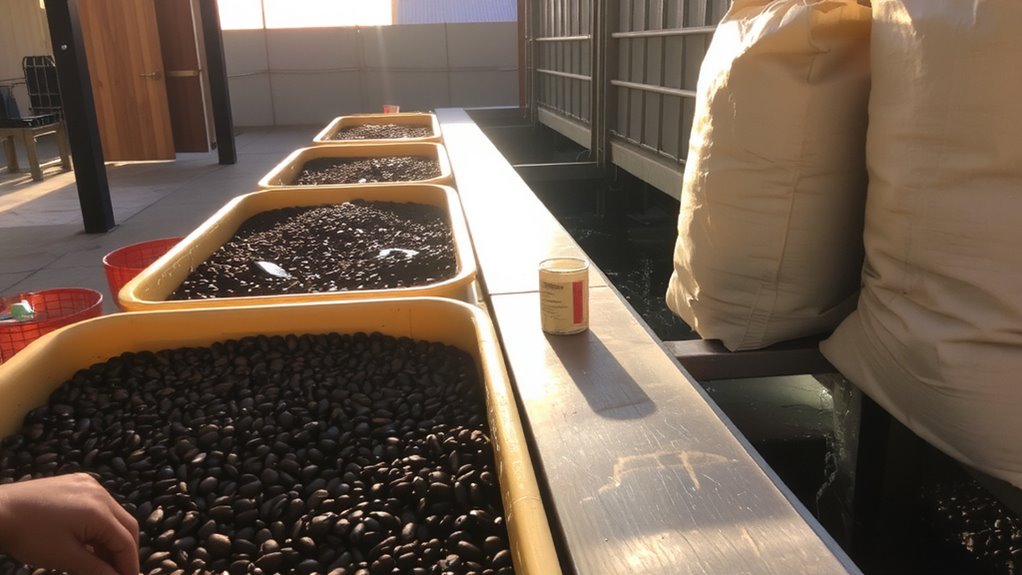
While you might think keeping coffee lots separate is just a logistical detail, it’s actually essential for meeting certification standards like Organic, Fair Trade, or Rainforest Alliance. You need clear separation to guarantee genetic traceability, which verifies the coffee variety and origin throughout processing. Without it, certifications can be invalidated, costing farmers access to premium markets. Ethical sourcing also depends on lot integrity-each stage must be documented so buyers know the coffee was grown and processed under fair, sustainable conditions. Mixing lots risks losing critical data about farm practices, labor standards, and environmental impact. Mills that maintain lot separation from harvest to drying protect both quality and compliance. It’s not just about rules; it supports transparency and builds trust with roasters and consumers. Properly labeled bins, dedicated processing lines, and accurate logs are practical steps you can’t skip.
Map the Washed Coffee Workflow for Lot Control
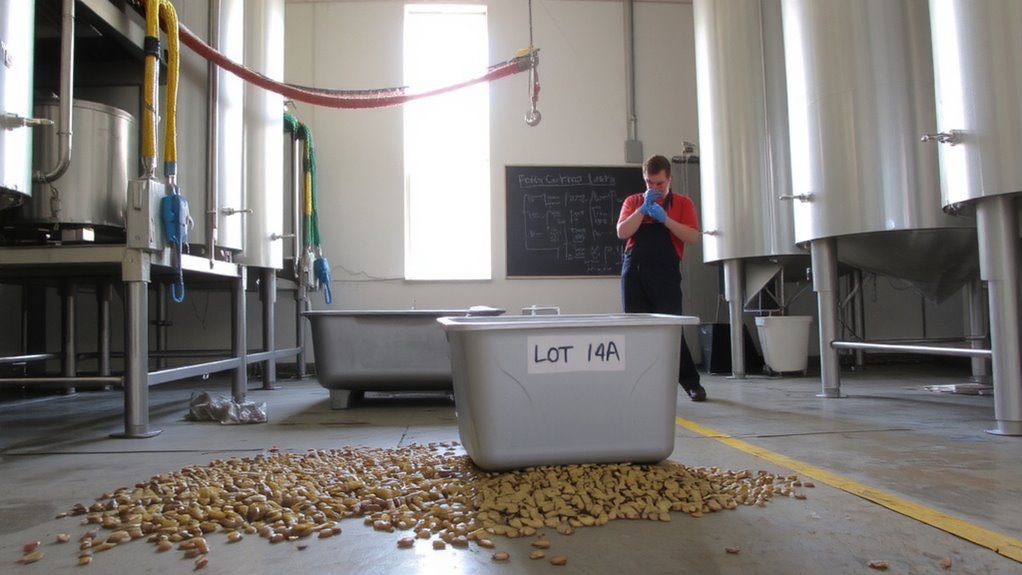
Think of your coffee lot as a fingerprint-unique and traceable from harvest to export. To maintain that identity, you need to map the washed coffee workflow using process mapping. Start by walking through each stage: receiving cherries, depulping, fermentation, washing, drying, hulling, and sorting. At every step, track how your coffee flow moves and where lots could mix. Use clear diagrams to show equipment paths, storage zones, and transfer points. Process mapping helps you spot risks to lot integrity before they happen. It also makes training staff easier and guarantees consistency during audits. Whether you’re using raised beds or mechanical dryers, document how each lot progresses. A well-mapped workflow isn’t just paperwork-it’s proof your system works. This step sets the base for strong lot control without jumping ahead to contamination fixes.
Critical Control Points to Prevent Cross-Contamination
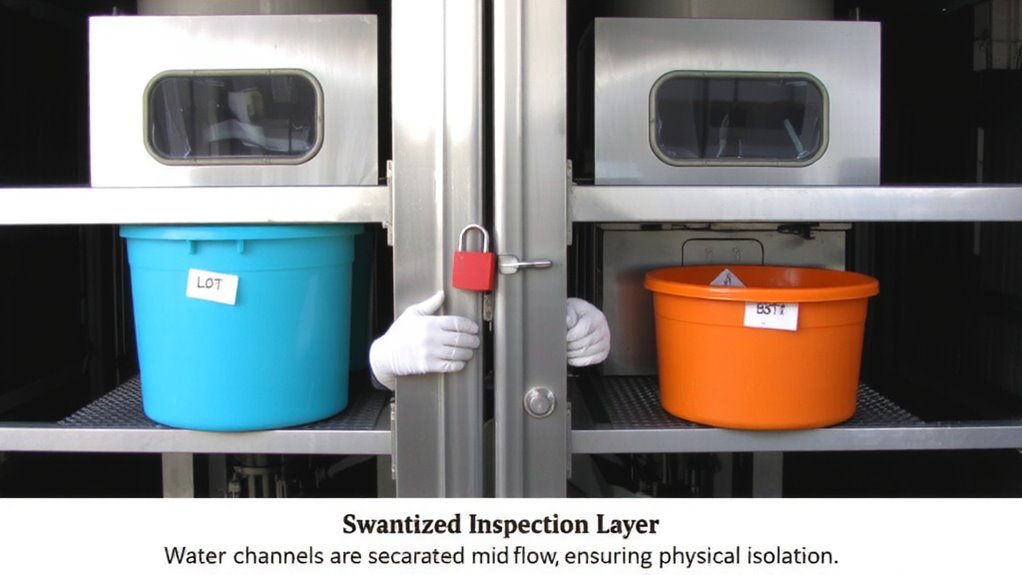
You’ve mapped out each stage of the washed coffee process, from cherry intake to export-ready beans, so now focus on where things can go wrong. Cross-contamination most often happens at pulping, fermentation, washing, and drying-especially when lots run back-to-back. You need physical barriers like dedicated tanks or clearly marked sections on raised beds to keep lots separate. Without them, beans from different farms or harvest times can mix, risking quality and certification. Cleaning schedules are just as critical: residue from prior lots in equipment or surfaces can taint the next batch. Clean depulpers, channels, and fermentation tanks between lots using consistent, documented routines. A missed step causes carryover, which undermines traceability. While some mills use shared equipment to save space or cost, that demands stricter sanitation. Even small oversights compromise lot integrity. Be thorough-barriers and cleaning aren’t optional if you want clean, certified coffee.
Use Tags, Logs & Digital Tools to Track Lots
A well-organized lot tracking system starts with clear, consistent identification. You should label each lot immediately after depulping using durable tags that stay with the coffee through drying and storage. Physical tags work, but RFID tagging boosts accuracy by letting you scan and log data quickly, reducing human error. Pair tags with batch logs that record timestamps, processing steps, and staff involved. Digital tools like cloud-based farm management software make updates easy and accessible in real time. For higher-value certifications, consider integrating blockchain traceability-it creates a tamper-proof record from mill to buyer. While blockchain adds transparency, it requires reliable internet and training. RFID and digital logs don’t replace good practices but strengthen them. Use these tools to track movement, prevent mix-ups, and speed up data retrieval when needed. They’re practical, scalable, and increasingly expected in specialty markets.
Document Lot Separation for Audit Success
Every successful audit starts with clear, consistent records proving lot separation at each processing stage. You need to document every transfer, wash, and drying step so auditors can trace each lot without confusion. Use batch logs, digital tags, and timestamped notes to show physical and procedural separation. Missing or messy records increase the risk of lot mixing, which undermines quality and certification. Detailed documentation also prevents audit delays-assessors won’t waste time chasing down gaps or verifying unclear entries. If your mill uses multiple drying patios or fermentation tanks, label everything and log each movement. Even minor oversights can look like systemic flaws under scrutiny. Proper records don’t just prove compliance-they highlight your mill’s reliability. Keep logs updated daily, store backups digitally, and cross-check entries weekly. Solid documentation turns a stressful audit into a smooth process.
Train Teams on Daily Lot Integrity Practices
Keeping records clean and accurate means nothing if the team handling the coffee isn’t following the same standards every day. You need consistent daily practices to maintain lot integrity from depulping through drying. Train everyone-operators, sorters, supervisors-on correct labeling, bin handling, and transfer steps. Clear routines prevent mix-ups that undermine certification. Reinforce these behaviors with team motivation strategies, like weekly check-ins and visual progress charts. Add performance incentives, such as small bonuses or recognition, for zero-error shifts. These rewards boost accountability without raising costs. Use real examples from past lots to show what proper separation looks like. Rotate staff roles occasionally so more people understand each step. Training isn’t a one-time fix-it’s ongoing. When your team knows the why and how, and sees benefits for doing it right, compliance becomes habit. That consistency is what auditors expect and what keeps your coffee’s quality traceable.
Fix Common Lot Separation Failures Before Audits
Why do lot mix-ups still happen even when protocols are in place? Because small lapses-like skipped equipment calibration or unclear waste management-add up fast. You can’t risk audits failing over preventable errors. Check lines, labels, and timing daily. Below are real consequences of ignoring the basics:
| Issue | Result |
|---|---|
| Poor equipment calibration | Inconsistent density sorting, cross-lot contamination |
| Sloppy waste management | Spilled pulp carries beans between lots |
| Rushed line clearance | Residual beans混入 next batch |
Catch these before auditors do. Recalibrate destoners and graders weekly. Map waste routes to avoid backflow into processing zones. Use color-coded bins and timed cleanup logs. Verify each lot’s exit before starting the next. It’s not extra work-it’s the work. Stay sharp, stay clean, stay certified.
On a final note
You need clear lot separation to meet certification standards. Track batches from depulping to drying using tags and logs. Watch critical points like tanks and patios where cross-contact happens. Digital tools help, but consistent staff training matters most. Fix issues like poor labeling or rushed cleaning before audits. Good documentation proves control. It’s not just compliance-it’s how you guarantee traceability and quality in every washed lot you produce.