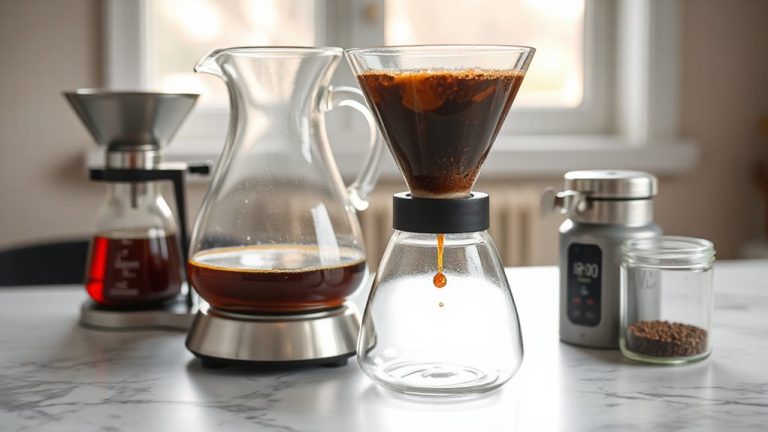
Maximizing Flavor Intensity Through Controlled Grind Sizes in Moka Pot Brewing
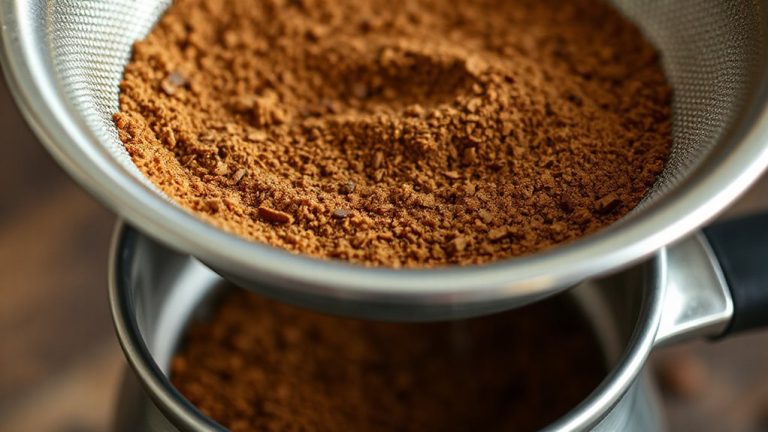
Use a medium-fine grind, around 200–300 microns, for intense Moka pot flavor. This size balances pressure and extraction, giving rich, full-bodied coffee without clogging. Light roasts need slightly finer grinds; dark roasts work better medium-coarse. A burr grinder like the Baratza Encore guarantees consistency, while blade grinders cause uneven results. Adjust in small steps if coffee tastes bitter or weak. Fresh beans and stable settings beat expensive gear-your next brew’s clarity starts with these choices.
Notable Insights
- Use a medium-fine grind (200–300 microns) to optimize extraction and pressure for intense, balanced flavor.
- Match grind size to roast level: finer for light roasts, medium-coarse for dark to maximize flavor intensity.
- Employ a burr grinder to ensure uniform particles, promoting even extraction and stronger, more consistent taste.
- Adjust grind in small increments to achieve a 4–5 minute brew time, ideal for peak flavor development.
- Prioritize fresh beans (7–14 days post-roast) and consistent grind settings to enhance solubility and flavor clarity.
The Perfect Moka Pot Grind Size (And Why It Matters)
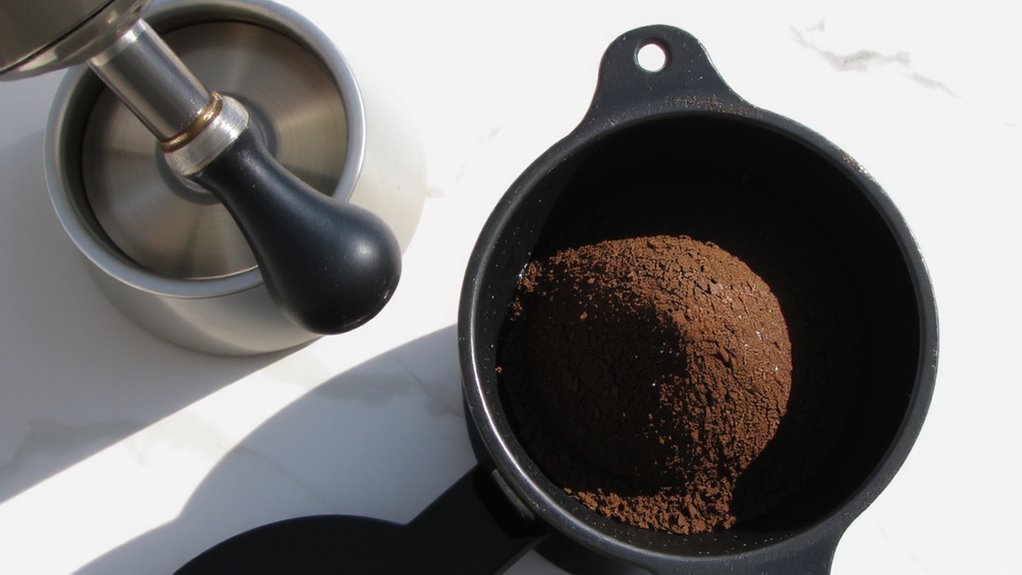
A medium-fine grind is usually your best bet for brewing with a Moka pot, striking the right balance between extraction and pressure. If the grind’s too coarse, you’ll get weak, under-extracted coffee; too fine, and it might clog or taste bitter. Consistency matters-grind uniformity guarantees even extraction, so avoid blade grinders when possible. A burr grinder gives better particle distribution, which helps water flow evenly through the puck. Uneven particles lead to some over-extracting while others under-extract, muddying the flavor. For Moka pots, aim for particles around 200–300 microns-similar to table salt. Popular grinders like the Baratza Encore or the 1ZPresso Q2 offer reliable performance here. Always adjust based on your machine’s behavior: gurgling or slow drip means grind too fine. Uniform particle distribution isn’t just ideal-it’s essential for balanced, rich coffee every time. Choosing equipment made in the USA can support local manufacturing and quality craftsmanship, as seen in American-made coffee makers.
Light vs. Dark Roast: How to Adjust Moka Pot Grind
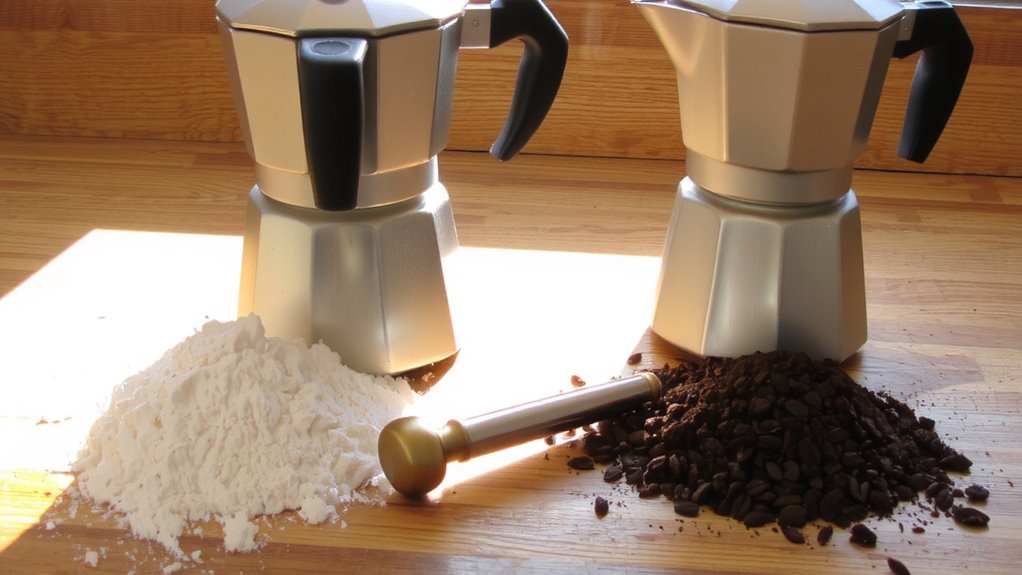
Roast level changes everything when dialing in your Moka pot grind. Light and dark roasts behave differently under pressure, so adjusting grind size optimizes flavor development. Light roasts are denser and need longer extraction, requiring a finer grind to increase surface area. Dark roasts are more porous and extract faster, so use a slightly coarser setting to avoid overpowering bitterness. This roast contrast means one size doesn’t fit all. For best results, consider the best coffee for Moka pot to complement your grind and roast pairing.
| Roast Type | Grind Size | Why |
|---|---|---|
| Light | Fine | Promotes even extraction, supports flavor development |
| Dark | Medium-Coarse | Prevents over-extraction, balances roast contrast |
| Medium | Medium | Safe middle ground for balanced results |
Match your grind to the roast, not the bean origin or brew day. Consistency wins.
Fix Common Grind Mistakes (Bitter or Weak Coffee?)
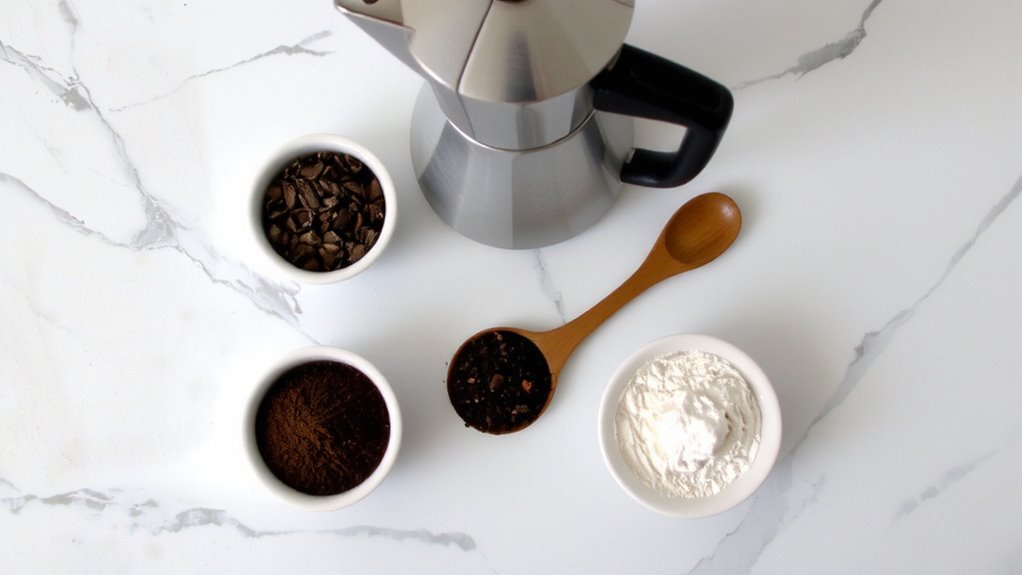
If your Moka pot coffee tastes bitter or weak, the issue likely isn’t your beans or machine-it’s your grind. A bitter cup usually means your grind is too fine, slowing brew time and over-extracting. Water temperature stays high during prolonged contact, pulling harsh flavors. Try coarsening the grind to shorten brew time and balance extraction. On the other hand, weak coffee suggests a grind that’s too coarse. The water passes through too fast, lowering contact time and yielding under-extracted, watery results-even with correct water temperature. Aim for a grind between table salt and sand, adjusting in small increments. Test by timing the brew: 4–5 minutes is ideal. Too short or too long? Tweak the grind. Consistency matters-your grind size directly controls flow rate, extraction, and final taste. Fix this, and you’ll fix most flavor issues. For more precise results, consider using a high-quality burr grinder designed for moka pot compatibility.
Blade vs. Burr Grinders: Which Wins for Moka Pot?
When it comes to consistent grind quality for your Moka pot, a burr grinder usually wins over a blade grinder-hands down. You’ll get uniform particles, which means even extraction and better flavor control. Blade grinders chop beans unevenly, leading to a mix of fines and boulders that can cause bitterness or weakness. They also suffer from blade heat buildup during longer grinding, potentially warming your beans and altering their aroma before brewing. Plus, blade grinder noise levels are often higher due to the fast-spinning blades. Burr grinders, especially manual or conical ones, operate more quietly and generate less heat, preserving bean integrity. While blade grinders are cheaper and compact, their inconsistency and heat issues make them less ideal. If you want reliable Moka pot results, investing in a basic burr grinder like the Baratza Encore or even a hand grinder like the Hario Skerton Pro pays off.
How to Fine-Tune Your Grind for Maximum Intensity
Though you’ve got a solid burr grinder, hitting the right grind size is where the real work begins-too fine and your Moka pot clogs, leading to over-extraction and bitterness; too coarse and you’ll get weak, underdeveloped coffee. Aim for a texture close to fine sand, slightly coarser than espresso. This setting helps maintain proper pressure and flow. Grind uniformity matters-uneven particle distribution causes some grounds to extract too fast while others lag, muddying flavor. A good burr grinder minimizes this by producing consistent particles. If your coffee tastes sharp or hollow, adjust finer in small increments; if it’s harsh or ashy, go coarser. Always change one variable at a time. Tap the filter gently to settle grounds and eliminate air pockets. With a stable brew routine, you’ll maximize intensity without sacrificing balance, revealing deeper chocolate, nut, or caramel notes consistently.
Why Freshness and Consistency Beat Equipment Upgrades
While high-end gear can make brewing easier, it won’t fix stale beans or an erratic routine-freshness and consistency deliver better results than most equipment upgrades. Your beans lose flavor fast; even slight changes in roast age alter bean density, affecting grind performance and extraction. A $200 grinder won’t help if you’re using beans from three weeks ago.
| Factor | Impact on Brew |
|---|---|
| Roast age (7+ days) | Declines solubility, flattens flavor |
| Inconsistent grind | Causes uneven extraction, bitterness |
You’re better off tracking roast dates and dialing in the same grind setting daily than chasing shiny tools. Fresh beans (within 7–14 days post-roast) and stable technique amplify sweetness, clarity, and intensity. Equipment helps refine, but only freshness and repetition build a reliable, flavorful Moka pot brew you can count on. Trust process over price.
On a final note
You get the most flavor from your moka pot by nailing the grind size-aim for fine, like table salt. Too fine and the coffee turns bitter; too coarse and it’s weak. A burr grinder gives consistent results, while blade grinders often don’t. Light roasts may need a slightly finer grind than dark ones. Freshly grinding beats upgrading gear. Stay consistent, adjust in small steps, and you’ll pull richer, more intense coffee every time.