How to Prevent Over-Extraction in Pour Over With Pulse Pouring and Lower Temperatures
Use a medium-coarse grind, like table salt, to avoid over-extraction. Pour in pulses-30 seconds on, 15 off-to slow flow and improve evenness, especially with a Hario V60. Keep water between 195°F and 205°F; cooler temps reduce bitterness, particularly with light roasts. A gooseneck kettle, like the Fellow Stagg EKG, gives control. Fresh beans and a burr grinder help too-consistency starts before the brew. There’s more to fine-tune for better cups every time.
Notable Insights
- Use pulse pouring (e.g., 30 seconds on, 15 seconds off) to slow extraction and reduce channeling in the coffee bed.
- Brew with water between 195°F and 205°F to avoid scorching and minimize bitter compound extraction.
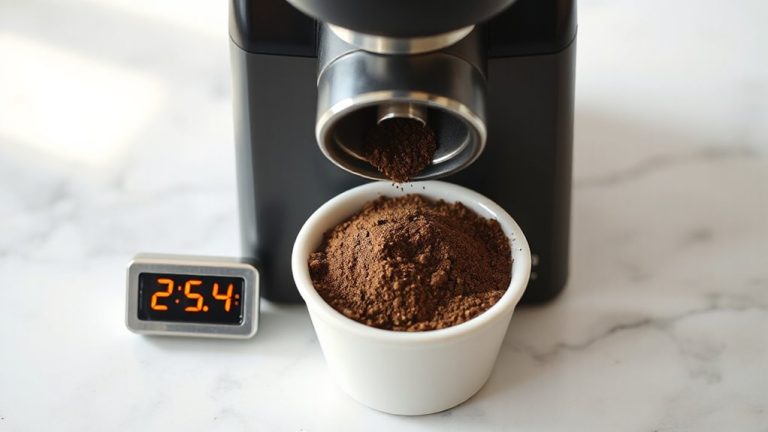
- Choose a medium-coarse grind, resembling table salt, to prevent over-extraction and ensure even flow.
- Opt for a burr grinder to achieve uniform particle size and eliminate extraction inconsistencies from fines and chunks.
- Use a gooseneck kettle for precise water control, enhancing pulse pouring effectiveness and brew consistency.
Why Your Pour Over Tastes Bitter
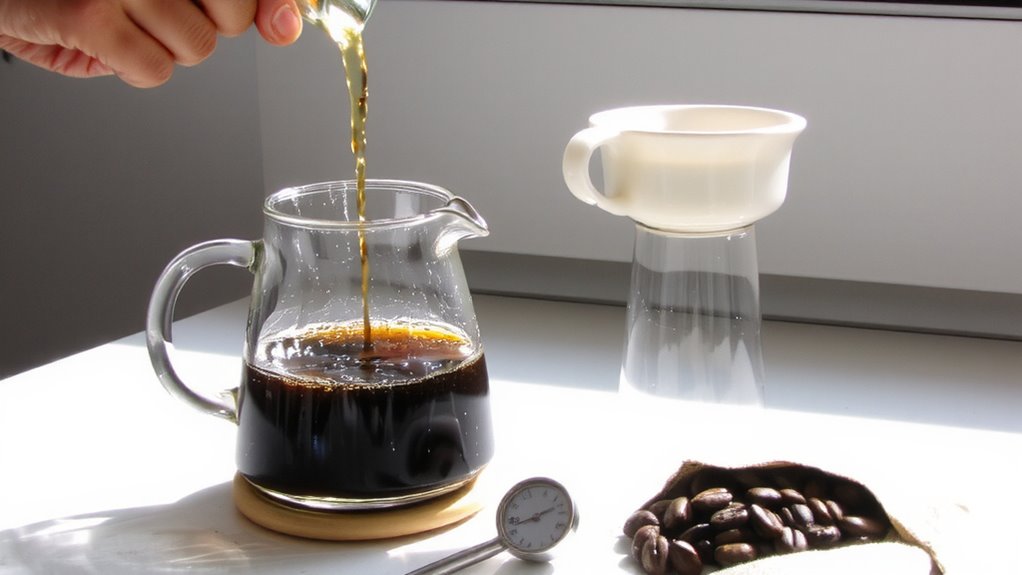
That bitter taste in your pour over isn’t just bad luck-it’s a sign something in your brew went off track. Over extraction causes harsh, bitter flavors when water pulls too many compounds from the grounds, often from grinding too fine or brewing too long. You’re likely over-extracting if the coffee tastes sharp or astringent, even with good beans. The roast level impact matters, too: darker roasts are more soluble and extract faster, increasing bitterness if your brew time isn’t adjusted. Light roasts, meanwhile, need slightly more time but are less prone to harsh notes. Using a medium-coarse grind, fresh beans, and brew time under 3 minutes can help. A gooseneck kettle and burr grinder give you control, but even basic gear works with the right technique. Fixing bitterness starts with tuning time, grind, and bean choice-not just blaming the roast. For consistent results, investing in a high-quality best coffee grinders can make a significant difference in controlling extraction.
Control Extraction With Pulse Pouring
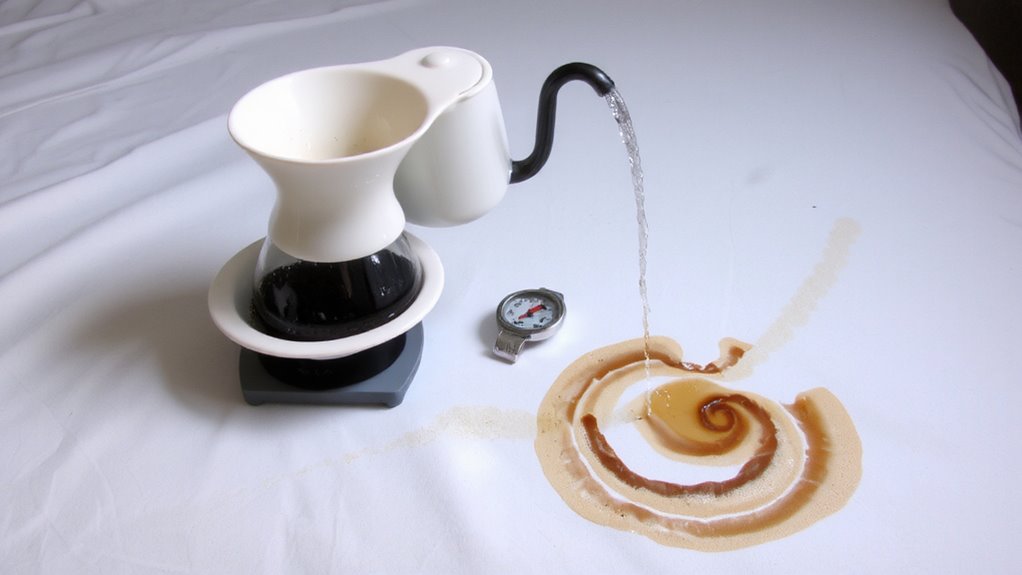
While continuous pouring might seem simpler, pulsing your water can give you far better control over extraction in pour over brewing. Instead of one steady stream, you add water in intervals-like 30 seconds on, 15 seconds off-especially during the main pour. This improves flow control, letting the coffee bed settle and reducing channeling. You’re not just dumping water; you’re guiding it. Pulse pouring also promotes even saturation balance, meaning dry spots are less likely, and extraction stays consistent. For best results, use a gooseneck kettle-something like the Fellow Stagg or Hario V60 Buono-to precisely time each pulse. Grind size matters too: too fine, and you’ll over-extract despite pulsing. Aim for medium-fine, like table salt. With practice, you’ll see how pulsing tames harsh flavors, giving you cleaner, more balanced coffee without slowing your morning routine. A reliable best gooseneck kettles choice enhances precision during each pulse for more consistent results.
Use Cooler Water for Balanced Flavor
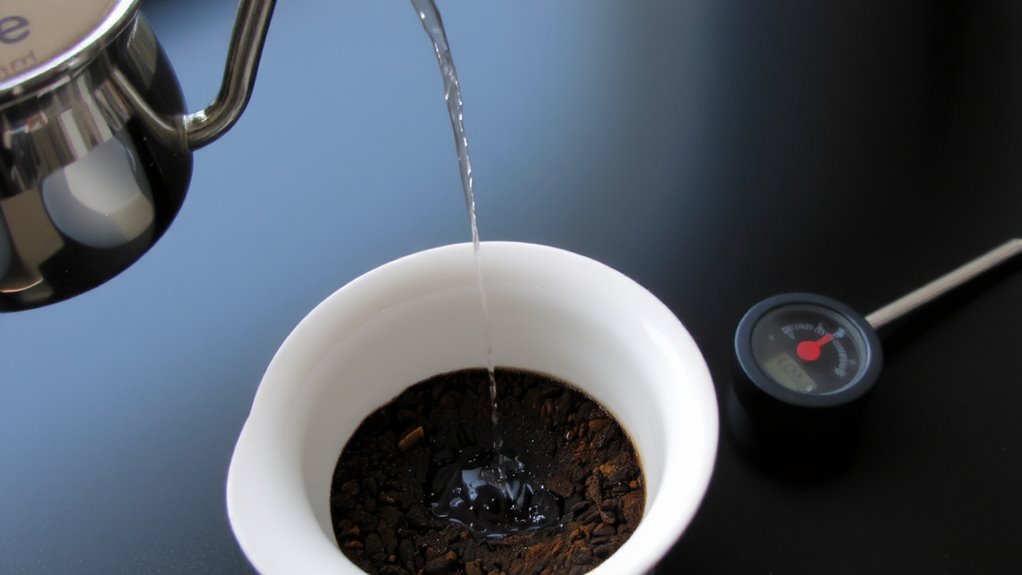
If you’re using boiling water straight off the boil, you might be scorching your coffee and pulling out too many bitter compounds, especially with light roasts. Lowering your water temperature helps maintain better flavor balance. For most pour overs, aim for 195°F to 205°F-just below boiling. Cooler water slows extraction, reducing harshness while preserving sweetness and clarity. This is especially useful with light-roast beans, which are more sensitive to over-extraction. If your coffee tastes sharp or astringent, your water temperature might be too high. A gooseneck kettle with temperature control, like the Fellow Stagg EKG, makes it easy to dial in precisely. While some darker roasts can handle higher temps, staying in the 200°F range consistently improves flavor balance. Adjusting water temperature is a simple, effective way to refine your brew without changing your technique. For more options, check the best coffee brewing kettles to find a model that suits your brewing style.
Pulse Pouring for Beginners
How do you gain better control over extraction without overcomplicating your pour over routine? Pulse pouring is a simple technique that helps regulate water agitation and flow rate. Instead of pouring continuously, you add water in short, timed intervals-like 15 seconds on, 15 seconds off. This lets the coffee bloom fully and slows extraction, reducing the risk of over-extraction. You don’t need special gear; just a gooseneck kettle and a timer. The Hario V60 works especially well with pulse pouring because its design responds to controlled flow. Pulsing limits aggressive water agitation during sensitive phases, leading to cleaner, sweeter coffee. Compared to a steady pour, it gives you more leeway if your grind isn’t perfect. Start with three to four pulses total, adjusting based on taste. It’s not magic-just consistency with timing and water volume.
Stop Making These Bitter Coffee Mistakes
Why does your pour over taste bitter, even when you’re following a recipe? You might be overlooking two key factors: coffee origin and grind consistency. Beans from regions like Indonesia or Brazil often have darker, earthier notes that lean bitter if over-extracted. Lighter roasts from Ethiopia or Kenya can also taste harsh if brewed incorrectly. Your grinder plays a big role-burr grinders give uniform particles, but blade grinders create uneven sizes, leading to some over-extracted fines and under-extracted chunks. That inconsistency pulls out bitter compounds faster. Also, water that’s too hot or a pour that’s too slow worsens it. Adjusting grind consistency helps control extraction, especially with finicky beans. Match your grind size to the coffee origin: denser high-altitude beans often need finer settings. Fix these, and you’ll cut bitterness without changing your method.
Brew Better Pour Over for Any Roast
What makes one pour over bright and balanced while another turns flat or harsh, even with the same gear? It often comes down to matching your method to the coffee origin and roast age. Lighter roasts benefit from slightly higher temperatures and finer grinds to extract delicate flavors, especially from African beans with floral or citrus notes. Darker roasts, especially past 3–4 weeks old, extract faster and can turn bitter or hollow if over-brewed-use a coarser grind and lower temps, like 195°F, to avoid harshness. Always adjust based on roast age; staling reduces solubility, so older beans may need shorter contact time or a tweak in pour speed. For consistent results, weigh your beans (try 20–30g for a single cup) and control water quality. Match your approach to the bean, not a rigid recipe.
On a final note
You can prevent over-extraction by using pulse pouring and water around 195–205°F. Pulsing lets coffee bloom and slows extraction, reducing bitterness. Cooler water temp helps, especially with dark roasts. Try three to four gentle pours instead of one continuous stream. Pair this with a medium-fine grind and rinse your filter. It works well with V60 or Chemex. Adjust pulses or temp slightly based on taste.