Espresso Tampers: Choosing Flat, Convex, or Calibrated for Your Portafilter
Your tamper choice affects espresso quality by shaping how water flows through the coffee. Flat tampers, like the Pullman Big Step, work well for most-they match standard basket bases and deliver even pressure. Convex tampers help if you’re fighting edge channeling, especially with curved baskets. Calibrated tampers, such as the Pullman Chisel, guarantee consistent 30-pound pressure, boosting shot-to-shot stability. Pick based on your portafilter size and tamping habits-getting it right means better extraction and fewer wasted shots. You’ll see how small changes add up.
Notable Insights
- Flat tampers provide even compression and are ideal for standard portafilter baskets with flat bases.
- Convex tampers reduce edge channeling by applying more pressure at the center and less at the edges.
- Calibrated tampers ensure consistent 30-pound pressure, improving shot-to-shot espresso quality and reducing user error.
- Tampers made of brass or stainless steel offer durability and optimal weight for effective puck compaction.
- Proper tamper fit and ergonomics are essential to avoid misalignment and wrist strain during tamping.
Why Your Espresso Tamper Choice Matters
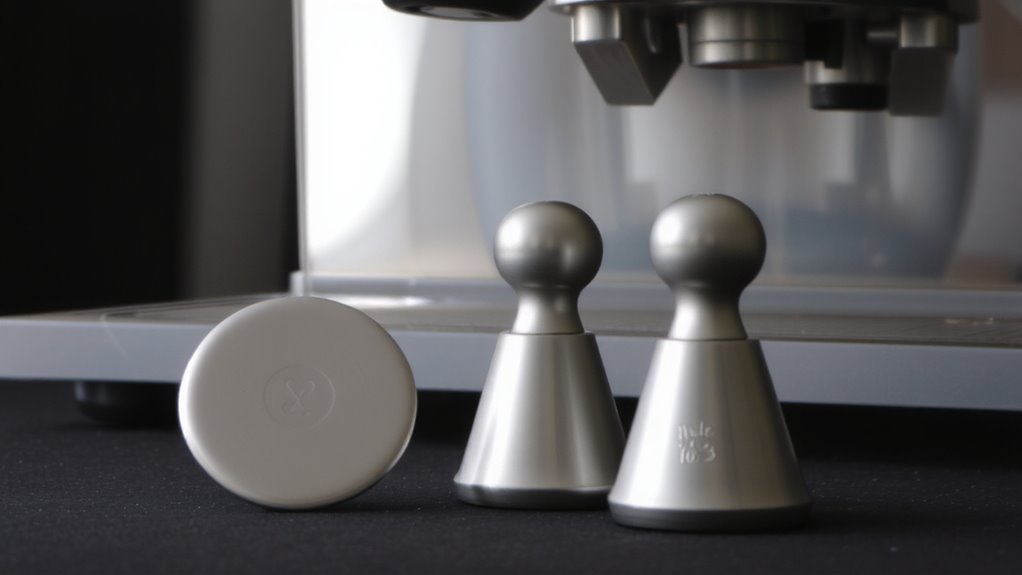
A good tamp starts with the right tamper, and that choice shapes every sip. Your tamping technique affects extraction, flow rate, and ultimately the balance in your cup. If you tamp too lightly or unevenly, you’ll get channeling-water finds weak spots, ruining espresso freshness. Too hard, and you restrict flow, risking bitterness. A tamper that fits your portafilter precisely guarantees even pressure, around 30 pounds, which compact grounds uniformly. This consistency means water flows evenly, extracting ideal flavor. Poorly chosen tampers wobble or tilt, leading to uneven beds and sour or stale-tasting shots-even with fresh beans. You might not notice at first, but over time, inconsistency undermines every variable. A proper tamper isn’t flashy, but it supports repeatable results. Match size, weight, and feel to your workflow so your tamping technique stays reliable. That’s how you protect espresso freshness and taste what the beans truly offer. For best results, consider investing in one of the Best Coffee Tamper Picks recommended for your specific portafilter size and brewing style.
Flat vs. Convex vs. Calibrated: Which Tamper Is Right for You?
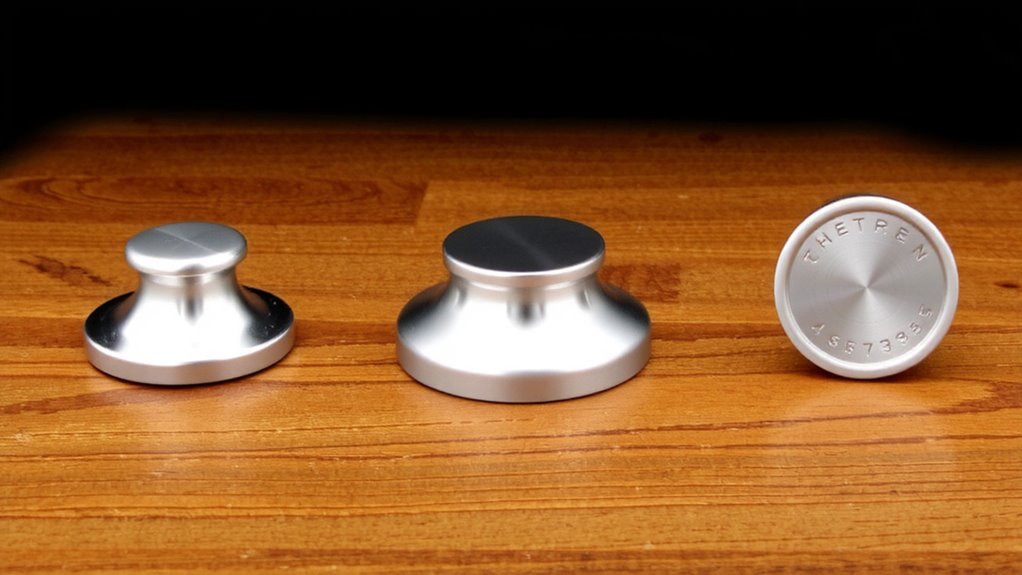
You’ve seen how the right tamper affects your shot consistency and flavor-now it’s time to break down the three main base types you’ll encounter: flat, convex, and calibrated. Flat tampers press evenly across the puck surface, making them reliable and widely compatible. Convex tampers have a slightly domed base that shapes the coffee into a curve, which some claim helps channel water better, though results vary by portafilter. Calibrated tampers include built-in pressure indicators, helping you tamp consistently shot after shot-great for dialing in or training. When choosing, consider tamper material: stainless steel offers durability, while brass gives heft. Handle design matters too-a lower-profile handle fits under group heads easily, while ergonomic grips reduce wrist strain. Match the base type to your machine and workflow for best results.
Why Flat Tampers Work Best for Most Baristas
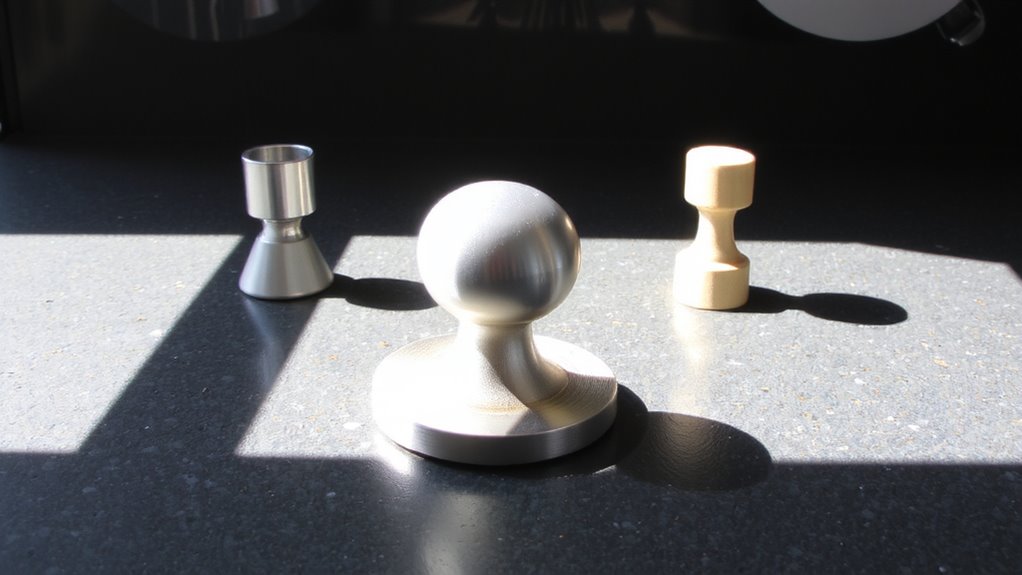
While some baristas experiment with convex or calibrated tampers for specific results, flat tampers remain the go-to choice for most because they deliver consistent, even compression across the entire coffee bed. You’ll find that a flat tamper simplifies puck preparation, reducing the risk of uneven extraction caused by tilt or pressure gaps. Since most portafilter baskets have flat bases, a flat tamper matches that geometry, helping you achieve a level surface every time. Your tamping technique matters more than the tool itself, but a flat base makes it easier to apply even pressure without needing perfect wrist alignment. Models like the Pullman Big Step or Mod Bar Slim fit most standard 58mm portafilters and offer durability and precision. They’re also simpler to clean and maintain. For daily use in busy environments or at home, flat tampers offer reliability, consistency, and better control-key factors in pulling balanced, repeatable shots. The best drip coffee makers under $200 include models that balance performance and affordability, making drip coffee makers a smart choice for daily brewing.
When a Convex Tamper Solves Tamping Problems
Geometry matters when your coffee shows signs of channeling at the edges. If you’re seeing water force its way through the outer rim of the puck, a convex tamper might fix what a flat one can’t. The domed surface applies more pressure toward the center and less at the sides, helping compact the coffee where it’s most needed. This shape improves pressure distribution, reducing edge gaps that lead to uneven extraction. You’ll especially notice a difference if your portafilter basket walls are slightly curved or worn. A convex tamper also eases tamper alignment, making it easier to seat the tamper squarely without over-tightening. It’s not a universal fix-some baristas overuse it trying to correct technique flaws-but when matched to the right basket profile, it solves real tamping issues. Try one if consistent edge channeling persists despite proper prep.
How Calibrated Tampers Improve Shot Consistency
Because inconsistent tamp force is a common culprit behind uneven extraction, a calibrated tamper can make a real difference in shot-to-shot stability. These tampers are built with a spring mechanism that guarantees the same tamp pressure every time, giving you better density control and even pressure distribution across the puck. That consistency means fewer variables to manage during extraction, leading to more predictable shots. Upgrading your grinder can also enhance puck uniformity, and pairing it with a calibrated tamper maximizes results-especially when using a high-quality mill grinder for optimal dose consistency.
Consider this comparison:
| Feature | Standard Tamper | Calibrated Tamper |
|---|---|---|
| Tamp Pressure | User-dependent | Consistent (e.g., 30 lbs) |
| Learning Curve | Steeper | Reduced |
| Density Control | Variable | High |
| Pressure Distribution | Uneven (common) | Even |
Models like the Pullman Chisel or Reg Barber Deluxe offer precision you can feel. You’ll waste fewer shots dialing in-especially helpful when switching beans or grinders.
Match Your Tamper to Your Portafilter Size
A tamper that fits your portafilter just right makes all the difference in getting a level, even tamp. If the base is too small, you’ll leave gaps; too large, and it won’t fit at all. Most home machines use 58mm portafilters, but sizes range from 49mm to 58.5mm. Always measure your basket’s inner diameter or check your machine’s specs. A snug fit guarantees even pressure and reduces puck channeling. Matching size also boosts tamper longevity-less wobble means less wear on the base and handle. Good handle ergonomics matter too; a comfortable grip helps maintain control and consistency, especially during daily use. Cheaper tampers may fit okay but often skimp on materials and feel. Investing in a precision-fit tamper, like those from Pullman or Espro, pays off in durability and performance. Don’t guess-measure first.
On a final note
Your tamper choice affects every shot. Flat tampers work for most people-simple, reliable, and widely compatible. If you struggle with puck sealing, a convex tamper might help, especially with basket designs that curve inward. Calibrated tampers add consistency by controlling depth, useful if you dial in shots tightly. Match the tamper base size to your portafilter exactly-usually 58mm for modern machines. A well-fitting tamper prevents edge gaps and guarantees even extraction.