How to Clean and Maintain Pour-Over Drippers: Ceramic, Glass, and Metal
Rinse your ceramic, glass, or metal pour-over with warm water after each use to remove oils and grounds. Use mild soap and a soft brush, avoiding abrasives that scratch surfaces. For glass, soak in vinegar to remove stains; for metal, deep-clean monthly with an oxygen-based soak. Prevent mineral buildup with filtered water and occasional descaling. Always dry thoroughly. Proper care keeps your dripper brewing cleanly and consistently-details on each method follow.
Notable Insights
- Rinse your pour-over dripper with warm water after each use to remove coffee grounds and prevent oil buildup.
- Clean ceramic drippers with a soft sponge and mild soap, avoiding thermal shock from extreme temperature changes.
- Remove stains from glass drippers by soaking in a vinegar-water solution, then gently scrubbing with a soft brush.
- Soak metal drippers in an oxygen-based cleaner to break down oils while preserving the seasoned surface.
- Prevent long-term buildup by using filtered water, deep cleaning weekly, and storing the dripper dry and uncovered.
How to Clean Your Pour-Over Dripper (Step-by-Step)
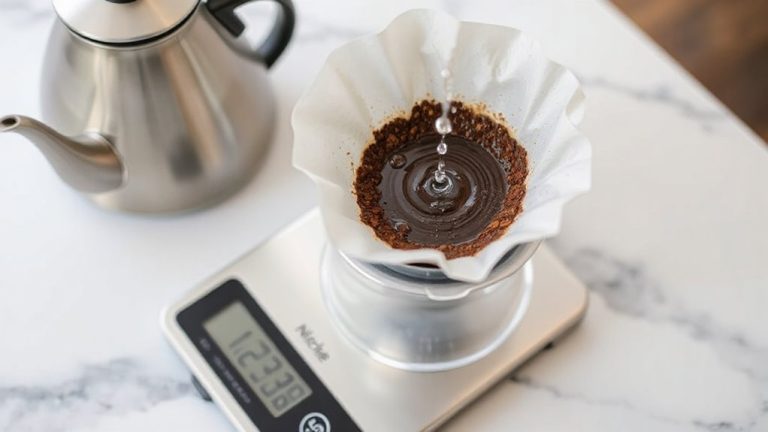
Coffee buildup in your pour-over dripper can affect flavor, so cleaning it regularly matters. Start by rinsing the dripper with warm water to remove loose grounds. For deeper cleaning, use a soft brush or cloth with mild dish soap-avoid abrasive pads that scratch surfaces. Pay close attention to the spout and bottom hole, where oils and fines accumulate. If using metal or ceramic, soaking in warm, soapy water for 10–15 minutes helps loosen residue. Rinse thoroughly to avoid soap taste, which can alter water temperature and brewing time during your next brew. Never let detergent linger. For paper-covered filters, discard immediately; with metal filters, clean separately. Regular maintenance preserves ideal flow rate and prevents clogs, ensuring consistent coffee extraction. This quick process keeps your gear ready, flavor clean, and brewing efficient.
How to Clean a Ceramic Pour-Over Dripper
Ceramic pour-over drippers, like the Hario V60 or Kalita Wave, need a slightly different care routine compared to metal or plastic ones. To preserve ceramic glaze integrity, avoid sudden temperature shifts and never expose the dripper to direct stove heat. Hand-washing with mild soap and warm water is best-abrasive scrubbers can scratch the surface over time. Ceramic’s heat retention properties help maintain stable brewing temperatures, but residue buildup can affect performance. Rinse thoroughly after each use to prevent coffee oils from dulling the glaze.
| Cleaning Step | Detail |
|---|---|
| Water Temp | Warm, not boiling |
| Tools | Soft sponge, mild detergent |
| Drying | Air-dry fully before storage |
Let it dry completely before storing to prevent moisture absorption and potential cracking.
How to Remove Stains From a Glass Pour-Over Dripper
Stains on your glass pour-over dripper, like those from the Hario V60 or Bodum, aren’t just unsightly-they can hint at lingering oils or mineral deposits that might affect your brew over time. To remove stains, soak the dripper in a mix of warm water and white vinegar for 15–30 minutes, then scrub gently with a soft brush. Avoid abrasive pads, as they increase the risk of glass etching, especially on delicate borosilicate models. For stubborn adhesive residue left by labels, use a bit of rubbing alcohol on a cloth-don’t soak the entire dripper in alcohol, as prolonged exposure may weaken the glass. Rinse thoroughly and inspect under light to check for remaining film or cloudiness. If stains persist, repeat the vinegar soak. Regular cleaning prevents buildup and maintains clarity, but always dry the dripper fully to minimize mineral spotting.
How to Strip Oil Buildup From a Metal Pour-Over Dripper
While glass drippers mainly contend with surface stains, metal models like the Stagg X or Kalita Wave Metal face a different issue-oil buildup from coffee grounds that can clog the mesh and affect water flow over time. To strip this buildup, soak your dripper in a mix of hot water and oxygen-based cleaner (like OxiClean) for 6–12 hours, then scrub gently with a soft brush. Avoid harsh detergents or steel wool-they damage the metal seasoning, which some users develop intentionally through repeated use. This layer, similar to cast iron seasoning, results from oil curing and may add durability over time. If you prefer not to build that layer, clean thoroughly after each use to prevent rancid oils. Stripping buildup monthly keeps flavor neutral and flow consistent, especially if you brew daily. Regular deep cleaning maintains performance-don’t skip it just because the dripper looks clean.
How to Prevent Mineral Buildup in Pour-Over Drippers
A little prevention goes a long way when it comes to mineral buildup in your pour-over dripper, especially if you’re using hard water. Water hardness varies by region, and if yours is high in minerals like calcium and magnesium, those deposits can build up over time, clogging pores and altering flow rates. To avoid this, consider using filtered or bottled water-it’s an easy switch that makes a real difference. Even with filtering, occasional vinegar soaking helps. Every few weeks, soak your dripper in a solution of one part white vinegar to three parts water for 30 minutes, then rinse thoroughly. This dissolves mineral deposits before they become problematic. Vinegar soaking works well across ceramic, glass, and metal, though metal may require less frequency. Staying proactive keeps your dripper functioning efficiently and extends its lifespan without extra effort.
Daily and Weekly Care for Long-Lasting Dripper Performance
You’ve already taken steps to prevent mineral buildup by managing water quality and doing periodic vinegar soaks, but consistent performance also depends on how you handle day-to-day cleaning and weekly maintenance. After each brew, rinse your dripper with warm water to remove coffee oils that can hurt coffee freshness over time. For ceramic and glass models like the Hario V60, a quick wash with mild soap keeps pores clean without affecting heat retention. Metal filters, such as those in a Kalita Wave, need brushing to prevent clogging. Once a week, do a deeper clean with a soft brush or sponge to maintain ideal water temperature stability and flow rate. Avoid abrasive pads-they can scratch surfaces and trap residue. Storing your dripper dry and uncovered prevents musty odors. Consistent care means better extraction, longer gear life, and a cleaner cup every time. Choosing the right best coffee drippers can enhance both ease of maintenance and brewing performance.
On a final note
Keep your pour-over dripper clean to guarantee better-tasting coffee. Rinse daily, scrub gently, and deep-clean weekly depending on material-ceramic needs mild soap, glass resists stains but can cloud, metal traps oil. Use vinegar or dedicated cleaner for mineral or oil buildup. Always dry thoroughly. Match your maintenance to your brew frequency and water hardness. A well-cared-for dripper lasts longer and brews more consistently.