The Impact of Processing Methods on Flavor: How Natural and Washed Techniques Affect Your Cup
Your coffee’s flavor is shaped by how the beans are processed after harvest. Natural processing dries cherries whole, boosting sweetness and giving bold, fruity notes, but risks mold in humid climates. Washed processing removes pulp first, yielding clean, bright cups with crisp acidity, common in Ethiopian and Colombian beans. Washed beans often roast more evenly due to higher density. If you keep exploring, you’ll see how hybrids and drying methods fine-tune these flavors further.
Notable Insights
- Natural processing yields fruity, winey flavors with heavier body and lower acidity due to prolonged drying with the fruit intact.
- Washed processing produces clean, bright cups with higher acidity and clarity by removing mucilage before drying.
- Fermentation in natural processing is longer and less controlled, enhancing complexity but increasing risk of off-flavors.
- Washed beans typically have higher density, leading to more even roasting and accentuated intrinsic coffee characteristics.
- Climate and drying method significantly influence flavor, with naturals thriving in dry conditions and washed offering more consistency in varied environments.
What Is Coffee Processing and Why It Matters
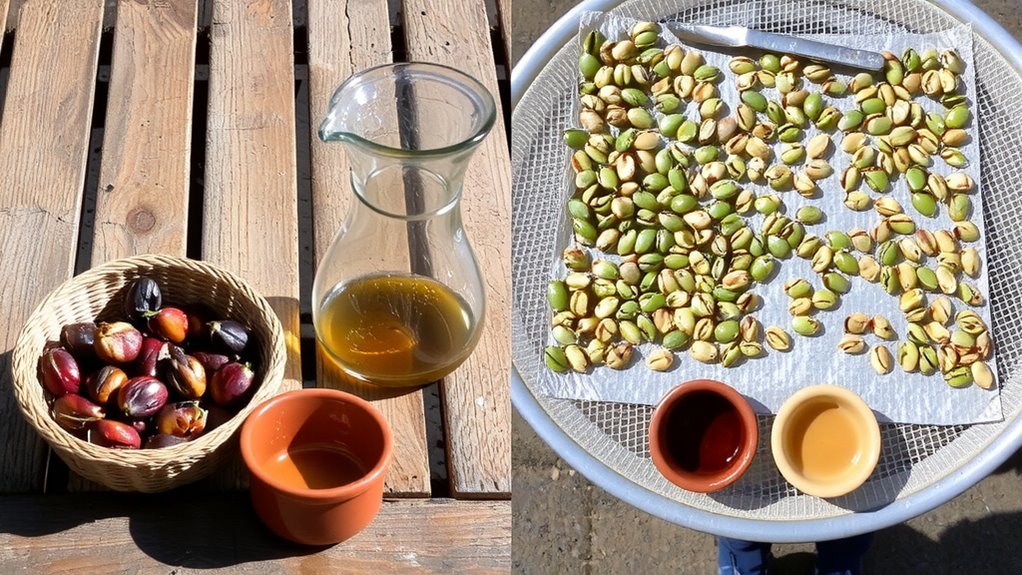
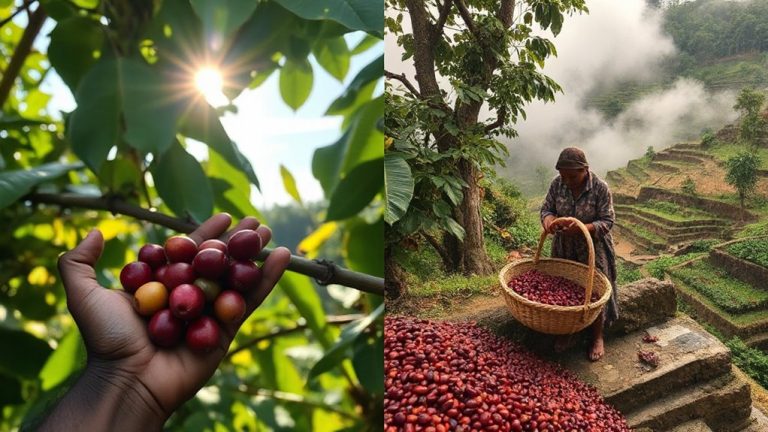
Coffee processing shapes the flavor of every cup you brew, starting the moment the beans are harvested. After picking, you must remove the outer fruit and pulp to reach the bean inside. How you do this-whether wet, dry, or honey processing-directly affects taste, acidity, and body. Bean selection plays a key role; only healthy, ripe cherries should be used, as damaged or underripe ones spoil the batch. You also need tight fermentation control, especially in washed methods, where over-fermenting can produce sour or off flavors. Tanks, temperature, and timing all matter. Equipment like depulpers, fermentation tanks, and drying beds help standardize results. Small farms might use basic tools, but consistency suffers. Larger operations invest in machinery for better control. Choosing the right method isn’t just tradition-it’s a practical decision affecting quality, shelf life, and market value. Processing isn’t just cleanup-it’s flavor creation.
How Natural Processing Builds Fruity Flavors
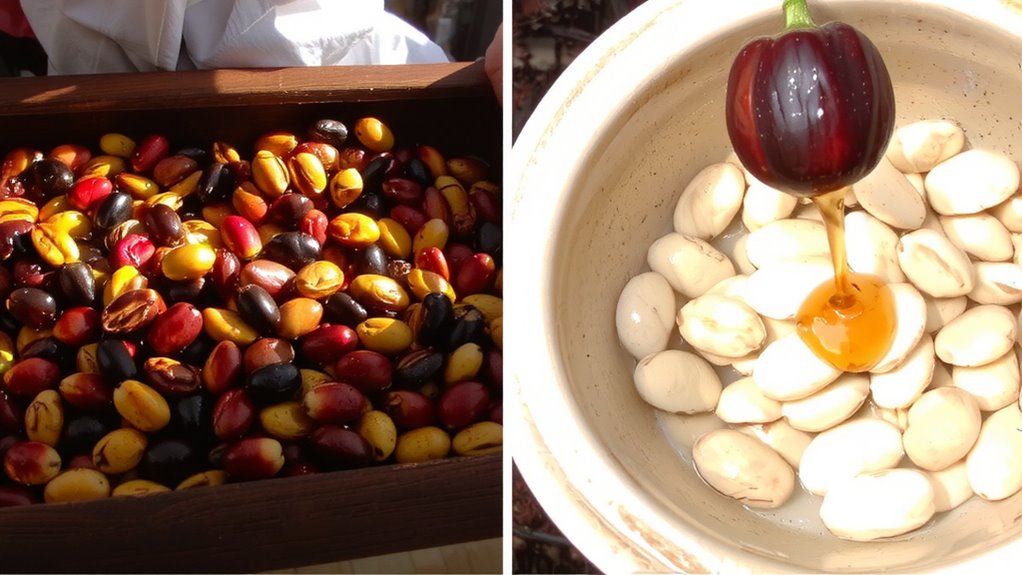
While the cherries ripen on the tree, their sugars and acids begin shaping the final cup-and with natural processing, you preserve all of that by drying the beans inside the whole fruit. As the fruit dries around the bean, fermentation intensity increases, boosting bold, fruity notes like berry and tropical fruit. Maintaining fruit integrity during drying is key; any spoilage or mold harms flavor. You’ll need consistent turning and dry, stable weather-or controlled drying rooms-to get it right.
| Factor | Effect on Flavor |
|---|---|
| Extended drying time | Enhances sweetness and complexity |
| High fermentation intensity | Increases wild, winey, or boozy notes |
| Poor fruit integrity | Leads to sour or fermented off-flavors |
Natural processing suits arid climates and works well for creating fruit-forward profiles when done carefully.
How Washed Processing Creates Bright, Clean Cups
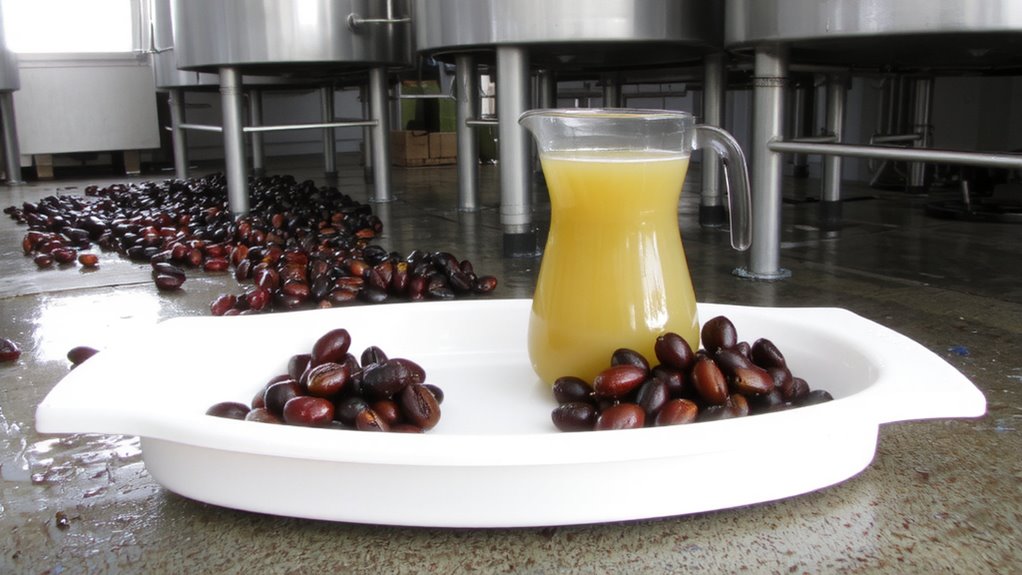
If you’re aiming for clarity and acidity in your cup, washed processing delivers by removing the coffee cherry immediately after harvest, so the bean doesn’t absorb fruit sugars during drying. This method prioritizes acidic clarity and flavor purity, giving you a bright, clean profile that highlights the coffee’s intrinsic qualities. After depulping, beans ferment in water to remove mucilage, then rinse and dry. The controlled environment minimizes fermentation variability, making results more consistent than natural processing. You’ll often notice citrus, green apple, or tea-like notes-especially in beans from Ethiopia or Colombia. Washed coffees work well with pour-over and drip brewing, where their crispness shines. While the process uses more water, many farms now recycle it to reduce environmental impact. If you value precision and transparency in flavor, washed-processed beans are a reliable choice for daily brewing and tasting origin characteristics clearly.
Natural vs. Washed: How Flavor Profiles Compare
Think of flavor as a spectrum, and you’ll see how natural and washed processing sit at opposite ends. Naturals tend to be bold and fruity, with longer fermentation duration deepening complexity. Washed coffees offer clarity and brightness, with higher bean density often leading to more even roasting. Your preference depends on what you value: intensity or precision.
| Feature | Natural Process | Washed Process |
|---|---|---|
| Flavor Profile | Fruity, heavy body | Clean, bright acidity |
| Fermentation | Longer duration | Shorter, controlled |
| Bean Density | Often lower | Typically higher |
Choose natural for adventurous palates; pick washed for consistency. Each method shapes flavor differently, and bean density affects roast performance.
How Drying and Climate Shape Flavor
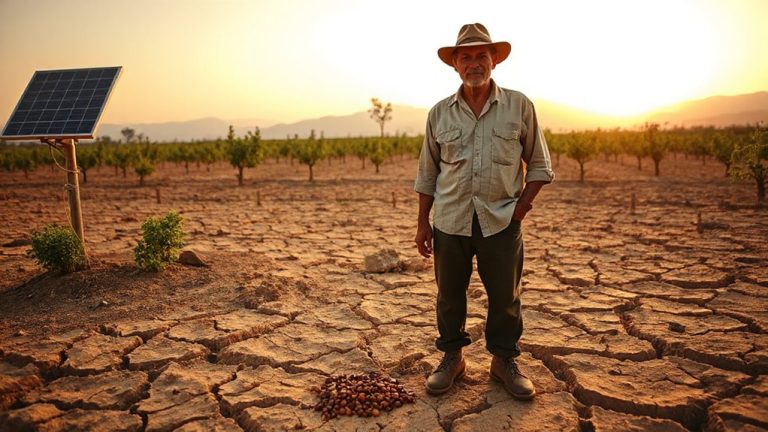
Drying methods and climate play a direct role in how your coffee tastes, building on the foundation set by processing choices like natural or washed. You need consistent warmth and airflow to dry beans evenly, and your drying altitude affects both speed and flavor development-higher elevations slow drying, which can deepen complexity but raise mold risk if not managed. Sun-drying on patios or raised beds is common, but mechanical dryers offer more control in wet climates. Fermentation duration continues subtly during drying, especially in natural processes, so uneven drying can cause off-flavors. Lower altitudes dry faster but may sacrifice nuance. You’ll find Ethiopians often dry at high elevations with long, slow fermentation duration, boosting fruitiness, while Brazilian farms use lower drying altitude and mechanical aid for efficiency. Your environment directly shapes the final cup-matching method to climate is essential for quality.
How to Match Processing to Your Taste Preferences
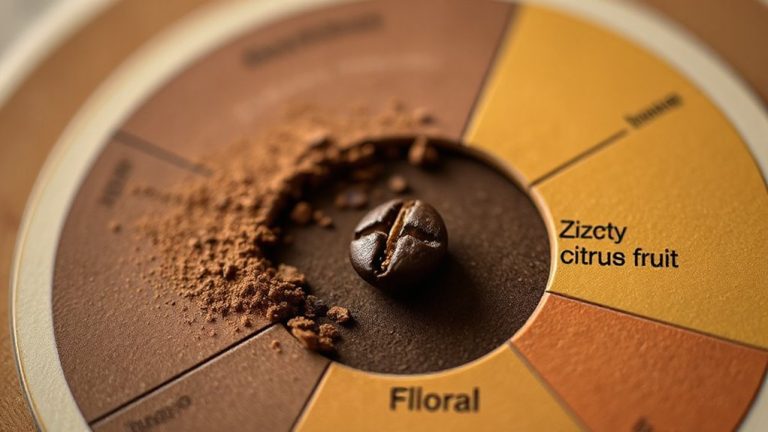
Why do some coffees burst with berry-like sweetness while others taste clean and tea-like? The answer lies in processing-and how it shapes flavor matching for your personal preference. If you love bold, fruity, syrupy notes, naturally processed coffees-like many from Ethiopia-are likely your go-to. They’re fermented with the fruit, boosting intensity. But if you prefer clarity and brightness, washed coffees-common in Colombia or Kenya-give a cleaner cup with more acidity and subtle complexity. It’s not about which is better; it’s about aligning processing with your taste. Flavor matching means considering body, aroma, and balance. Try side-by-side tastings. Note which you reach for again. Your personal preference isn’t random-it’s discoverable through deliberate comparison. Start with known origin-process pairs, then branch out.
How Hybrids Combine Natural and Washed Traits
You’ve probably noticed how natural-processed coffees bring bold fruitiness while washed ones offer clean, bright profiles-now envision getting both in a single cup. Hybrid processing makes that possible, merging traits from both methods to create balanced, complex flavors. Through hybrid experimentation, producers adjust fermentation time, water use, and drying techniques to fine-tune outcomes. Some methods, like the honey process, keep some mucilage while washing away part of the fruit, leading to flavor bridging-think sweet body and mild acidity with subtle berry notes. These hybrids demand precise control, but they’re repeatable and less weather-dependent than fully natural processing. For roasters and brewers, they offer consistency without sacrificing interest. If you value clarity but miss a hint of fruit, hybrids widen your options. They’re worth trying on a drip brewer or V60-no special gear needed.
On a final note
You now know how natural and washed processing shape your coffee’s flavor. Naturals tend to be sweeter, fruitier, and heavier; washed coffees are cleaner and brighter. Your taste preference guides the choice-try a naturally processed Ethiopian for bold fruit notes or a washed Kenyan for crisp acidity. Drying conditions matter, so look for consistent processing. Hybrid methods like honey-processed offer middle ground. Pick beans based on flavor goals, not trends.