How to Match Grind Size to Water Agitation in Pour Over Techniques
Match your grind size to water agitation for balanced pour over coffee. Use a fine grind with low, slow pours to prevent over-extraction, ideal for delicate beans like Ethiopian Yirgacheffe. With medium grinds, a steady spiral pour works well in a Hario V60 or Kalita Wave, ensuring even saturation. Go coarse when pouring fast or from height to avoid bitterness. A gooseneck kettle and burr grinder give you control-small tweaks make a noticeable difference.
Notable Insights
- Match fine grinds with low agitation to prevent over-extraction and highlight delicate flavor notes.
- Use medium grinds with steady, controlled pours for balanced extraction and consistent flavor.
- Pair coarse grinds with high-agitation pours to improve extraction without excessive bitterness.
- Adjust pour height and gooseneck precision to control turbulence and complement your grind size.
- Ensure grind consistency with a burr grinder to avoid uneven extraction caused by fines or boulders.
Define Water Agitation in Pour Over Brewing
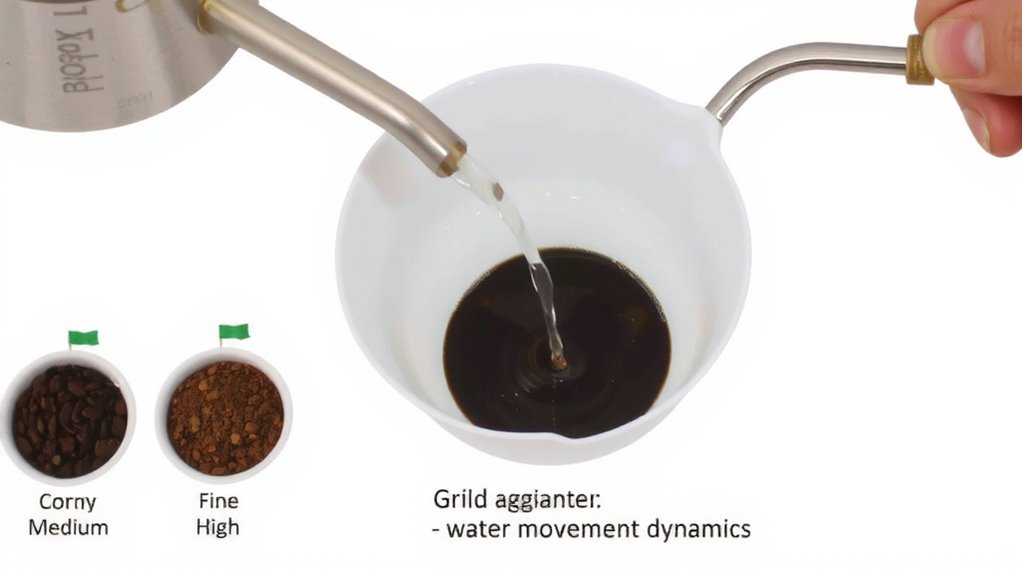
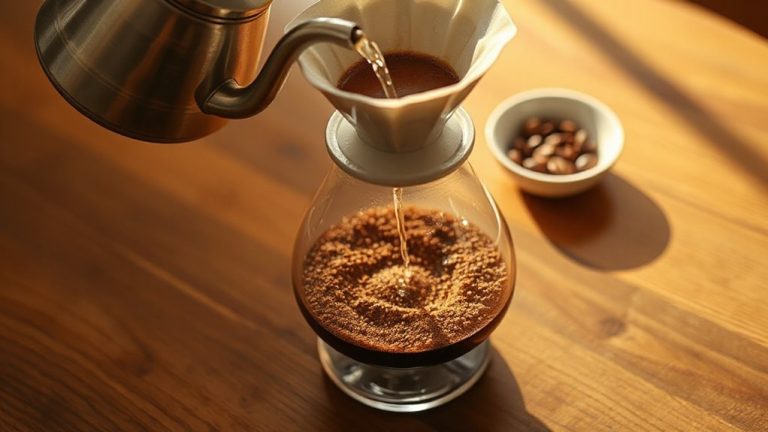
While pour over brewing might look simple, what happens when the water hits the coffee grounds-known as water agitation-plays a key role in extraction. You’re not just wetting grounds; you’re creating water turbulence that disrupts the coffee bed and speeds up solubles release. Strong agitation increases flow dynamics, pushing water through channels and boosting contact. But too much turbulence can lead to over-extraction, especially with coarse grinds, resulting in bitter flavors. Pour height, gooseneck kettle precision, and pour technique directly influence how intense the agitation is. A high, fast pour adds more energy, while a low, slow one reduces it. You’ll see this clearly when comparing a chaotic spiral pour versus a steady spiral in a Hario V60. Controlling agitation means managing how aggressively the water moves through the grounds-balancing speed and flavor. Using a gooseneck kettle with best gooseneck kettles ensures consistent, controlled pours that enhance precision and reduce unwanted turbulence.
Brew Gentle With a Fine Grind and Low Agitation
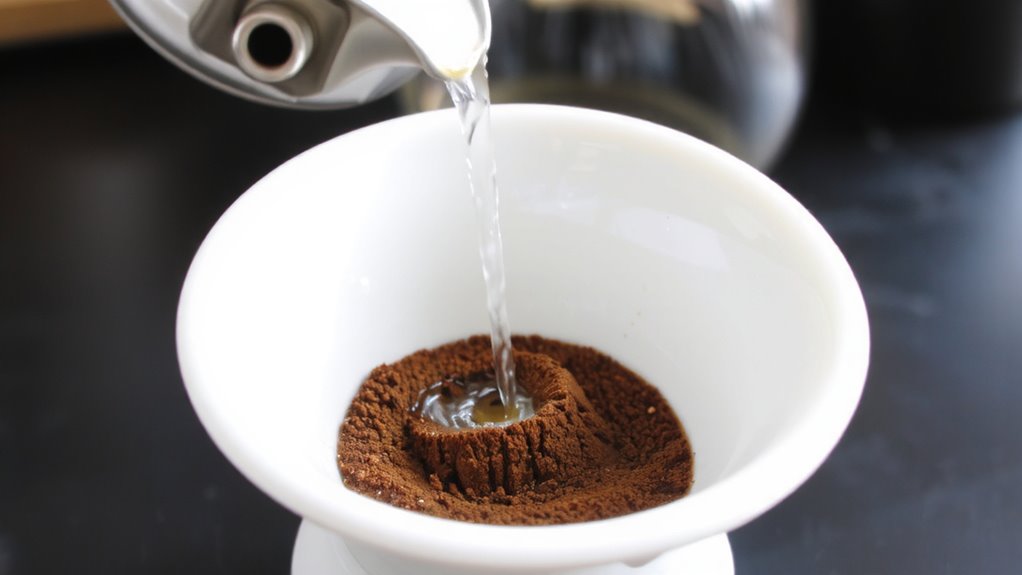
A fine grind acts like a brake on water flow, so pair it with low agitation to keep extraction even and avoid harshness. You want light saturation-just enough water to wet the grounds without over-pushing. Too much stirring or aggressive pouring creates minimal turbulence, which seems gentle but can still lead to uneven extraction if the water channels through. Instead, pour slowly and steadily in tight spirals, keeping the stream near the center. This method suits delicate, light-roast beans that shine with clarity, like Ethiopian Yirgacheffe. Use a gooseneck kettle for control-it’s essential. A flat-bottom filter, like in the Chemex, also helps distribute water evenly without disturbing the bed. Avoid high pulses or splashy pours; they disrupt the fines and bring out bitterness. This approach takes patience, but rewards with soft, tea-like cups. It’s not for speed, but for when nuance matters most. For optimal results, choose a grind size specifically tailored to highlight the nuanced flavors in light roasts, as the right coffee grind can make all the difference in pour-over mastery.
Balance Extraction With Medium Grind and Steady Pour
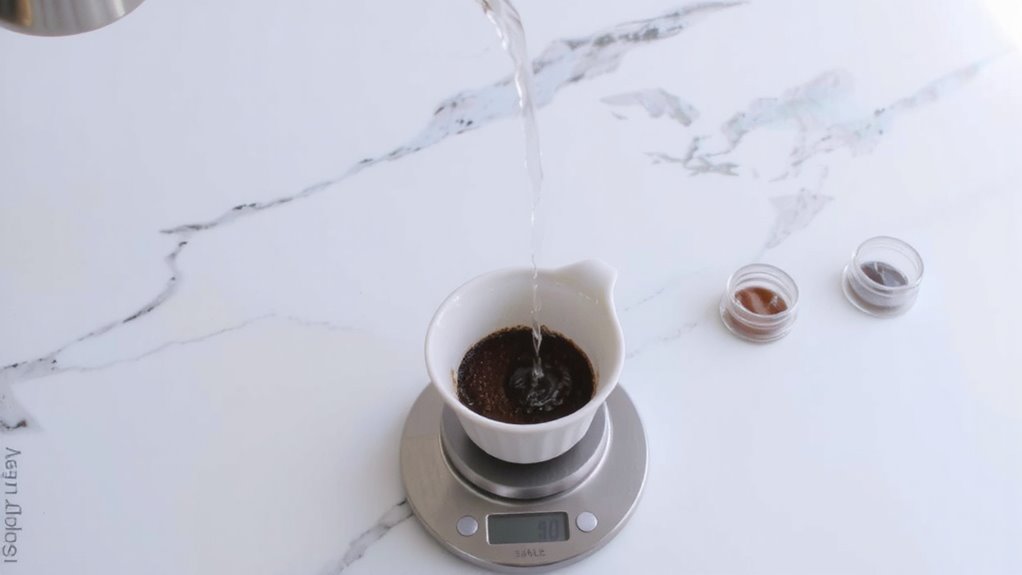
Most home brewers find the sweet spot for balanced extraction starts with a medium grind and a steady, controlled pour. You’ll achieve better taste balance-neither sour nor bitter-when the grind size lets water interact evenly with coffee particles. A medium grind, like table salt, works well with most pour over cones, such as the Hario V60 or Kalita Wave. It allows sufficient flow control without clogging or rushing through. Keep your pour smooth and circular, starting from the center and moving outward, then spiraling back in. This method promotes even saturation and consistent contact time. Avoid erratic splashing or aggressive pulses, since they disrupt flow control and extraction uniformity. You don’t need fancy gear-a gooseneck kettle helps, but careful hand pouring works too. This approach gives reliable results for everyday brewing, offering clarity and harmony in every cup without overcomplication. For consistent results, using a high-quality burr grinder is essential, and models like the Baratza Encore are widely praised for their performance in pour-over setups.
Use Coarse Grind for High-Agitation Pours
When you’re using high-agitation pouring techniques-like fast, turbulent spirals or pulse pouring-the water moves aggressively through the coffee bed, so you’ll want to use a coarse grind to slow things down. High agitation speeds up extraction, and without a coarser particle size, your coffee can over-extract and taste harsh. A coarse grind benefits your brew by increasing flow resistance, giving water more time to extract evenly despite the intense movement. Think of a French press-style grind-just a bit finer-when adjusting your grinder. This approach works well with kettles that produce strong flow, like the gooseneck’s wider spout. Avoid fine or medium settings here; they’ll clog and channel. Stick to consistency: uneven particles increase the risk of sour or bitter notes. If you’re seeing fast runoff or dry spots, check your grind before changing technique. Coarse grind benefits shine when you need control under high agitation.
Fine-Tune Grind and Agitation for Better Flavor
Why does your coffee sometimes taste sharp or flat, even when you follow the same steps? Small changes in grind uniformity and agitation can have big effects. If your grind isn’t consistent-some fines, some boulders-extraction becomes uneven, leading to off-flavors. A good burr grinder matters here; blade grinders just don’t cut it. Pair a uniform grind with controlled pouring: slow, spiral pours reduce agitation, suiting medium-fine grounds. High agitation? Use a coarser grind to avoid over-extraction. Also, check your water temperature-200°F to 205°F is ideal. Too hot, and you’ll burn delicate notes; too cool, and the coffee tastes weak. Adjusting both grind and agitation gives you control. Try minor tweaks: change the grind setting slightly, alter your pour speed, or adjust water temperature by a few degrees. These small moves fine-tune flavor without guesswork.
On a final note
You’ll get the best results by matching your grind size to your pouring style. Use a fine grind with gentle pours to avoid over-extraction, especially with delicate beans. A medium grind suits steady, even pouring for balanced flavor. For aggressive, high-agitation pours-like fast spirals-choose a coarse grind to prevent bitterness. Experiment gradually, adjusting one variable at a time, and note how taste changes with tools like a Kalita Wave or V60.