How to Choose Between Prosumer and Commercial-Grade Espresso Machines
You need a commercial machine if you pull 20+ shots daily-prosumer models like the Breville Dual Boiler can’t handle constant use and may overheat. Commercial units have stronger boilers, better temperature stability, and last longer under heavy demand. Prosumer machines save space and cost less upfront but wear faster. Match your pick to your volume, skill, and setup-your workflow will show you what comes next.
Notable Insights
- Match daily espresso volume to machine capability-prosumer for light use, commercial for 20+ shots daily.
- Choose commercial-grade builds for durability under constant use; prosumer models may wear faster.
- Prioritize stable pressure and quick heat recovery, where commercial machines outperform prosumer models.
- Weigh long-term costs-commercial units save energy and last longer under heavy use despite higher upfront price.
- Assess skill level and space: prosumer machines are more user-friendly and compact for home setups.
Assess Your Daily Espresso Volume
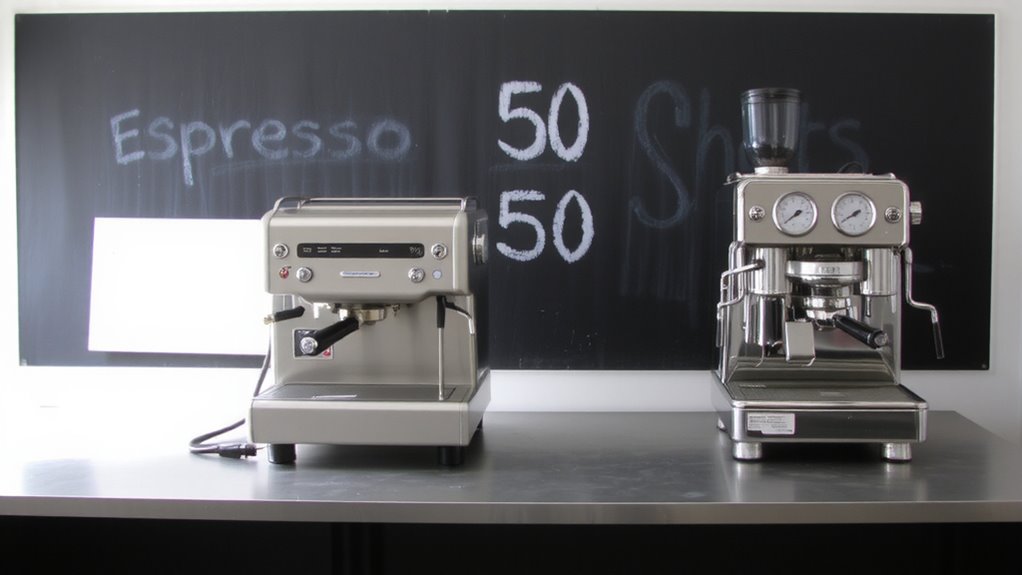
How many espressos do you actually pull each day? If it’s just a few, a prosumer machine like the Rancilio Silvia works fine-its daily output meets home needs without strain. But if you’re pulling 20+ shots regularly, you’ll need commercial-grade daily output. Machines like the Nuova Simonelli Oscar II handle volume better, thanks to stronger boilers and superior machine durability. Prosumer models can overheat or wear down with heavy use, shortening lifespan. Commercial units run longer with less stress, but they’re larger and cost more. For occasional use, that’s overkill. Ask yourself: Is your routine light or intense? Do you entertain often or run a small café? Match the machine to your real usage, not just ambition. High machine durability isn’t needed unless your daily output demands it. Choose based on actual habits, not idealized ones. For a full overview of top options, check out our Best Espresso Machines guide.
Compare Prosumer and Commercial Build Quality
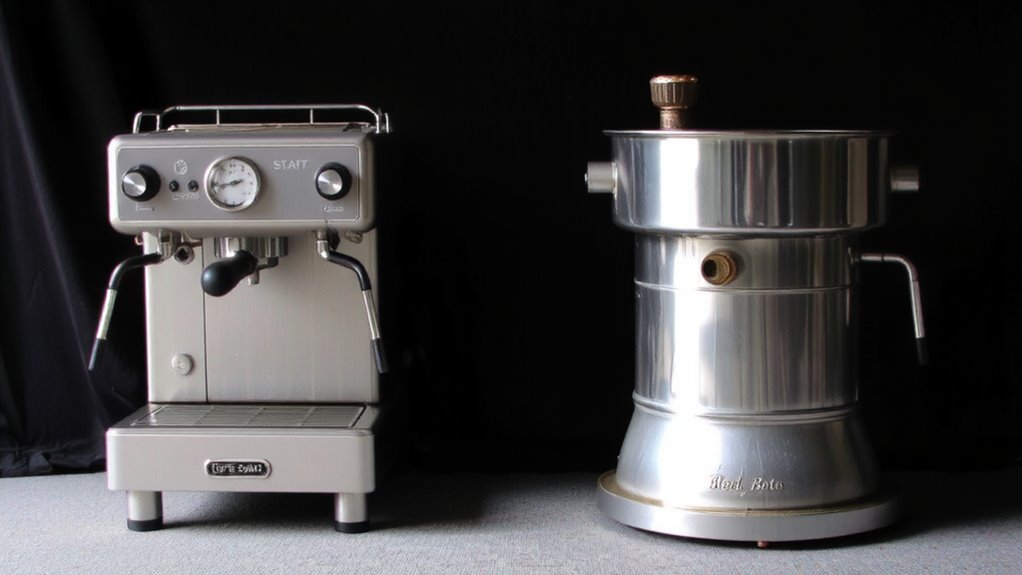
A prosumer espresso machine like the Rancilio Silvia or Rocket Appartamento is built with solid materials-often stainless steel and brass components-but it’s designed with home use in mind, so corners are cut to keep cost and size manageable. You’ll notice decent material durability, but it’s not on par with commercial units built for constant operation. Commercial machines like the La Marzocco Linea or Nuova Simonelli Aurelia use industrial-grade parts and tighter construction precision, meaning less flex, vibration, and wear over time. These machines handle heavy use because they’re overbuilt on purpose. While prosumer models can last years with care, their seals, frames, and boilers aren’t meant for back-to-back service. If you’re pulling more than 20 shots daily, especially in a semi-pro environment, commercial build quality gives better long-term reliability. You’re paying for stronger frames, thicker metal, and tighter engineering-critical when downtime isn’t an option. For those evaluating durability and performance, exploring a Top Commercial Coffee Machines buyer’s guide can help clarify the distinctions between models built for high-volume environments.
Weigh Pressure, Boiler, and Temperature Performance
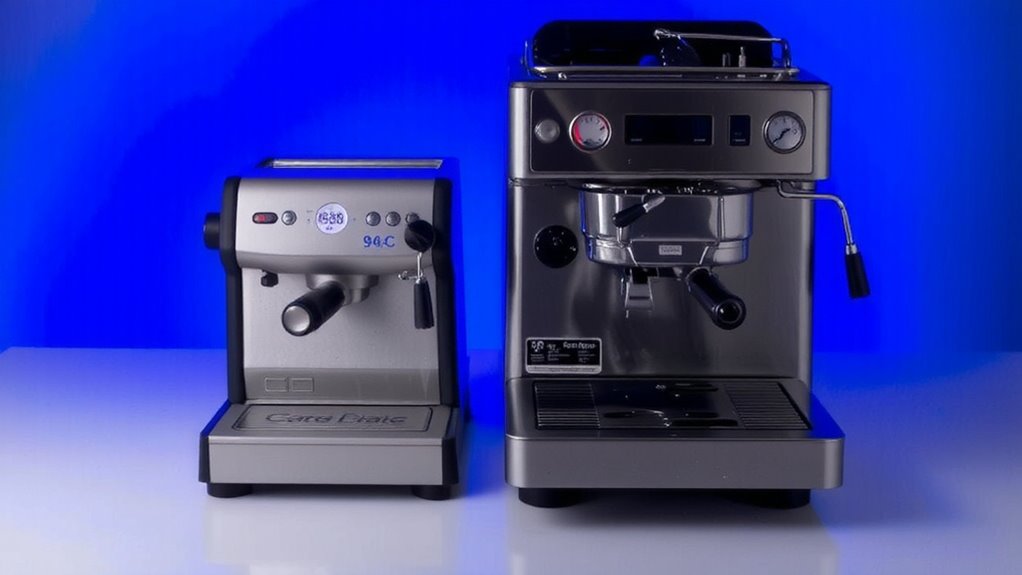
Why does one espresso shot pull smoothly while another sputters and under-extracts? It often comes down to pressure, boiler design, and temperature control. With commercial machines like the La Marzocco Linea Mini, you get stable pressure and fast heat recovery, which boosts brew consistency-critical if you’re pulling back-to-back shots. These machines use dual or triple boilers, so you can brew and steam at the same time without dropping temperature. Prosumer models, like the Breville Dual Boiler, offer solid performance but may lag in steam recovery, needing a pause between drinks. Heat exchange systems save space and cost but can struggle with temperature stability during long sessions. If you value reliability and high-volume output, commercial-grade performance wins. For lighter use, prosumer setups can still deliver solid brew consistency-just mind the limits when demand increases. A key factor in achieving this consistency is starting with evenly ground coffee, which is why investing in a high-quality espresso grinders under $1000 can make a noticeable difference in extraction quality.
Calculate Upfront and Long-Term Costs
While you might save money upfront with a prosumer machine like the Breville Dual Boiler or Rancilio Silvia, it’s worth considering how costs add up over time. Commercial machines cost more initially-often two to three times the price-but they’re built for heavy use and usually offer better energy efficiency, lowering utility bills in high-volume settings. Prosumer models consume more power over time and may need earlier replacement. Both types benefit from proper water filtration, which prevents scale buildup and extends lifespan. Without it, repairs become more frequent and costly. Factor in filter replacements and maintenance when budgeting. Over five years, a commercial machine’s durability and energy efficiency can offset its higher initial price, especially if used daily. For lighter home use, a prosumer machine with filtration may still be cost-effective. Think long-term, not just sticker price.
Choose Based on Your Skill and Maintenance Routine
You’ve weighed the numbers, but cost alone won’t determine which machine works best for your daily routine-your skill level and willingness to maintain it play just as big a role. If you’re new to espresso, a prosumer machine like the Breville Dual Boiler or Gaggia Classic Pro is more forgiving and easier to manage than a commercial beast like a La Marzocco Linea Mini. These machines require less barista experience to dial in shots consistently. Commercial units demand precise technique and daily care. Cleaning frequency is critical: prosumer models need backflushing and grouphead cleaning every few days, while commercial machines often require it after every few uses. If you can’t commit to that, you’ll face clogs and inconsistent pulls. Be honest about your time and skill-choosing the right machine means picking one you’ll use well and maintain regularly.
Fit the Machine to Your Kitchen or Cafe Space
Since space and layout vary widely between home kitchens and professional cafes, choosing the right-sized espresso machine matters just as much as performance. You’ll need to measure your counter space carefully-prosumer models like the Rocket R58 fit well in homes with limited room, while commercial units like the Nuova Simonelli Aurelia require dedicated space and reinforced flooring. Don’t overlook space constraints behind and above the machine; plumbed models need water line access, and group heads need clearance for portafilters. Ventilation needs are greater in cafes-high-output machines generate heat and steam, so proper hoods or exhaust fans are essential. Home setups might rely on open windows or nearby vents. Always account for workflow too: baristas need room to move around during service. A machine that fits snugly might still disrupt efficiency if it blocks access to grinders or sinks. Plan the entire zone, not just the footprint.
Know When to Upgrade to Commercial-Grade
When your daily shot count climbs past 50, it’s time to contemplate stepping up to a commercial-grade machine. Prosumer models might struggle under constant use, reducing machine longevity and increasing downtime. Commercial units handle high volume efficiently and offer better service availability through authorized dealers and skilled techs.
| Factor | Prosumer | Commercial |
|---|---|---|
| Machine Longevity | 3–5 years (moderate use) | 7–10+ years (heavy use) |
| Service Availability | Limited regional support | Nationally backed networks |
You’ll also notice faster recovery times, multi-boiler setups, and PID temperature control as standard. If you’re running a small cafe or a busy office kitchen, the upgrade isn’t just about performance-it’s about reliability and reducing long-term costs. Don’t wait for breakdowns; plan your shift before demand overwhelms your current setup.
On a final note
You’ll want a prosumer machine like the Rocket R58 if you’re making 5–10 shots daily at home-solid build, lower cost. But if you’re pulling 50+ shots daily in a cafe, step up to a commercial machine like the La Marzocco Linea Mini-better heat stability, durability, and faster recovery. Match the machine to your volume, space, skill, and budget. Upgrade only when performance or wear demands it.