The Role of Humidity in Coffee Storage: How Proper Conditions Can Preserve Freshness and Optimal Quality Over Time
Humidity ruins coffee by inviting mold and speeding up flavor loss, especially above 60%. Keep your beans in a sealed container like an Airscape or Fellow Atmos canister to block moisture. Store them in a cool, stable spot-away from the sink, stove, or window. For best results, aim for 50%–60% humidity; use a ThermoPro TP50 to check. If it’s too dry, beans get brittle; too damp, and aromas fade fast. You’ll see how small changes make a real difference.
Notable Insights
- Humidity levels between 50% and 60% preserve coffee’s freshness by preventing mold and protecting volatile flavor compounds.
- Excess moisture above 60% promotes mold growth and accelerates chemical degradation, compromising safety and taste.
- Low humidity below 50% dries beans, causing brittleness and inconsistent grinding that affects extraction quality.
- Airtight containers like Airscape or Fellow Atmos minimize moisture transfer and maintain stable storage conditions.
- Avoid refrigerators or freezers due to condensation risks; use humidity-controlled, cool, and dark storage environments instead.
How Humidity Ruins Coffee Freshness
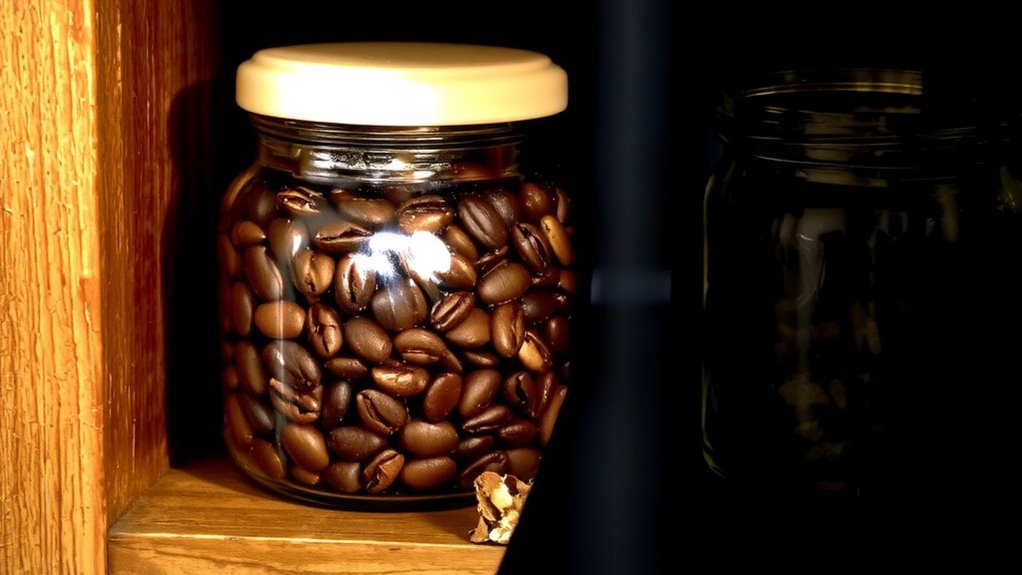
Even a small amount of moisture in the air can do real damage to your coffee’s flavor. Humidity opens the door to mold growth, especially in poorly sealed containers or damp environments like under-sink cabinets. You might not see it right away, but mold silently compromises safety and taste. Worse, moisture speeds up flavor decay by helping volatile compounds break down. Once those aromatics fade, your brew loses brightness and complexity. Ground coffee suffers faster than whole beans-it’s got more surface area exposed. That’s why storing coffee in a humid pantry or near a steaming kettle is a bad idea. Airtight containers like the Airscape or Fellow Atmos cut moisture transfer and help, but they can’t fix a steamy kitchen. Avoid the fridge-condensation forms every time you open it. Instead, keep beans in a cool, dry place away from sinks or windows. Simple choices, but they make the difference between fresh, vibrant coffee and a flat, stale cup.
How Humidity Changes Coffee Over Time
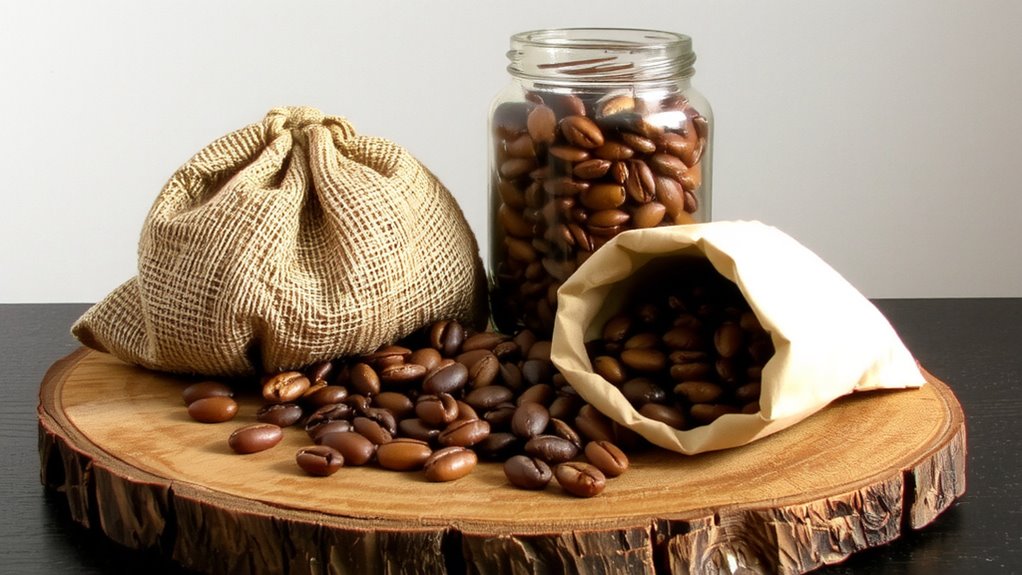
You’ve seen how moisture harms coffee right away, but its long-term effects are just as damaging. Over time, humidity drives chemical degradation and accelerates flavor oxidation, steadily dulling the vibrant notes you enjoy. Even sealed bags aren’t fully safe if stored in damp areas-moisture migrates, breaking down aromatic compounds. This slow decay robs complexity, leaving coffee flat and stale.
| Time Period | Effect on Coffee |
|---|---|
| 1–2 weeks | Slight aroma loss |
| 3–4 weeks | Noticeable dullness |
| 1–2 months | Flavor oxidation evident |
| 3 months | Bitter, woody notes appear |
| 6+ months | Severe chemical degradation |
The changes are irreversible. Once volatiles degrade and oils oxidize, no brewing method can restore the original profile. Store coffee in dry environments to slow these reactions. Simple steps now prevent disappointing cups later.
The Ideal Humidity for Storing Coffee
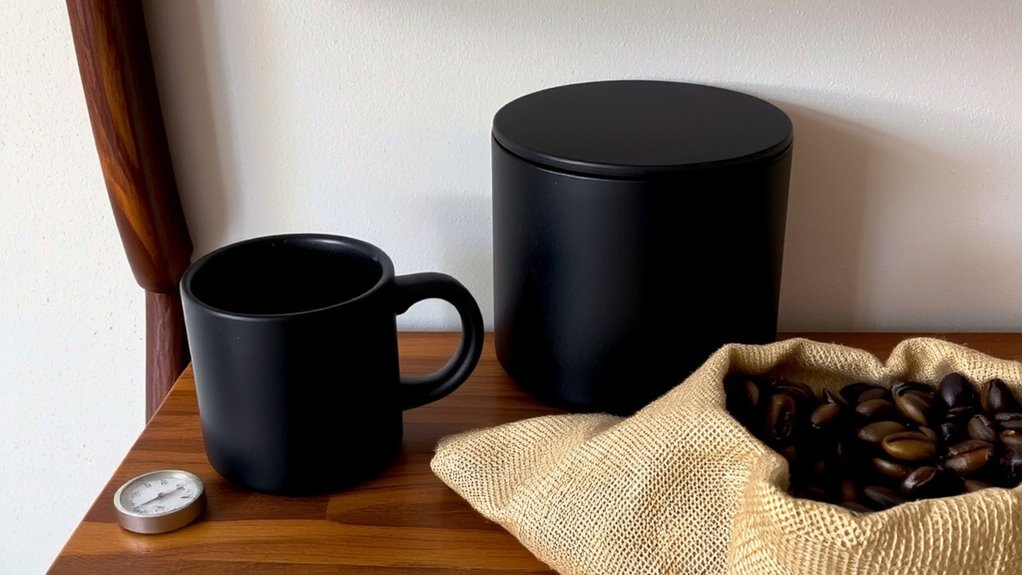
Most experts agree the ideal humidity for storing coffee is between 50% and 60%. If it’s too dry, you’ll increase bean brittleness, making grounds uneven when you grind-this hurts extraction and leads to weak or off flavors. On the flip side, high humidity boosts flavor volatility, letting your coffee lose its aromatic complexity faster. Keeping humidity in that sweet spot helps preserve the oils and volatile compounds responsible for the taste you want. You don’t need lab-grade gear-simple digital hygrometers, like the ones used in wine storage, can monitor your pantry or container. For practical results, pair stable humidity with an airtight, opaque container away from light and heat. This combo won’t stop staling completely, but it slows degradation enough to keep your daily cup noticeably better for weeks. A well-designed coffee storage container can further enhance preservation by minimizing oxygen exposure and protecting against environmental factors.
Storage Mistakes That Invite Moisture
Condensation is the quiet enemy of fresh coffee. You might not see it, but condensation buildup happens when your coffee moves between environments with sharp temperature fluctuations. That moisture degrades flavor fast. Storing beans in the fridge or freezer? Bad idea unless you seal them airtight-otherwise, every time you open the container, condensation forms. Even near windows or above the kettle, heat changes invite dampness. Here’s where common storage spots go wrong:
| Storage Spot | Risk Level |
|---|---|
| Refrigerator | High |
| Freezer (unsealed) | High |
| Countertop (near stove) | Medium |
| Pantry (cool, dark) | Low |
| Window shelf | Medium |
Keep beans in a cool, stable spot. Avoid temperature fluctuations and always use an airtight container to block condensation buildup. Your coffee stays fresher longer when moisture stays out. A dedicated coffee bean sample roaster can help ensure beans are roasted to optimal freshness before storage.
How to Control Humidity at Home
A few simple tools can make a big difference in keeping your coffee fresh by managing indoor humidity. Start by using humidity sensors to monitor levels-they’re cheap and accurate, with models like the ThermoPro TP50 giving reliable readings. Ideally, keep humidity between 50% and 60%; above that, coffee absorbs moisture and degrades faster. If your kitchen is damp, a small dehumidifier can help stabilize conditions. Store beans in airtight containers, and consider vacuum sealing for long-term storage-devices like the FoodSaver V3840 remove air and slow oxidation. But don’t freeze coffee unless you’re storing it for months, as condensation can form when thawed. Avoid plastic bags; they don’t block moisture well. Instead, use glass jars with sealed lids. Vacuum sealing works best in dry environments, so pair it with humidity sensors to confirm conditions. This combo gives real control-simple, practical, and effective for preserving coffee quality.
On a final note
You need to keep coffee dry-humidity ruins freshness fast. Store beans in airtight containers like Mason jars or Fellow Atmos to block moisture. Aim for 50–60% humidity; too high and mold grows, too low and beans dry out. Avoid fridges-they sweat. Pantries work if climate-controlled. A $10 hygrometer helps monitor levels. Simple, consistent storage prevents stale, flat-tasting brew.