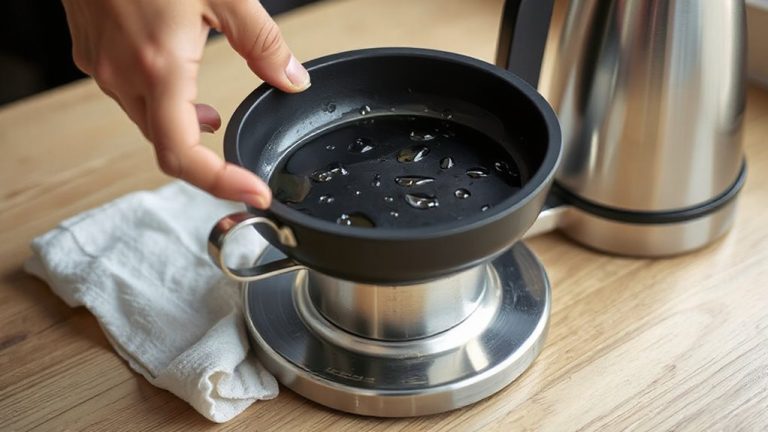
Why Cleaning Your Grinder’s Grounds Bin Prevents Stale Coffee Taste
Old coffee grounds in your bin turn rancid fast, especially in darker roasts, and leave behind stale oils that taint fresh grinds. Plastic bins hold odors worse than stainless steel, and heat from grinding speeds up oxidation. That musty or bitter taste in your morning cup? It’s likely from leftover residue. Cleaning your bin every few uses keeps flavors sharp and pure. You’ll notice a cleaner finish in every espresso or pour-over-you might already taste the difference, but you’ve only seen part of the fix.
Notable Insights
- Stale coffee particles in the bin release rancid oils that spoil fresh grounds and create off-flavors.
- Rancid oils from oxidized residues taint the taste, causing musty or bitter aftertastes in brewed coffee.
- Old grounds degrade aromas, dulling bright flavor notes and reducing coffee’s freshness and complexity.
- Moisture absorption and mold growth in leftover grounds introduce off-flavors and accelerate spoilage.
- Regular bin cleaning removes contaminated residues, preserving the purity and true flavor of fresh coffee.
Why Old Grounds Ruin Your Coffee Taste
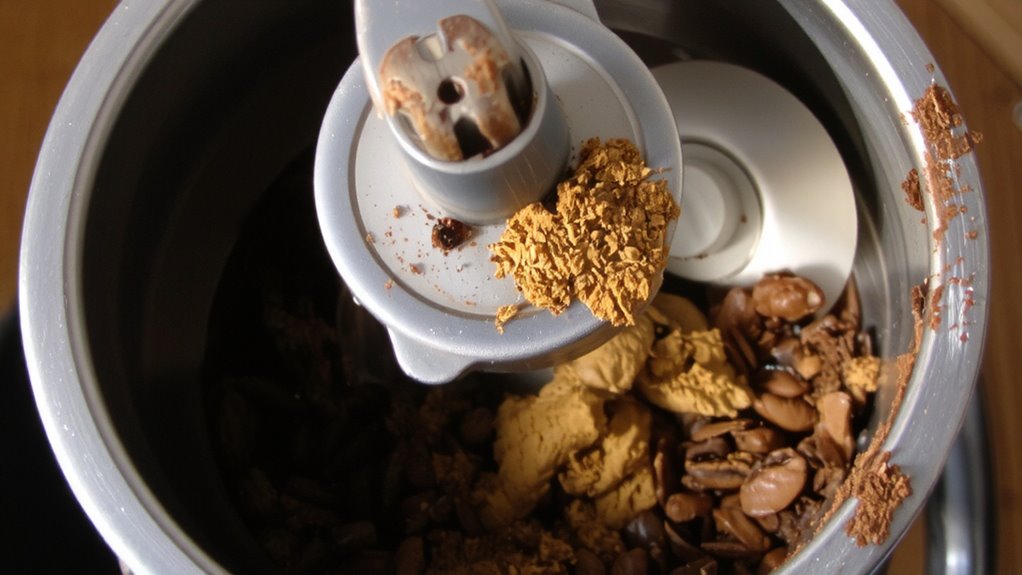
Ever wonder why your morning brew sometimes tastes off, even when you’re using fresh beans? Old coffee grounds stuck in your grinder’s bin are likely the culprit. Over time, these stale particles degrade, releasing rancid oils that cause both flavor contamination and aroma degradation. Even a small amount can taint your fresh grounds, dulling bright notes and introducing musty or bitter aftertastes. This isn’t just about convenience-it directly impacts your coffee’s quality. Darker roasts, which have more oil, tend to worsen the problem by leaving sticky residue. Plastic bins absorb odors more than stainless steel, increasing the risk. If you’re using pre-ground coffee or grinding daily without cleaning, you’re compounding the issue. The result? A cup that lacks clarity and freshness. Regular removal of old grounds isn’t optional-it’s essential for preserving the true taste of your beans. Using the right tools, like a dedicated coffee grinder cleaning brush, makes it easier to reach tight spaces and remove residual buildup effectively.
How To Clean Your Coffee Grinder Fast
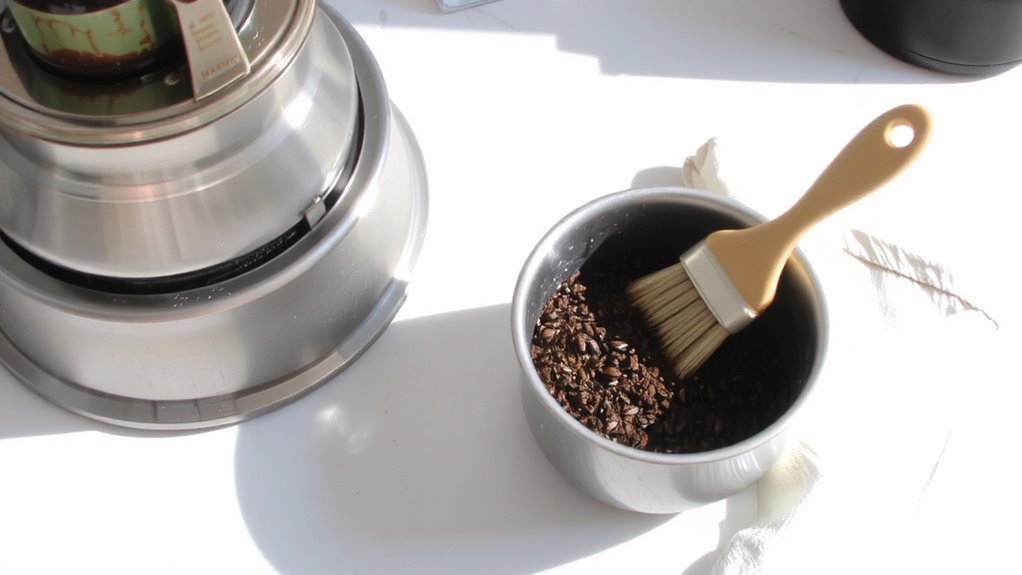
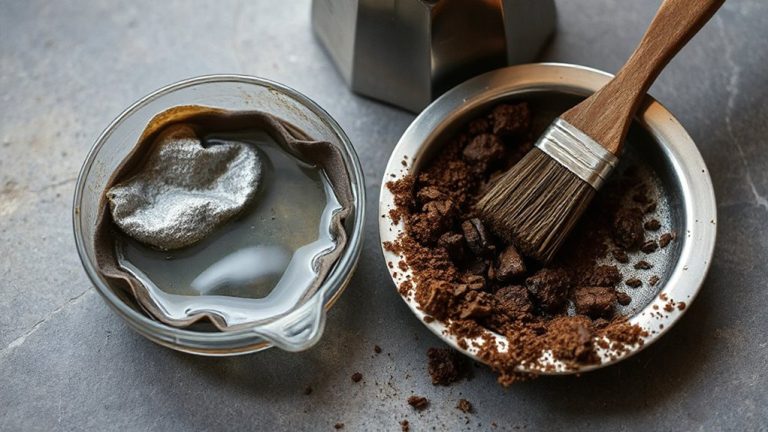
How do you keep your grinder in top shape without wasting time? Use quick methods that target buildup fast. Start by unplugging the grinder and disassembling removable parts like the hopper and grounds bin. Brush out stuck grounds with a dry, soft brush-one of the most effective coffee tools for daily maintenance. For tighter spots, a folded paper towel on a butter knife cleans between burrs safely. If you use an electric grinder, run uncooked rice through it occasionally to absorb oils and residue, then brush out the leftover powder. This isn’t a deep clean, but it’s a practical in-between fix. Avoid water unless the model allows it-most don’t. Wipe exterior surfaces with a dry cloth. These quick methods take under five minutes but extend grinder life and keep your coffee tasting fresh. Consistency beats intensity: a little effort daily beats a long overhaul weekly.
How Coffee Oils Turn Rancid In Grinders
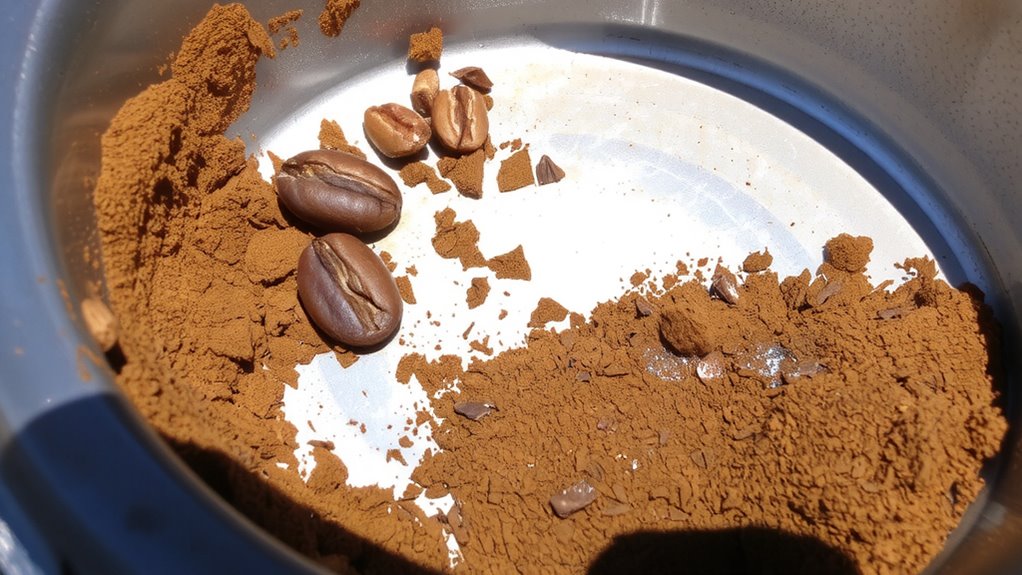
That oily residue clinging to your grinder’s burrs isn’t just messy-it’s a breeding ground for stale, rancid flavors. Coffee beans release natural oils during grinding, and those oils stick to your machine’s parts. Over time, they go bad through the oxidation process, especially when exposed to air and light. Your grinder generates heat during use, and that heat exposure speeds things up, breaking down the oils faster. Once rancid, these oils taint fresh grounds with every use-even small amounts affect taste. Burr grinders, especially steel ones, hold more residue than blade types, making them more prone to this issue. Regular cleaning reduces oil buildup, but it’s best to run cleaning tablets or brush out oils weekly, depending on use. Prevention beats deep cleaning later. Neglect it, and even premium beans won’t taste right-you’ll get flat, off notes instead of bright, rich coffee. Investing in one of the best coffee grinders can also help minimize oil retention due to superior burr design and material.
How Stale Grounds Spoil Fresh Coffee
Why does yesterday’s grind ruin today’s brew? Because leftover grounds degrade quickly, affecting your fresh coffee through oxidation effects and moisture absorption. Even small amounts left in the bin change flavor fast, dragging down the quality of your next cup. Stale particles don’t just taste flat-they transfer bitterness and mustiness. Here’s how degradation happens:
| Factor | Impact on Coffee |
|---|---|
| Oxidation effects | Breaks down aromatic oils, dulling flavor |
| Moisture absorption | Encourages mold and off-flavors |
| Air exposure | Speeds up staleness in under 2 hours |
| Heat from grinding | Accelerates chemical breakdown |
| Residual oils | Trap stale particles and moisture |
These factors combine to compromise clarity, sweetness, and balance. You’re not imagining that dull taste-old grounds are quietly sabotaging your brew. Clean storage helps, but lingering grounds in the bin remain a hidden culprit. Preventing contamination starts where the grind lands-your bin.
When To Clean Your Grinder For Best Flavor
You can store your beans properly and grind them fresh every morning, but if your grinder’s bin is packed with old grounds and oily residue, you’re still compromising flavor. For best results, clean your grinder every 1–2 weeks if you use it daily. Those leftover grounds turn rancid and mix with fresh ones, dulling your coffee’s taste. Grinder maintenance isn’t just about runs-wipe the bin, brush the burrs, and remove built-up oils that trap moisture and accelerate staling. Burr grinders, especially steel ones, hold more residue than you think. For flavor preservation, disassemble and deep-clean monthly. If you switch beans-say, from a dark roast to a light-clean it beforehand to avoid cross-contamination. A quick brush-out after every few uses helps, but don’t skip regular deep cleaning. It’s simple upkeep that makes a real difference in your cup. Clean equipment means pure extraction and true flavor. Using a high-quality mill grinder ensures consistent particle size, enhancing flavor clarity and reducing the risk of stale or bitter notes.
On a final note
You should clean your grinder’s grounds bin regularly to avoid stale coffee taste. Old grounds absorb moisture and oils, turning rancid and contaminating fresh batches. Coffee oils degrade quickly, especially in warm or humid kitchens. Even small residues can taint your next grind, dulling flavor and aroma. Wipe the bin weekly with a dry brush or cloth-no soap needed. For frequent users, a deeper clean every two weeks helps maintain peak freshness. It’s a quick habit that makes a real difference.