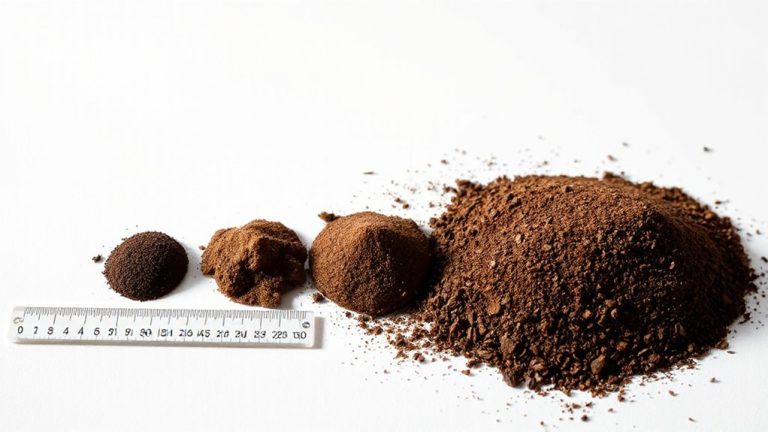
How Sumatra’s Lintong Region Produces Earthy, Low-Acidity Coffee
You get Lintong’s earthy, low-acidity coffee thanks to volcanic soil rich in minerals, which boosts bean density and deepens flavor. Shade-grown farming slows cherry ripening, enhancing sweetness and balance. The wet-hulling process, or *giling basah*, cuts fermentation time, lowering acidity while giving the coffee its bold, syrupy body. Grown at 1,100–1,400 meters, these beans mature slowly, preserving smoothness. There’s more to how tradition shapes this unique cup.
Notable Insights
- Lintong’s wet-hulling process shortens fermentation, reducing acidity and enhancing bold, earthy flavors.
- Volcanic soil rich in minerals contributes to deep, woodsy notes and dense, flavorful coffee beans.
- Shade-grown farming slows cherry development, improving sugar balance and bean density for smoother taste.
- Lower elevation drying slows moisture loss, influencing pH and yielding a low-acid, full-bodied profile.
- Cool highland altitudes between 1,100–1,400 meters promote slow bean maturation, boosting body and sweetness.
Why Lintong Coffee Stands Out for Low Acidity?
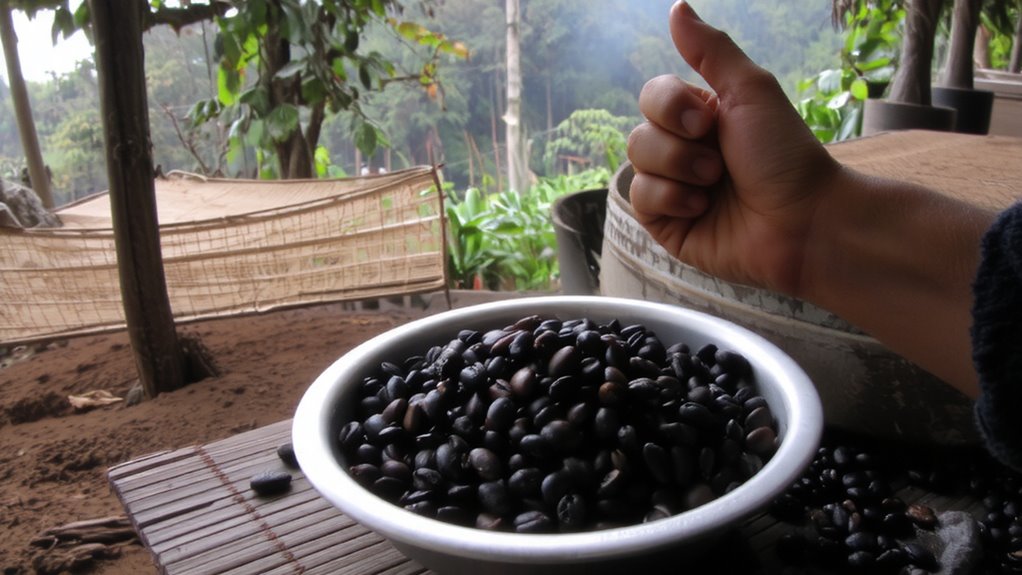
While many coffees highlight bright, tangy points, Lintong from Sumatra sets itself apart with particularly low acidity, making it a go-to for drinkers sensitive to acid or those who prefer a smoother cup. You’ll notice this trait stems from both the region’s unique fermentation process and the natural bean density. After harvesting, beans undergo a wet-hulling method called *giling basah*, which shortens fermentation time and reduces acid development. This step, combined with slower drying at lower elevations, influences the final pH balance. The dense structure of Lintong beans also resists over-extraction, allowing you to brew with confidence-especially with methods like French press or drip. While lower acidity can mean less complexity than high-acid African beans, Lintong delivers consistency and body. For your morning routine, that trade-off often makes sense.
How Volcanic Soil Shapes Lintong’s Earthy Flavor
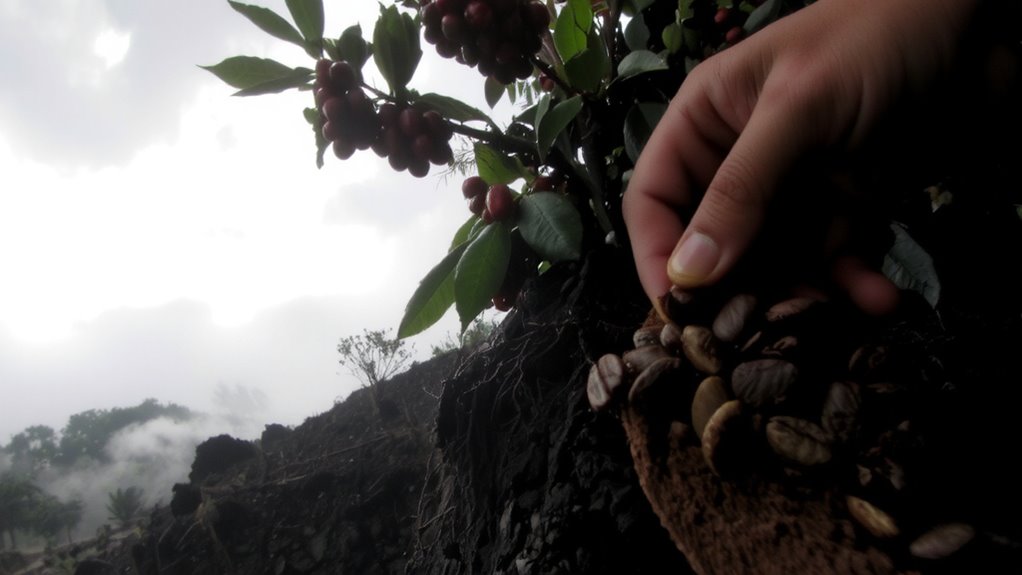
You’ve already seen how Lintong’s low acidity makes it a solid choice for smoother coffee, especially if you’re brewing at home and want to avoid harsh notes. But what gives it that distinct earthy flavor? It’s the volcanic soil. Packed with mineral richness from ancient eruptions, it feeds the coffee plants with essential nutrients. Combined with steady organic decomposition in the lush highlands, this creates a dense, nutrient-loaded base. The result? Beans with deeper, woodier tones and a full-bodied mouthfeel.
| Factor | Impact on Flavor |
|---|---|
| Volcanic ash | Enhances mineral richness |
| Organic decomposition | Adds earthy, compost-like notes |
| Iron-rich soil | Supports bean density |
| Low erosion | Maintains consistent soil quality |
| High microbial activity | Aids nutrient cycling |
This soil profile directly shapes the cup-ideal if you prefer bold, rustic notes without over-roasting.
The Role of Shade-Grown Farming in Smooth Coffee
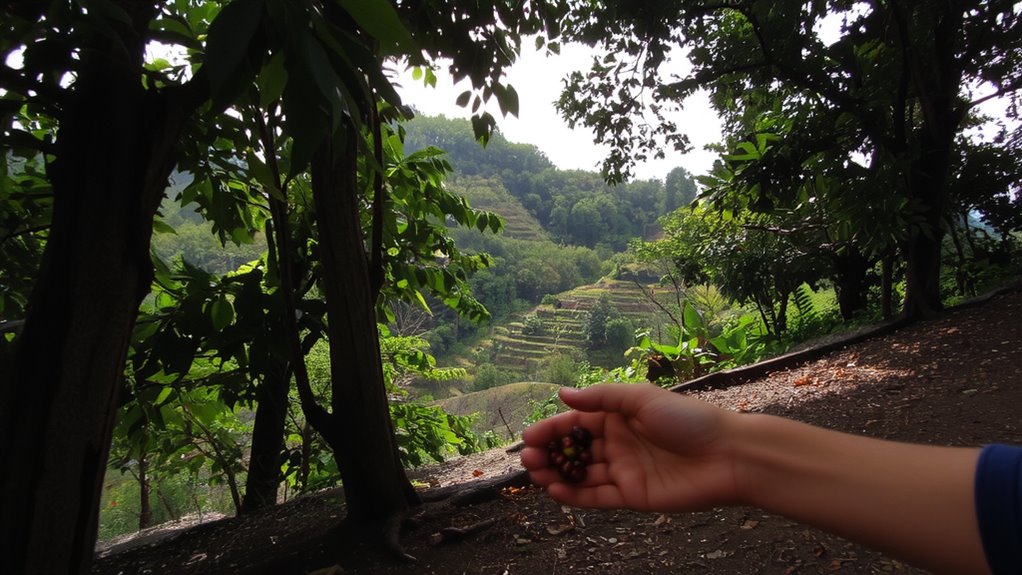
Most smallholder farms in Sumatra’s Lintong region grow coffee under shade trees, and this practice plays a key role in shaping a smoother cup. You’ll find that the shade slows cherry development, leading to denser beans with more balanced sugars. Canopy density matters-too thick, and yields drop; too thin, and beans risk overexposure. Farmers aim for about 30–50% coverage, often using native trees like lamtoro or fruit varieties. Tree diversity isn’t just ecological-it stabilizes microclimates and reduces pests naturally. This means fewer chemicals and more consistent flavor over time. Shade-grown coffee typically shows lower acidity and muted brightness, which aligns with Lintong’s profile. If you’re sourcing, look for farms maintaining mixed canopies, as they support bean uniformity. While full sun farming boosts short-term yield, it often sacrifices cup smoothness and long-term soil health-trade-offs you’ll want to weigh.
Wet-Hulling: How Giling Basah Builds Bold Body
When farmers in Sumatra process coffee using giling basah, they’re not just speeding up drying-they’re shaping one of the boldest, heaviest bodies in specialty coffee. You’ll taste the results: low acidity, deep earthiness, and a syrupy mouthfeel that stands out in the cup. This happens because beans are hulled while still wet, altering structural compounds. Fermentation control is limited, leading to complex, sometimes funky notes. Different drying methods follow-sun-drying on mats-but the quick turnaround risks over-fermentation if not monitored.
| Sensation | What You Feel |
|---|---|
| Heavy body | Like warm syrup coating your tongue |
| Muted acidity | Smooth, almost tea-like brightness |
| Lingering finish | Flavors stick around, deep and grounded |
You get a distinct profile shaped by tradition, practicality, and unique post-harvest choices.
Why Altitude Matters in Sumatra’s Coffee Highlands?
Altitude plays a key role in shaping the character of Lintong coffee, even after the giling basah process defines its body. You’ll find most farms between 1,100 and 1,400 meters above sea level, where terrain elevation slows bean development, boosting density and flavor complexity. Higher ground means cooler temperatures, which align with ideal climate patterns for Arabica plants-fewer pests, reduced disease pressure, and longer maturation. That slower ripening enhances sweetness and body while maintaining low acidity. But if you go too high-say above 1,500 meters-yields drop and harvesting gets tougher. At lower elevations, beans roast unevenly and often lack depth. So farmers stick to mid-to-high altitudes, balancing practicality with quality. When you buy Lintong coffee, check the elevation range; beans from 1,200+ meters typically deliver the most consistent, earthy profile you’d expect.
Traditional Farming vs. Modern Techniques in Lintong
While some farmers in Lintong still rely on age-old methods, others have adopted modern tools and practices to improve yield and consistency. You’ll find both approaches coexisting, each with clear trade-offs. Traditional growers depend on organic fertilization, using compost and natural mulch to nourish soil without chemicals-great for sustainability but slower in boosting production. They also stick to hand harvesting, which guarantees only ripe cherries are picked, improving bean quality but requiring more labor. Modern farms may use calibrated fertilizers and mechanical aids, speeding up growth and reducing effort, though sometimes at the cost of soil health. Hand harvesting remains common even on updated farms, since precision picking supports better grading. If you’re sourcing beans, know that traditional methods often mean smaller batches with more traceability, while modern techniques deliver volume and uniformity. Your choice depends on priorities: purity and care, or scale and predictability.
What Makes Lintong a Go-To for Mellow, Complex Brews?
Because the beans develop slowly in Sumatra’s warm, humid climate and absorb nutrients from rich volcanic soil, they end up dense and flavorful-perfect for roasting into a balanced cup. You’ll notice Lintong coffee has low acidity and a full body, making it ideal if you prefer smooth, mellow brews without bitterness. The unique processing method, often semi-washed (giling basah), enhances complexity, adding fermented notes and earthy depth. Look for herbal undertones-like lemongrass or tea-that emerge clearly when brewed with a French press or pour-over. These traits stand out best with medium to dark roasts, which preserve body without scorching delicate flavors. Compared to brighter Sumatran regions like Mandheling, Lintong offers more nuance and less sharpness. For home brewers, a burr grinder and water at 195–205°F deliver clean, consistent results. Lintong’s profile works well daily, especially if you skip sugar and want complexity without intensity.
On a final note
You get Lintong’s smooth, earthy coffee thanks to volcanic soil, high altitudes, and shade growing, all reducing acidity. The wet-hulling method, or *giling basah*, adds bold body and depth. Traditional farming plays a role, but some modern tools improve consistency. If you want a mellow, complex cup without bitterness, try beans from Sumatra’s highlands. Grind fresh, brew with a French press or pour-over, and skip extra heat to preserve flavor.