Unlock the Potential of Pour Over Coffee by Controlling Water Temperature and Flow Rate
You get better pour over coffee by using water between 195–205°F and pouring at a steady pace in a spiral motion. Too hot and your coffee turns bitter; too cool and it tastes weak. Light roasts need hotter water, while dark roasts do best just under boiling. Pour too fast and the coffee under-extracts-too slow and it over-extracts. A gooseneck kettle like the Fellow Stagg EKG and a digital scale help you stay precise. There’s more to fine-tuning your brew just ahead.
Notable Insights
- Use water between 195–205°F to optimize extraction, adjusting slightly lower for dark roasts to avoid bitterness.
- Maintain a steady pour speed with a spiral motion to ensure even saturation and balanced flavor.
- Light roasts benefit from higher temperatures (up to 205°F) to extract complex sugars and acids fully.
- Pair a gooseneck kettle with a precision scale to control water flow and maintain consistent brew times.
- Adjust grind size and pour rate together to correct under- or over-extraction and refine taste balance.
Control Water Temperature for Better Pour Over Coffee
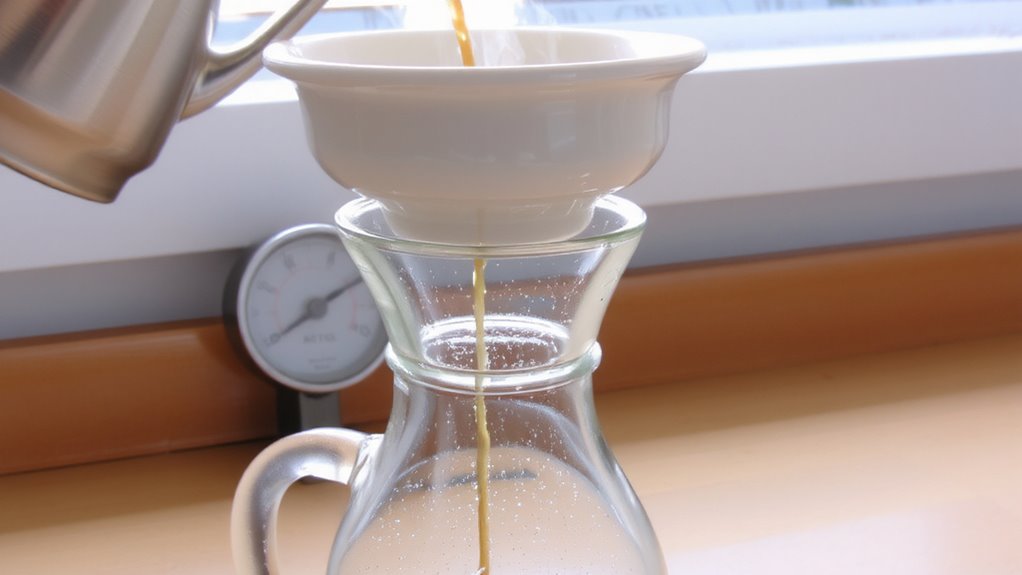
While you might be tempted to just boil water and start pouring, using water that’s too hot can scorch your coffee grounds and lead to bitter flavors. Aim for 195–205°F-the sweet spot for most pour overs. Go too cool, and extraction suffers; too hot, and you’ll pull harsh notes. Your gooseneck kettle should let you control this precisely-many electric ones have built-in temp settings. Water chemistry matters just as much: balanced minerals help extract flavors evenly, while overly soft or hard water skews taste. Pair proper temperature with consistent grind consistency-uneven particles extract unevenly, regardless of temp. A burr grinder beats blade types every time. For example, a Baratza Encore delivers reliable results. If your brew tastes flat or sharp, revisit both temp and grind. Tweaking both gives you control, clarity, and better coffee. A high-quality electric kettle can make all the difference in achieving precise temperature control.
Pour at the Right Speed for Even Extraction
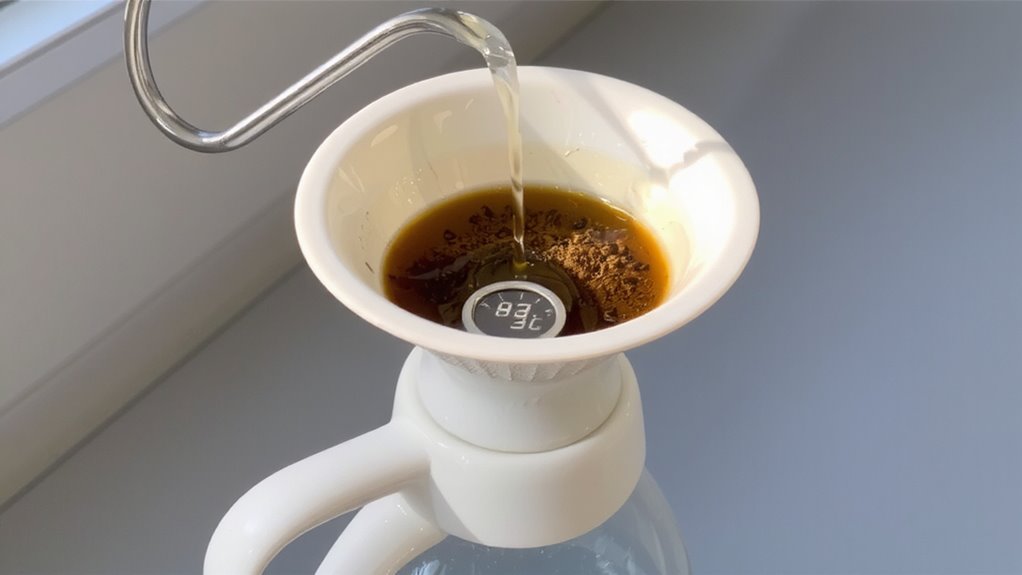
You’ve nailed the water temperature, but how fast you pour matters just as much. Pouring too fast shortens brew time, leading to weak, under-extracted coffee. Too slow, and you risk over-extraction, bringing out bitter, harsh notes. The key is steady flow consistency. Aim for a smooth, spiral pour with a gooseneck kettle-it gives you precision most regular kettles lack. For a standard 15g coffee dose, target a brew time of 2:30 to 3:30 minutes. This range balances extraction without rushing or dragging. If your brew finishes too fast, slow your pour; if it takes too long, speed up slightly. Consistency across brews means taste you can replicate, not guesswork. Using a scale helps, since pour speed affects total water delivery. Adjust based on grind: finer grinds slow flow, requiring a gentler hand. Mastering this builds better control than any gadget alone. A crucial part of refining your technique is exploring different manual brewing methods to understand how each affects flavor and extraction.
Use the Best Water Temperature for Your Roast Level
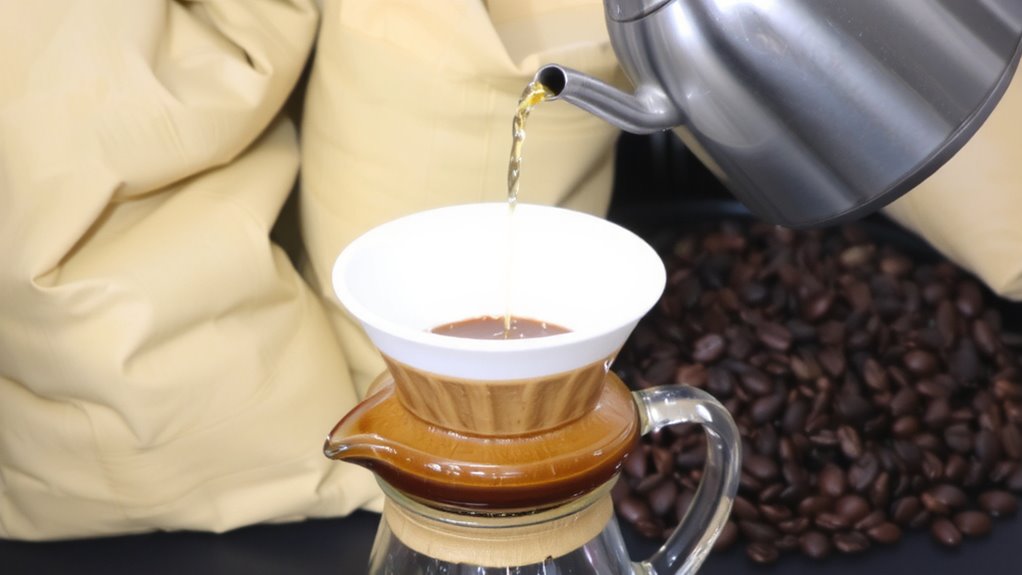
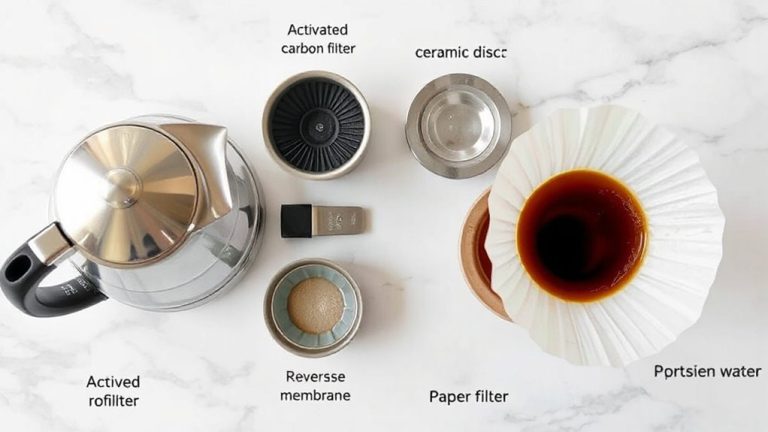
Since roast level affects how coffee dissolves during brewing, adjusting your water temperature helps match the roast’s characteristics for balanced flavor. For light roasts, use water between 195°F and 205°F-they’re denser and need higher heat to extract fully. These beans often come from regions like Ethiopia or Kenya, where the bean origin contributes to bright, complex notes that respond well to hotter water. Medium roasts do best around 200°F, balancing sweetness and acidity. Dark roasts, like those from Sumatra, burn easier, so drop the temp to 190–195°F to avoid harshness. Your water chemistry matters too-hard water can over-extract, while soft water may under-extract. Always use filtered water for consistent results. A gooseneck kettle with a thermometer helps maintain precision. Match temp to roast, and you’ll get cleaner, more accurate flavors from your beans. The Perfect Coffee Brewing Temperature is essential for maximizing flavor clarity and achieving optimal extraction.
Fix Bitter or Weak Coffee: Solve Temp and Pour Mistakes
Getting the temperature right matters, but even with ideal heat, poor pouring can still leave you with bitter or weak coffee. If your brew tastes harsh, you might be over-extracting due to water sitting too long on fine grounds-check your grind consistency. On the flip side, weak coffee often comes from under-extraction, where water flows too fast over coarse grounds or pours too quickly. A steady, spiral pour helps distribute water evenly, improving extraction. Don’t overlook coffee freshness, either-stale beans lose sweetness and complexity, making even well-poured coffee taste flat. Always use beans within two to four weeks of roasting and grind them just before brewing. Adjusting your technique based on roast level and bean age makes a clear difference. Small tweaks in pour speed and grind size, combined with fresh beans and uniform particles, balance flavor and fix most issues fast.
Use the Right Kettle and Scale for Precision Pouring
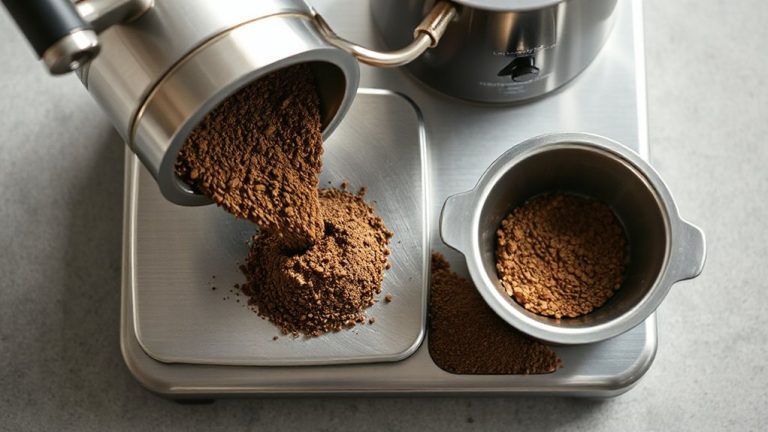
A gooseneck kettle is essential for precision pouring, giving you control over water placement and flow. Gooseneck kettles have a narrow, swan-like spout that lets you pour slowly and accurately, which is key for even saturation. Models like the Fellow Stagg EKG or Hario V60 Buono heat water evenly and let you set exact temperatures. You’ll want one with temperature control to stay within the ideal 195–205°F range. Pair it with digital scales for best results. Digital scales track both time and weight, helping you hit the right coffee-to-water ratio-usually 1:15 to 1:17. Look for scales with a 0.1-gram accuracy and a built-in timer, like the Timemore Black Mirror or Acaia Pearl. Without these tools, pouring becomes guesswork. Using gooseneck kettles and digital scales together improves consistency and flavor, making every cup more predictable and balanced.
On a final note
You’ll get better pour over coffee by controlling water temperature and pour speed. Use hotter water (195–205°F) for light roasts, slightly cooler for dark. Pour steadily to avoid under or over-extraction. A gooseneck kettle, like the Fellow Stagg, gives precision. A scale helps keep water and coffee ratios consistent. These tools and techniques fix weak or bitter coffee fast. Small tweaks make a real difference in flavor.