Arusha Coffee: Tanzania’s High-Altitude Bean Explained
You get balanced brightness from Arusha coffee because its dense beans grow slowly at high altitudes on Mount Meru, developing more sugar and acidity. Volcanic soil adds minerals that sharpen clarity without harshness, while wet processing removes mucilage cleanly to preserve a bright, even profile. Light to medium roasts highlight citrus and stone fruit notes without tipping into sharpness. The result is a clean, vibrant cup with smooth acidity-ideal for pour-over. There’s more to how terroir and technique shape this balance.
Notable Insights
- Grown at high altitudes above 1,500 meters, Arusha beans develop slowly, enhancing sugar and acid balance for bright yet smooth flavors.
- Volcanic soil from Mount Meru provides rich minerals that contribute to a clean, vibrant cup with pronounced citrus and floral notes.
- High bean density ensures even roasting, preserving delicate acids that deliver balanced brightness in the final brew.
- Wet processing with controlled fermentation removes mucilage cleanly, maintaining clarity and bright flavor without excessive sourness.
- The Arusha variety’s inherent sweetness and stone fruit notes complement its citrus acidity, creating a harmonious and complex cup profile.
What Is Arusha Coffee: And Why Does It Stand Out?
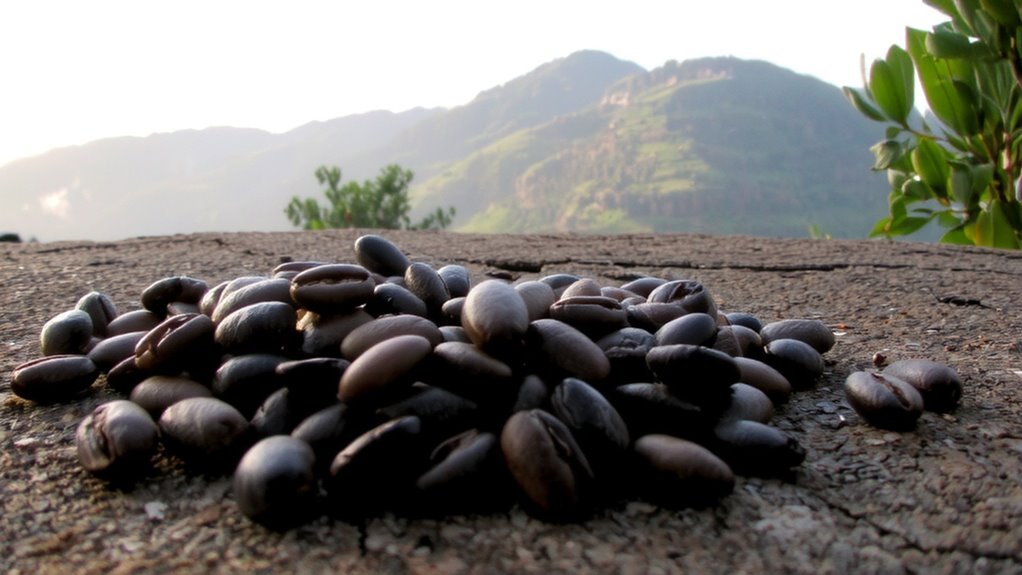
What makes Arusha coffee stand out in Tanzania’s diverse coffee scene? It starts with its unique Arusha origins-grown primarily in the northern slopes near Mount Meru, where elevation and climate support slow bean development. You’ll notice the bean morphology is distinct: medium-sized, slightly elongated, with a curved crease, often resembling Ethiopian heirlooms but denser due to the altitude. This structure affects roasting-expect more even heat penetration and less breakage during grinding. Because of their shape and density, Arusha beans respond well to pour-over and filter brewing, highlighting clarity and acidity. While not as widely known as Bourbon or Typica, Arusha offers a balanced cup with floral and citrus notes when properly processed. You’re better off using a gooseneck kettle and a medium-fine grind to maximize extraction without over-brewing.
How Mount Meru’s Volcanic Soil Shapes Arusha’s Flavor
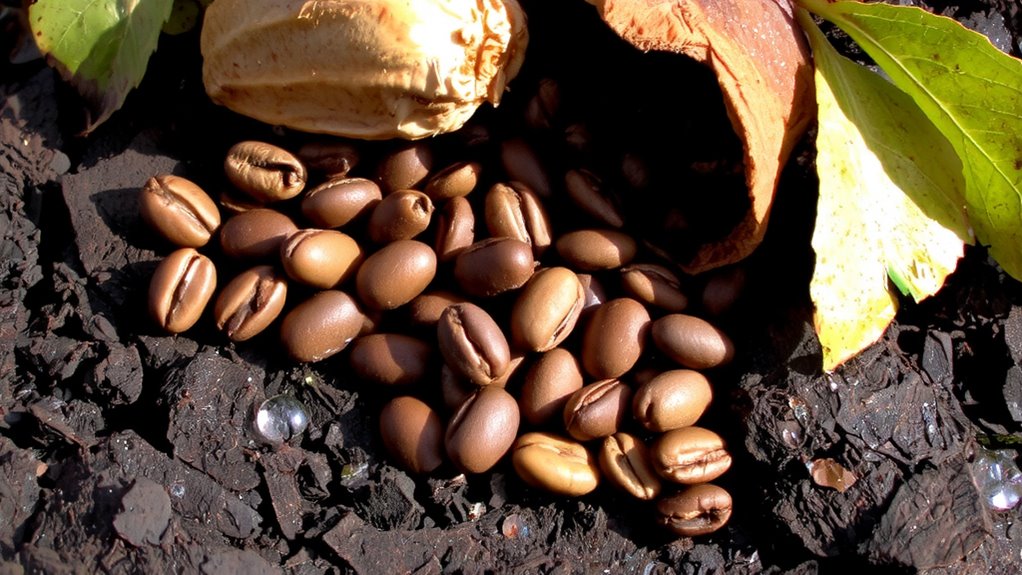
Mount Meru’s volcanic soil gives Arusha coffee its signature mineral richness, and you’ll taste the difference in the cup. The soil composition here is packed with volcanic minerals like potassium and magnesium, which help the Arusha plants absorb nutrients efficiently. This directly influences the coffee’s clean, bright profile with subtle earthy depth. You’re not just sipping altitude-grown beans-you’re tasting geology.
| Feature | Benefit |
|---|---|
| Volcanic minerals | Boost plant health and bean density |
| Rich soil composition | Enhances nutrient uptake and root development |
| Natural drainage | Prevents waterlogging, supports consistent growth |
| Organic matter | Sustains microbial activity for long-term fertility |
These conditions create resilient crops and more uniform beans, making Arusha a reliable choice for filter brewing. You’ll notice better clarity and balance, especially with pour-over or drip methods.
Why High Altitude Grows More Complex Arusha Beans
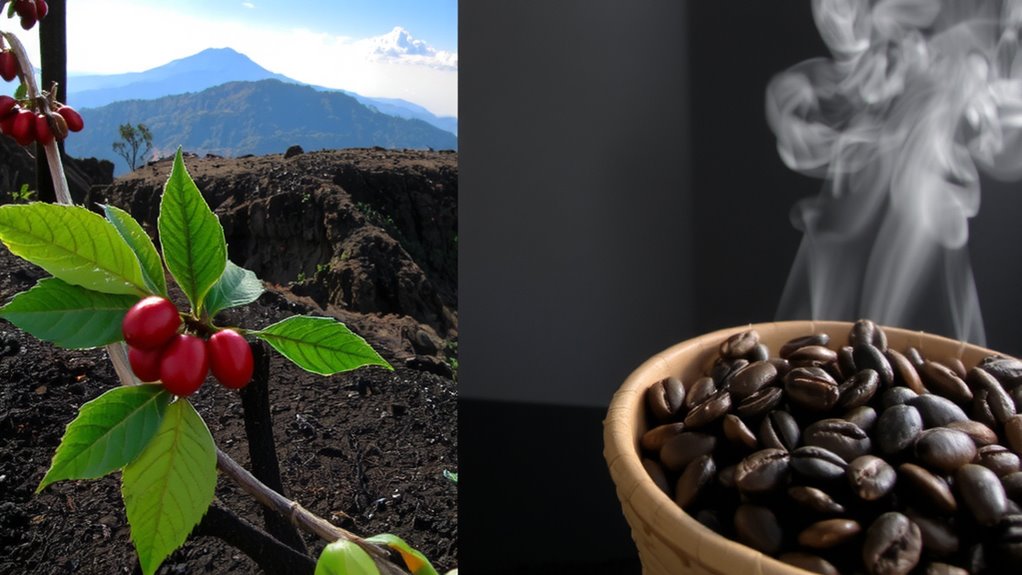
You already know the volcanic soil around Arusha adds mineral depth and promotes healthy, dense beans, but elevation plays just as strong a role in shaping flavor. Grown above 1,500 meters, Arusha beans develop higher density because cooler air slows maturation, letting sugars build gradually. That bean density improves roast consistency-dense beans absorb heat evenly, reducing defects. You’ll notice this as smoother acidity and layered sweetness in the cup. Just as essential is temperature variation: warm days and sharp nighttime drops stress the plant slightly, boosting complexity. That stress encourages the bean to store more nuanced compounds, not just sugar. Think of it like alpine grapes developing more balanced profiles. For best results, use a precise roaster that responds to bean density-like a Probat or even a high-end home roaster with good airflow control. It preserves what altitude carefully built.
How Wet Processing Preserves Arusha’s Bright, Clean Taste
While altitude shapes the structure of Arusha beans, it’s wet processing that locks in their bright, clean character. You’ll see this method used widely in Tanzanian cooperatives like those around Mount Meru. After depulping, the beans are fermented in water to break down mucilage, and your success hinges on precise fermentation control-typically 12 to 36 hours. Too long, and you risk sour, over-fermented notes; too short, and the beans retain unwanted residue. Clean water matters just as much. Poor water quality introduces off-flavors and inconsistent results. Stations using fresh spring or filtered water produce more stable, vibrant profiles. After washing, beans are soaked in clean tanks to remove remaining sugars. Then they’re sun-dried on raised beds. This full wash process, when done right, preserves the Arusha variety’s signature clarity and brightness-no guesswork, just disciplined execution.
Tasting Notes: Citrus, Stone Fruit, and Honey in Every Sip
That bright, clean taste preserved by proper wet processing shows up clearly in the cup, where Arusha beans reveal their distinctive flavor profile. You’ll notice crisp citrus notes-like orange zest or lemon-balanced by ripe stone fruit, such as peach or apricot, offering complexity without sharpness. A subtle floral aroma emerges as the coffee cools, hinting at jasmine or bergamot, especially when brewed with a pour-over like the Hario V60 or Chemex. The balanced sweetness mimics fresh honey, rounding out the cup without added sugar. For best results, use freshly ground beans, water just off the boil (around 200°F), and a medium-fine grind. These flavors come through clearest in light to medium roasts, which preserve origin characteristics better than darker roasts. Avoid over-extraction-keep brew time between 2:30 and 3:30 minutes to maintain clarity and avoid bitterness.
Why Arusha’s Acidity Feels Smooth, Not Sharp
Because Arusha coffee grows at high elevations-often above 1,500 meters-the beans develop slowly, which helps build dense cell structures and a more even acid profile. You’ll notice the acidity isn’t sharp or jarring; it’s bright but rounded, like lemon zest diffused in honey. That smoothness comes from balanced sweetness that tempers the tang, giving each cup stability without dullness. You’re also likely to pick up floral undertones-think rose or jasmine-that weave through the background, adding complexity without perfume-like intensity. These traits make Arusha easier to roast evenly and brew consistently, whether you’re using a pour-over or espresso machine. Unlike some high-acid coffees that demand precise water chemistry to avoid sourness, Arusha stays harmonious even with slight variances. It’s a practical choice when you want brightness you can rely on, not chase.
Why Specialty Roasters Are Betting Big on Arusha Beans
Arusha beans are turning heads in the specialty coffee scene, and for good reason. You’ll find roasters prioritizing them because of their clean, balanced cup profile with that signature smooth brightness. What really sets them apart isn’t just taste-it’s traceability. Roasters can build direct trade relationships with Tanzanian farmers, ensuring fair prices and consistent quality. That access matters, especially when you’re roasting for discerning customers who care about origin. Plus, many Arusha growers use sustainable farming practices, rotating crops and minimizing chemical inputs, which improves soil health and long-term yield. These factors mean more stable supplies and better beans over time. For you, that translates to easier sourcing and a product that stands out in a crowded market. If you’re relying on freshness and ethics as selling points, Arusha beans offer a practical, scalable choice without sacrificing cup quality.
On a final note
Arusha beans give you bright, balanced cups thanks to volcanic soil and high altitudes in Tanzania. Wet processing keeps their citrus and stone fruit notes clean and crisp. You’ll notice smooth acidity-never harsh-ideal for pour-over or drip methods. For best results, use a burr grinder and water just off the boil. Compared to sharper Ethiopian beans, Arusha offers more rounded brightness, making it a solid choice for daily specialty coffee.