How to Calibrate a Baratza Encore Grinder for Consistent Espresso Dosing
Start with a fresh, medium to medium-dark roast-like a Colombian or Guatemalan-dosed at 18–20g. Clean your Baratza Encore regularly by brushing the burrs and wiping down parts. Set the grind between 5 and 8, then adjust finer or coarser to hit a 1:2 yield (36–40g) in 25–30 seconds. Use consistent tamping pressure and brew temp. Small changes make big differences, so tweak one variable at a time-you’ll see how each affects flavor and flow.
Notable Insights
- Choose a consistent medium to medium-dark roast espresso bean, like Colombian or Guatemalan, to avoid extraction variability during calibration.
- Set a stable dose of 18–20g and target a 1:2 brew ratio (36–40g yield) to establish a repeatable baseline for testing.
- Clean the Baratza Encore thoroughly by brushing between burrs and removing old grounds to ensure grind consistency and accuracy.
- Begin grinding between settings 5 and 8, adjusting finer or coarser based on shot time and taste, not dose.
- Pull test shots, aiming for 25–30 seconds extraction time, and tweak grind size incrementally while keeping tamping pressure and temperature steady.
Pick a Consistent Espresso Bean for Testing
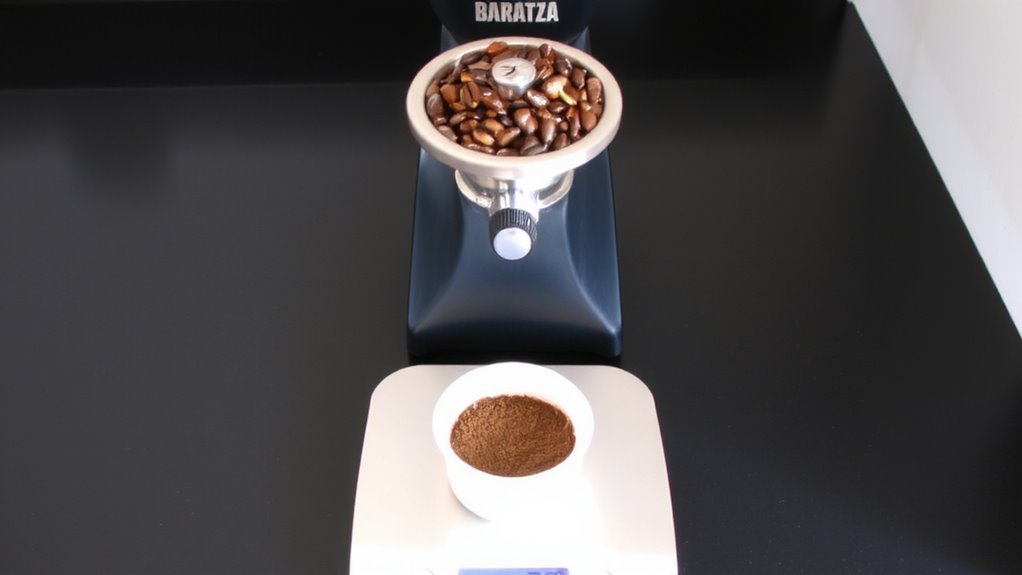
Consistency starts with the bean-your grinder can’t dial in properly if the input keeps changing. You need a stable reference, and that means picking one espresso blend or single origin and sticking with it during calibration. Choose a bean with a consistent roast level-medium to medium-dark works best for the Baratza Encore, since it balances clarity and body without over-extracting. Avoid very light or very dark roasts; they can skew your results. Also, check the roast date and buy from roasters who list bean origin and roast level clearly. A Colombian or Guatemalan bean, for example, often offers the uniformity you need. Don’t switch beans mid-process. Changing origin or roast alters density and oil content, which affects grind size and extraction. Stay with one known variable so you can accurately adjust your grinder. For reliable performance, consider trying one of the top-rated espresso beans recommended by expert reviews.
Set Your Dose and Yield Targets
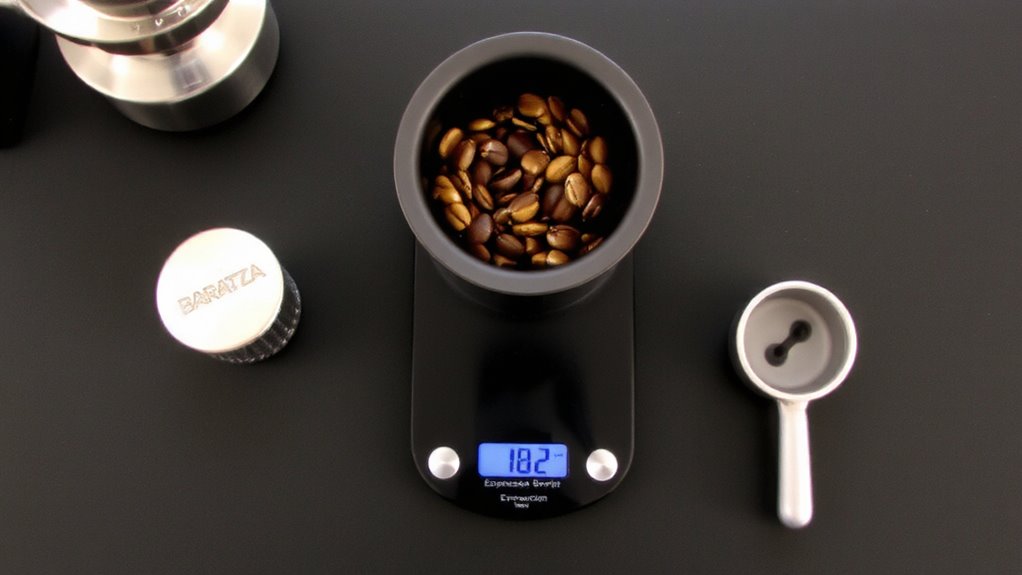
How do you know if your espresso shot is on point? You start by setting clear dose and yield targets. For most double shots, aim for a 18–20g dose and a 36–40g yield in 25–30 seconds. These numbers give you a baseline to evaluate flavor and adjust later. Dose consistency matters-if your grind settings change but your dose doesn’t, your results stay comparable. Use a scale to measure both input (dose) and output (yield) accurately. Yield accuracy helps you spot small grind shifts before taste does. Don’t wing it; write down each dose and yield. That way, you’ll see patterns over time. If shots run too fast or taste weak, adjust the grind, not the dose. Keeping targets consistent lets you isolate variables and fine-tune your Baratza Encore reliably.
Clean Your Baratza Encore First
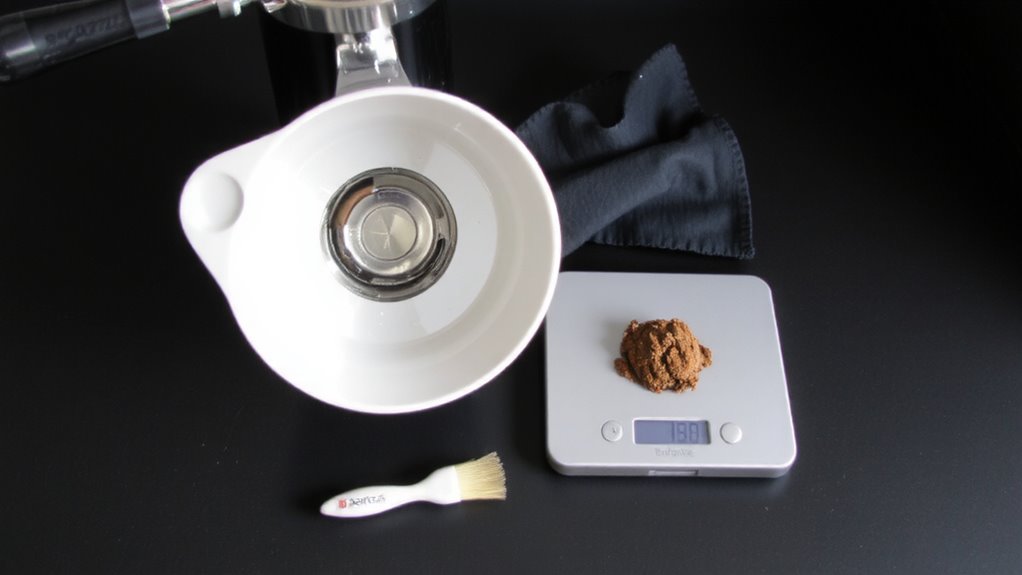
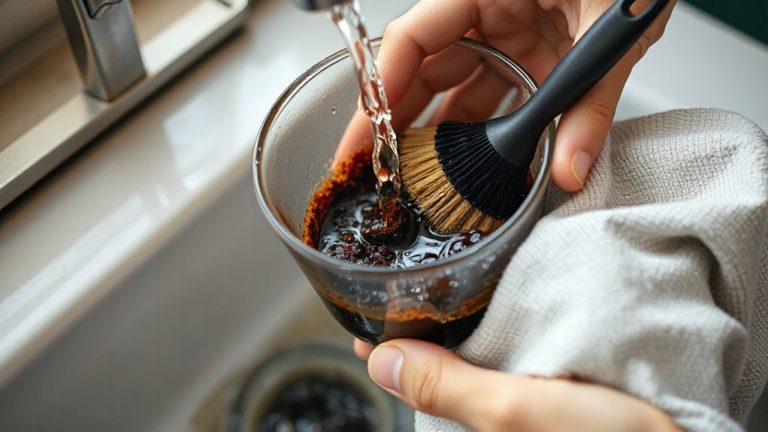
Before you start tweaking grind settings or chasing the perfect shot, make sure your Baratza Encore is clean-residual oils and old grounds can throw off your results, even if your dose and yield are spot on. Old coffee buildup affects grinder maintenance, clogs the burrs, and risks contaminating fresh beans, which undermines bean freshness and shot consistency. Start by powering off and unplugging the grinder. Remove the hopper and bean hopper gasket, then brush out old grounds with a dry brush or soft cloth. Use a small brush to clean between the burrs, making sure to dislodge any trapped particles. Wipe the exterior with a damp cloth if needed. Avoid using water inside the grinder-moisture damages the motor and promotes mold. Regular cleaning after every few days of use preserves performance and extends the grinder’s lifespan. Think of it as essential upkeep, like replacing filters or descaling your espresso machine. Upgrading to reusable Aeropress filters can reduce waste and enhance your brewing experience over time.
Dial in Your Grind Setting
Why does your espresso pull too fast or taste bitter, even with fresh beans and a clean grinder? Chances are, your grind setting’s off. The Baratza Encore’s stepped adjustments aren’t perfect for espresso, but you can still dial it in closely. Start between settings 5 and 8, then adjust finer or coarser based on taste. Good grind consistency matters-uneven particles lead to mixed extraction. If your grounds look gritty or dusty, check the burr alignment; misaligned burrs crush instead of cutting, hurting consistency. Use a burr alignment tool or the coin method to center the inner burr. Tighten the locking ring evenly. This improves particle uniformity, which helps extraction stability. Even small tweaks can make a real difference. Trust your taste and timing-once you find a sweet spot, stick close unless beans or humidity change. For more precision, consider upgrading to a flat burr grinder with finer adjustment capabilities.
Run Test Shots and Check Timing
What’s your espresso pulling in under 20 seconds or dragging past 30? That means your grind isn’t quite right. Start running test shots using the same dose and check the shot volume-aim for 1:2 ratio, like 18g in, 36g out. Time the pull from start to finish. If it’s too fast, your grind’s too coarse; too slow, it’s too fine. Remember, grinder temperature affects consistency-after a few shots, the burrs warm up and the grind can shift slightly, changing extraction. Let the grinder rest if you’re doing multiple tests close together. Keep your shot volume consistent between trials so you can isolate timing changes. Don’t adjust your dose here-stay focused on grind and time. Each adjustment on the Encore should be small, half a click at a time. Write down each result so you can track progress without guessing.
Fine-Tune for Balanced, Repeatable Shots
Once you’ve established a stable shot time close to 25–30 seconds, you can start dialing in for flavor and consistency. Make small grinder adjustments-usually one notch at a time-and pull test shots after each change. Pay close attention to how tamping pressure affects extraction; uneven or excessive pressure creates channeling, leading to unbalanced shots. Use a calibrated tamper and aim for 30 pounds of consistent force. Also, verify your machine maintains a steady shot temperature-ideally between 195°F and 205°F-as fluctuations alter flavor clarity. If your espresso tastes bitter, try a coarser grind or lower temperature; if sour, go finer or increase heat slightly. Always change only one variable at a time. With the Encore’s step adjustments, repeatable dosing is achievable. Track your settings in a notebook or app to replicate results. Patience and precision here make a real difference in daily performance.
On a final note
You’ve cleaned the Encore and picked a consistent bean, so stick with that setup. Lock in your dose and grind, then adjust in small clicks to hit your shot time-usually 25–30 seconds for 1:2 brew ratio. If flow’s too fast, go finer; too slow, go coarser. Test, tweak, and repeat. The Encore won’t match high-end grinders, but it delivers solid, repeatable results if kept clean and dialed in.