Using Filter Paper Correctly: Tips for Baristas to Improve Pour Over Quality
Rinse your filter to remove paper taste and preheat your brewer-especially with unbleached filters. Use cone #4 for Hario V60, square for Chemex; the right shape prevents leaks. Center the filter to stop channeling, and press it gently into place. Match grind to filter thickness: medium-fine for thin papers, coarse for thick metal filters. Pour evenly in slow spirals with a gooseneck kettle. Get these steps right, and you’ll fix most sour, bitter, or weak brews before they start. More tweaks await to refine your results.
Notable Insights
- Rinse filter paper to eliminate paper taste, preheat equipment, and ensure proper filter seating.
- Select the correct filter shape to match your brewer and prevent leaks or uneven extraction.
- Center the filter paper to avoid channeling and promote uniform water flow through the coffee bed.
- Match grind size to filter thickness to prevent clogging or excessive flow and optimize extraction.
- Pour water evenly in concentric circles to prevent wet spots and ensure balanced flavor development.
Rinse Your Filter Paper to Remove Taste and Preheat
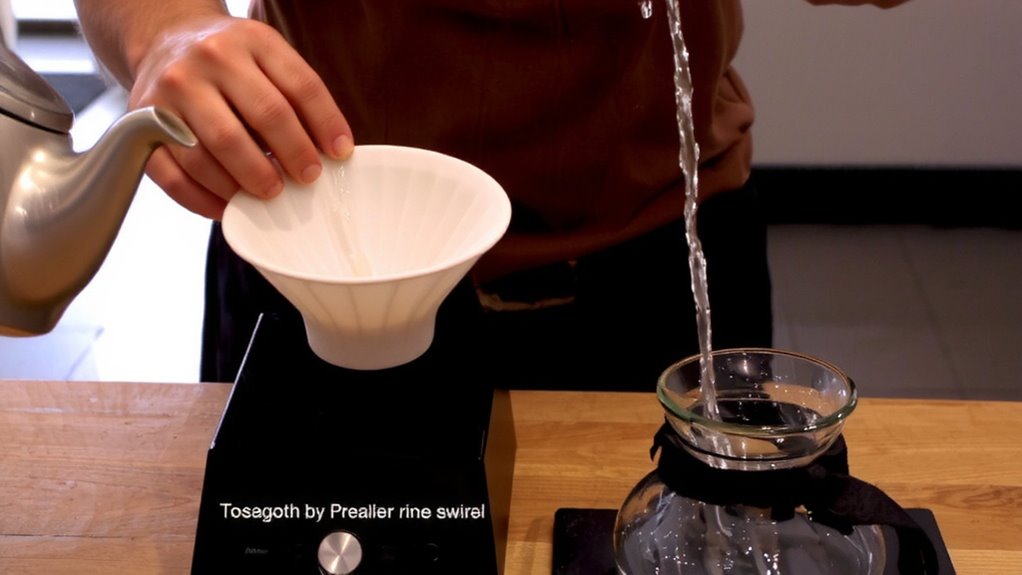
While your gear might seem ready to go, rinsing your filter paper first can make a real difference in both flavor and performance. That papery aftertaste? That’s “paper taste,” and it can seep into your brew if you skip this step. Rinsing removes loose fibers and eliminates most of that unwanted flavor, especially with unbleached filters. Plus, you get preheating benefits-rinsing with hot water warms the dripper and carafe, stabilizing brewing temperature from the first pour. A colder start can slow extraction and mute flavors. Just a quick rinse takes seconds and uses little water. It also seats the filter smoothly against the brewer walls. While bleached papers have less paper taste, rinsing still delivers better consistency. You’ll notice cleaner, brighter cups with more accurate flavor profiles-exactly what matters in a professional setting. Skip it, and you risk compromising quality unnecessarily. Choosing the right best pour-over coffee filters can further enhance your brewing results by ensuring optimal flow and filtration.
Pick the Right Filter Paper Shape for Your Brewer
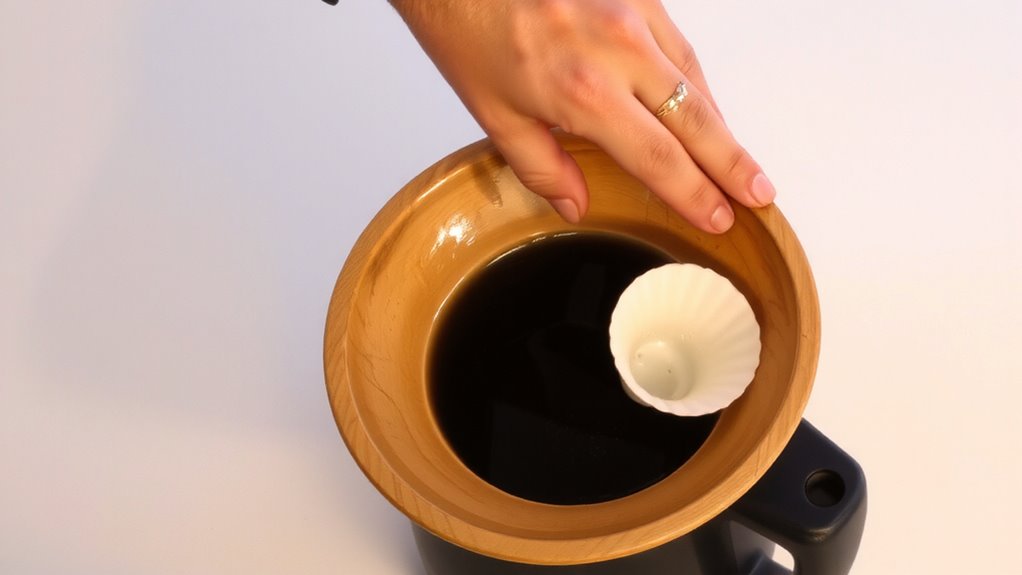
Matching the correct filter paper shape to your brewer isn’t just about fit-it’s about function. The wrong shape leads to poor brewer compatibility, causing leaks, overflows, or uneven extraction. For example, a cone-shaped paper like a #4 fits most Hario V60 brewers, while flat-bottom filters like those for Chemex require a specific square shape. Paper texture also matters-thicker papers, such as those from Chemex, filter more oils and reduce bitterness but can slow flow. Thinner papers, like many generic V60 options, allow faster drainage and highlight brighter notes. Always check your brewer’s manual for recommended filter types. Using the right shape guarantees even water distribution and proper contact time. Don’t guess-match the filter to your brewer’s design for reliable results every time. Based on performance and consistency, the best V60 filters enhance clarity and balance in your cup.
Center the Filter Paper to Prevent Channeling
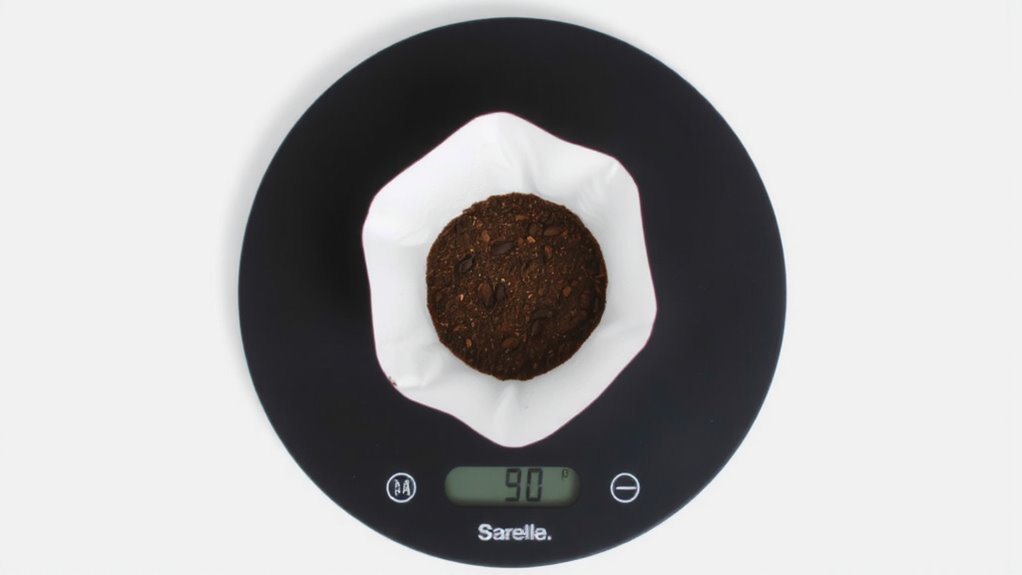
If you want even extraction, make sure the filter sits perfectly centered in your brewer-any tilt or gap lets water sneak through one side, which creates channeling and uneven brewing. Proper filter alignment guarantees water flows evenly through the coffee bed. A misaligned filter can cause brewing to finish too fast or produce sour, weak coffee. Paper positioning matters most right after you place the filter: press it gently into the sides so it sticks, and check that the top edge sits level all the way around. With cone brewers like the V60 or Kalita Wave, even a small gap near the spout can lead to problems. Rinsing the filter first helps it cling better and removes paper taste, but don’t skip checking its position afterward. Taking five seconds to center the filter improves consistency. Good filter alignment isn’t flashy, but it’s a simple step that makes your pour-over flavor more balanced and repeatable every time. Choosing the right pour-over coffee dripper can also influence how easily you maintain proper filter placement and brewing performance.
Match Grind Size to Your Filter Paper Thickness
A lot of home brewers overlook how filter thickness affects flow and extraction, but it’s one factor you can’t afford to ignore. Thin filters flow faster and increase extraction, but raise bleed through risk. Thick filters slow water, lowering absorption rate and reducing fines in your cup. Your grind size must match-otherwise, you’ll face clogging or weak coffee. Use the table below to balance these factors:
| Filter Type | Grind Size | Effect |
|---|---|---|
| Thin (e.g., Hario #1) | Medium-fine | Faster flow, higher bleed through risk |
| Medium (e.g., Chemex) | Medium-coarse | Balanced absorption rate, fewer fines |
| Thick (e.g., Able Kone) | Coarse | Slow flow, low absorption rate |
Match your grind to filter specs, and you’ll improve clarity and consistency every brew.
Pour Evenly to Avoid Wet Spots and Channeling
While it might seem minor, how you pour water over the coffee bed makes or breaks your brew’s consistency. Uneven pouring leads to wet spots-areas where water pools-and channeling, where water carves paths through the grounds, leaving much under-extracted. To prevent this, focus on your water flow: keep it steady and controlled, using a gooseneck kettle for precision. Start your pour from the center and spiral outward, then back inward, ensuring even saturation across the entire bed. Pour in slow, concentric circles, avoiding the edges of the filter. Too fast or erratic water flow disrupts the coffee bed, promoting channeling. A consistent, mindful pour promotes uniform extraction, improving clarity and balance. Practice makes perfect-small, deliberate adjustments to your technique yield better results than gear upgrades. Aim for smooth, repeatable pours every time.
Fix Bitter, Sour, or Weak Coffee From Filter Mistakes
Your pour sets the foundation, but even with perfect technique, filter brewing can still go wrong if other variables are off. If your coffee tastes bitter, the water temperature might’ve been too high-aim for 195–205°F. Too hot and you extract harsh compounds fast. Sour coffee? The water’s probably too cool or your brew time is too short, leaving acids underdeveloped. Weak coffee often means your grind’s too coarse or brew time’s too fast, so water doesn’t pull enough flavor. Adjust grind size first: finer slows brew time and boosts extraction. Check your scale and timer-target 2.5 to 3.5 minutes for most pour overs. Use a gooseneck kettle for better control. Paper filters can also absorb oils, muting body, so consider thickness-unbleached filters may add papery taste if not rinsed.
On a final note
Rinsing your filter removes paper taste and preheats the brewer, which helps stabilize temperature. Use cone filters for Kalita Wave and folded ones for Chemex-the right fit matters. Center the filter so water flows evenly through the grounds. Pair a finer grind with thick filters, coarser with thin ones. Pour in steady spirals to avoid dry spots or channeling. Fix off-flavors by adjusting these details-small tweaks make stronger, cleaner coffee.