Aeropress Timing Guide: 1–3 Minute Brew for Best Flavor
You control flavor in your Aeropress by dialing in infusion time-usually 1 to 3 minutes-for balanced extraction. Too short, and your coffee tastes sour; too long, it turns bitter. Light roasts and coarser grinds need more time, while fine grinds or older beans require less. Keep water between 175°F and 205°F, and stir gently to help even extraction. Time from first pour for consistency. Get this right, and you’ll access cleaner, fuller cups every time-small tweaks reveal even better results.
Notable Insights
- Precise infusion timing ensures optimal extraction, balancing acidity, sweetness, and bitterness in Aeropress coffee.
- Brew times under 1 minute risk under-extraction, yielding sour, weak, and underdeveloped flavors.
- Exceeding 2.5 to 3 minutes increases over-extraction, resulting in bitter, flat, and harsh coffee.
- Ideal brew times (1–3 minutes) vary by method, grind size, and roast level for full flavor development.
- Consistent timing starting at water contact improves repeatability and helps adjust for bean freshness and grind.
What Is Infusion Timing in Aeropress Brewing and Why It Matters
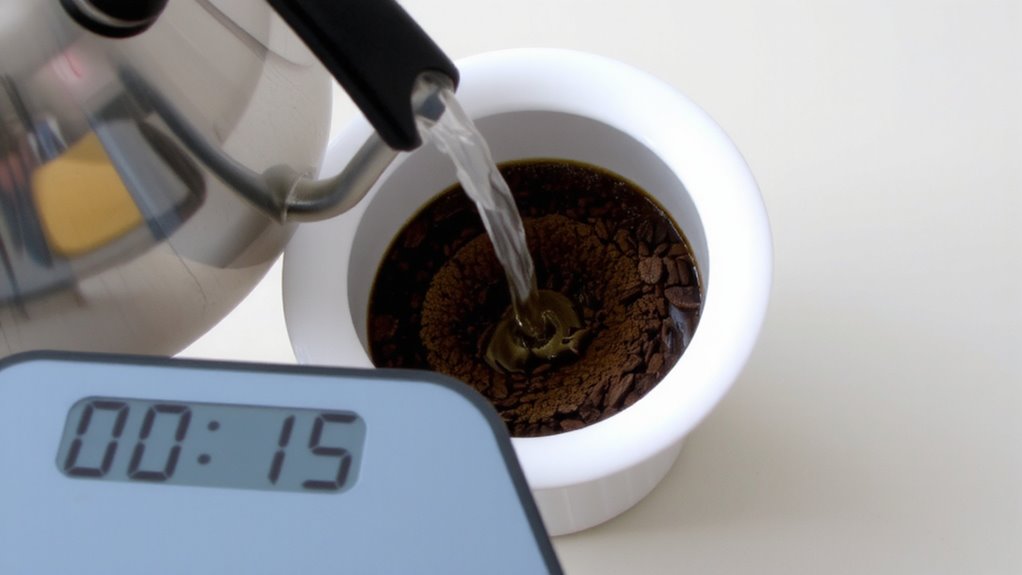
Why does your coffee sometimes taste too bitter or too weak, even when you’re using the same beans and grind size? Because infusion timing-the period water interacts with coffee grounds-directly affects extraction. If it’s too short, your brew tastes weak; too long, and it turns bitter. Water temperature plays a key role: too hot (above 205°F) speeds extraction, risking bitterness, while cooler water slows it, possibly under-extracting. Your agitation method matters too-stirring vigorously increases contact, boosting extraction quickly, while a gentle pour-over style does less. Even small changes in timing, heat, or stirring affect flavor. For consistent results, control these variables: use a gooseneck kettle for steady pouring, a thermometer for water temperature, and a timer. Adjust agitation by counting stirs or using the same circular motion every time. Precision gives repeatable, balanced coffee. Using the right manual coffee maker can further enhance control over these variables for optimal brewing results.
Ideal Brew Times for Top Aeropress Recipes
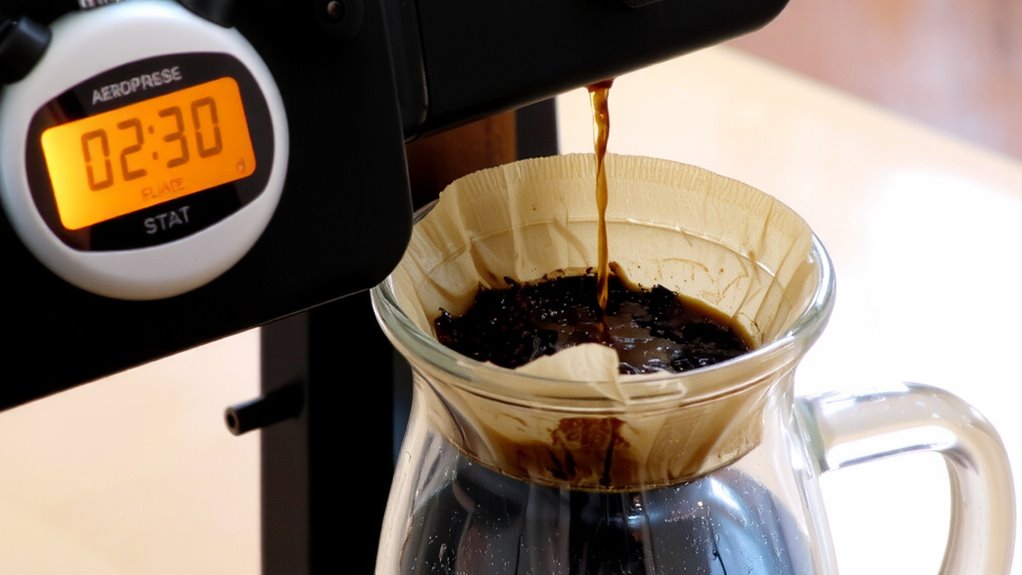
Most top Aeropress recipes rely on brew times between 1 and 3 minutes, depending on the style you’re aiming for. If you’re using the standard upright method, 2 minutes is common, while the inverted method often uses 1 to 2.5 minutes. Your water temperature matters-keep it between 175°F and 205°F to avoid under- or over-extraction. Lower temps need slightly longer brew times, but don’t exceed 3 minutes or you risk bitterness. Pressure control is key during pressing; press too hard and you’ll increase resistance, altering extraction. A steady, moderate press over 20–30 seconds works best. Recipes like the AeroPress World Championships’ winners often use 1:12 to 1:16 coffee-to-water ratios with a 2-minute steep. Stick to these ranges, adjust based on taste, and you’ll consistently get balanced, flavorful coffee with reliable results.
Why Short Brews Taste Sour and Underdeveloped
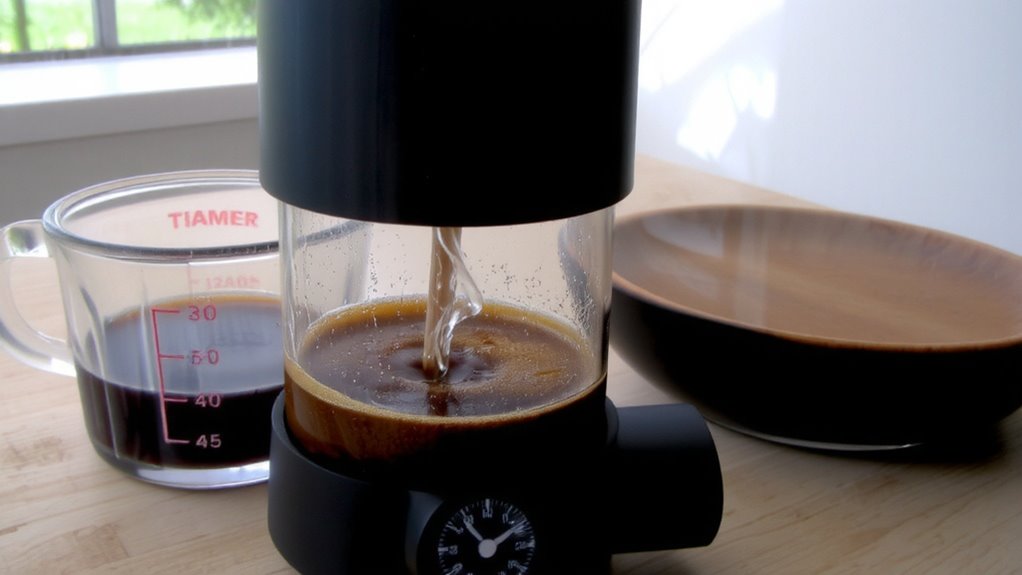
That sharp, sour hit in your cup? It’s likely from an underdeveloped brew. When your Aeropress run is too short-under 1 minute-water doesn’t dissolve enough of the coffee’s sugars and body. Instead, it grabs the fastest-extracting compounds: acids. That’s where sour notes come from. You’re not giving the grounds enough time to release balanced flavor. The result? Underdeveloped flavors that taste green, tangy, or sharp. Light roasts especially need adequate time, as they’re denser and slower to extract. Going too fast skips past sweetness and complexity. For most recipes, aim for 1:00 to 2:30 minutes. Need to adjust? Grind finer or extend brew time slightly. Don’t rush it-precision matters. A few extra seconds can shift sour notes toward rich, full-bodied coffee. Watch your clock, not just your taste, and you’ll see the difference.
How Over-Extraction Creates Bitter, Flat Coffee
If you’ve ever tasted a cup that’s harsh or leaves a drying feeling on your tongue, you’ve likely pushed your brew too far. Over-extraction happens when coffee steeps too long, pulling out excessive bitter compounds like tannins and overbearing phenols. These harsh elements overpower delicate notes, making your coffee unpleasantly sharp. You’re not just getting bitterness-you’re also losing complexity. Instead of a vibrant, layered cup, you end up with flat profiles that lack sweetness and acidity. Even with good beans, over-extracted brews taste one-dimensional and stale. The Aeropress amplifies this if you exceed 2.5 to 3 minutes, especially with fine grinds. Shorter brews preserve balance; longer ones sacrifice it. To avoid this, stick to precise timing, and never let the press drag. You control the outcome-pull too late, and you trade flavor for bitterness. Keep it timely, and you’ll keep the quality. Using a gooseneck kettle can enhance your control, and pairing it with essential Aeropress accessories ensures optimal brewing conditions.
Adjusting Brew Time for Grind Size and Bean Freshness
Since grind size and bean freshness directly impact how quickly flavors extract, you’ll want to tweak your brew time accordingly to hit that sweet spot. A finer grind increases surface area, speeding up extraction-so shorten brew time to avoid bitterness. With a coarser grind, you’ll need more time to pull out enough flavor. Fresh beans, especially those roasted within two weeks, release more CO2, which can interfere with even extraction; a slightly longer steep helps. Older beans extract faster, so reduce time. Grind temperature matters, too-grinding too hot alters particle consistency, affecting flow rate and taste. While bean origin influences density and moisture, African beans often need slightly shorter times than denser Central Americans. Adjust in 15-second increments, tasting as you go. Match grind size, freshness, and timing closely to get the cleanest, fullest cup your Aeropress can deliver.
How to Time Your Aeropress Brews Precisely and Consistently
While you can brew an Aeropress without strict timing, hitting the same time every time gives you far more control over quality and consistency. Use a timer every brew-no exceptions. Start it the moment water touches coffee. Your brew vessel material matters: the standard plastic Aeropress handles heat well and insulates slightly, but glass or metal versions may alter cooldown rates, affecting extraction. Stick with the original unless you’ve tested alternatives. For water agitation technique, a solid stir with a spoon or paddle guarantees even saturation. Some swirl the entire device, but that’s less repeatable. Aim for 10–15 seconds of total contact time before plunging. Keep your grind, water temp, and technique stable so time becomes a reliable variable. Tweaking one factor at a time lets you refine flavor with precision, brew after consistent brew. For repeatable results, consider using one of the best coffee timers designed for precision brewing.
On a final note
You get the best Aeropress results by controlling infusion time precisely-usually between 1 to 2.5 minutes. Too short, and your coffee tastes sour; too long, it turns bitter. Match brew time to your grind size: finer needs more time, coarser less. Fresh beans handle longer extraction better. Use a timer, stick to proven recipes like the 17:5 or inverted method, and adjust in small steps to dial in flavor fast.