Maximizing Aroma Release Through Controlled Steeping Times and Temperatures in Cold Brew Processes
You get the best aroma by matching your steep time and temperature to the beans you’re using. Light roasts, like Ethiopian, shine at 16 hours and 4°C, bringing out floral notes without bitterness. Dark roasts need only 18 hours max to avoid harshness. A coarse grind and filtered water help preserve delicate scents, while glass or stainless steel containers prevent off-flavors. Keep beans fresh-use them within 14 days of roasting-and you’ll notice a sharper, more balanced profile. There’s more to fine-tune for consistently aromatic results.
Notable Insights
- Steep coffee grounds for 16–18 hours at 4–6°C to optimize aroma development and extraction balance.
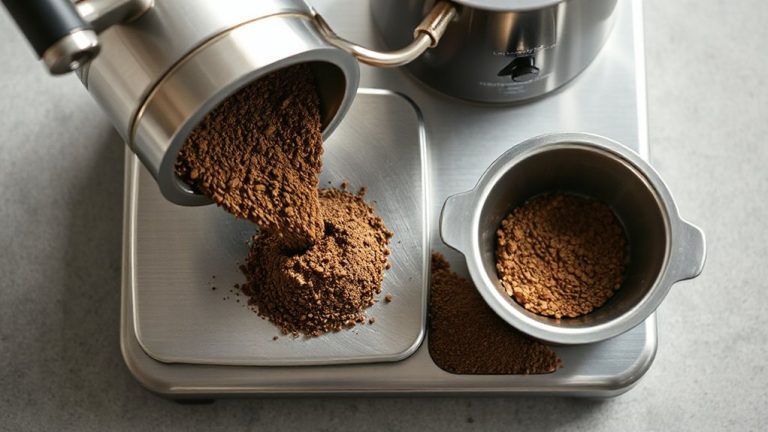
- Use freshly ground beans from a burr grinder to ensure consistent particle size and enhanced volatile release.
- Choose light to medium roasts for floral or fruity notes, adjusting steep time to prevent over-extraction.
- Employ filtered water and airtight glass or stainless steel containers to preserve scent clarity and minimize oxidation.
- Match bean origin to steeping parameters-e.g., Ethiopian beans at 16 hours, 4°C for peak aromatic expression.
What Aroma Reveals About Your Cold Brew
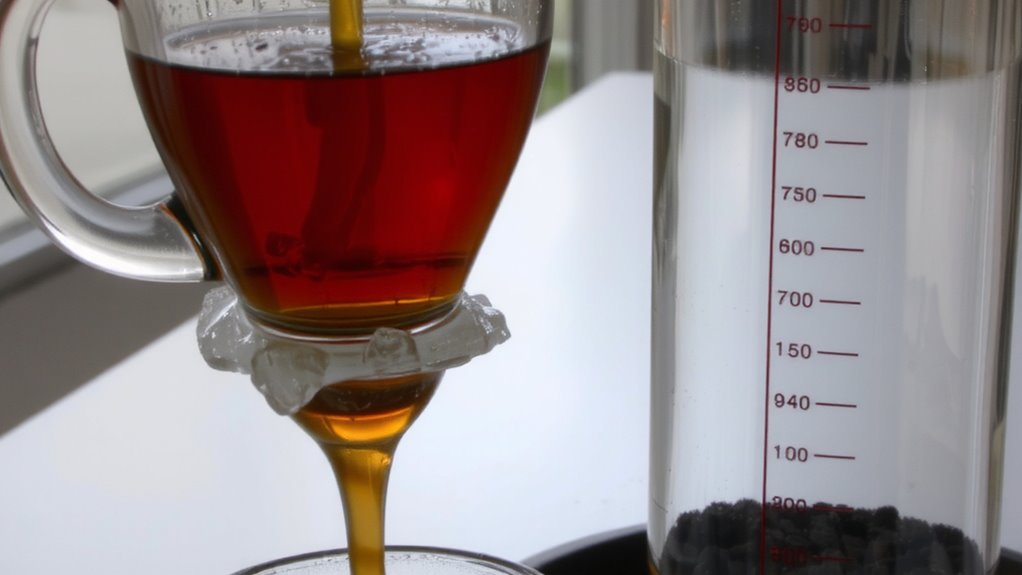
Why does your cold brew smell the way it does? The answer lies in aroma evolution during steeping. As coffee grounds soak in cold water, volatile compounds slowly release, shaping the scent profiles you detect. Freshly ground beans from a burr grinder enhance this process, offering more consistent extraction than a blade grinder. Lighter roasts often develop floral or fruity notes, while dark roasts lean toward chocolate or nutty hints. You’re not just smelling coffee-you’re sensing chemical changes over time. Extended steeping can deepen aroma but risks over-extraction, introducing bitter or dull tones. Using filtered water helps preserve clarity in scent profiles. Airtight containers minimize oxidation, maintaining freshness. Observing these aroma cues guides better brewing choices. By tracking scent changes, you adjust grind size, bean origin, or steep duration-not just for flavor, but for a more predictable, controllable cold brew result. Investing in the right tools can elevate this precision, such as cold brew coffee accessories that optimize steeping conditions.
How Temperature Changes Cold Brew Aroma
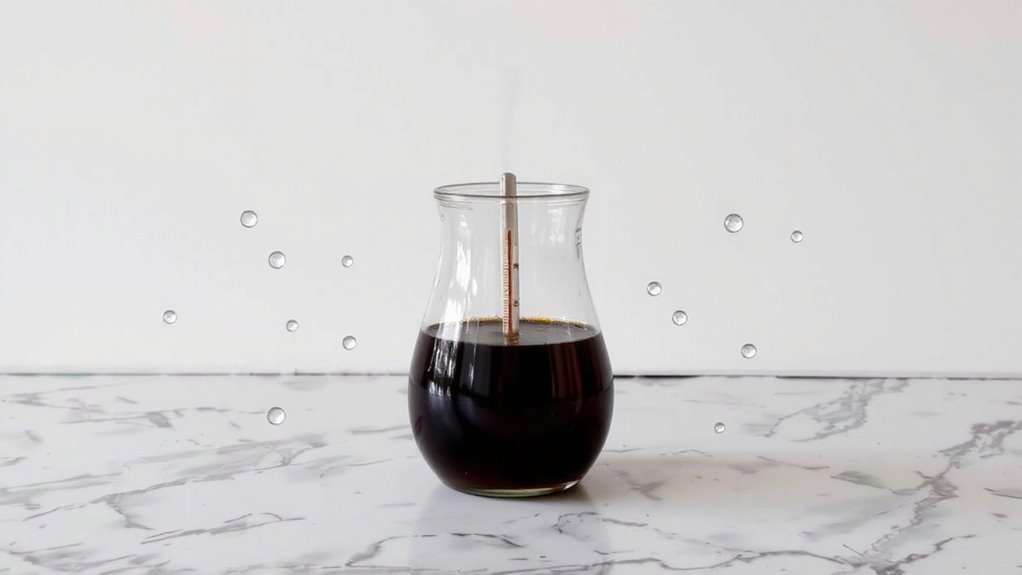
You’ve seen how time and grind consistency shape the aroma of your cold brew, but temperature plays just as big a role in what ends up in your glass. Cold water slows aroma diffusion, pulling fewer top notes initially but helping with volatile retention over time. That means more stable, subtle scents in your final cup compared to hot brews, which lose delicate compounds fast. If you steep at 4°C (39°F), like in a fridge, you’ll get cleaner, milder aromas with less acidity. Room temperature (20–22°C or 68–72°F) speeds extraction and boosts aroma diffusion, but risks over-extracting bitter notes and losing fragile volatiles. For balanced aroma, many baristas recommend starting cold and monitoring shifts. Your gear matters-use a sealed container to limit oxidation and aid volatile retention. Glass or stainless steel works better than plastic for preserving scent integrity.
Find Your Cold Brew’s Aroma Window (12 Vs 24 Hours)
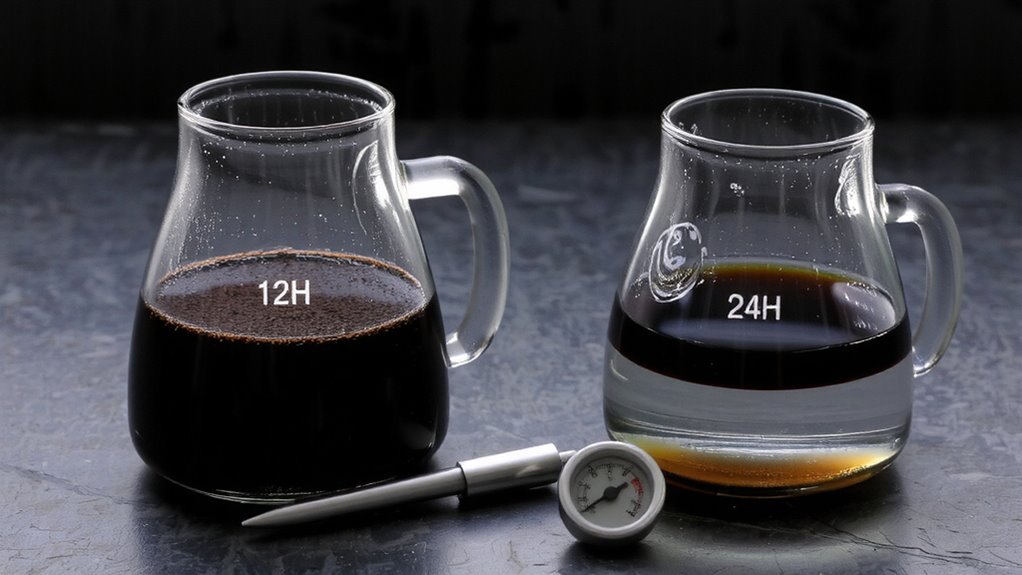
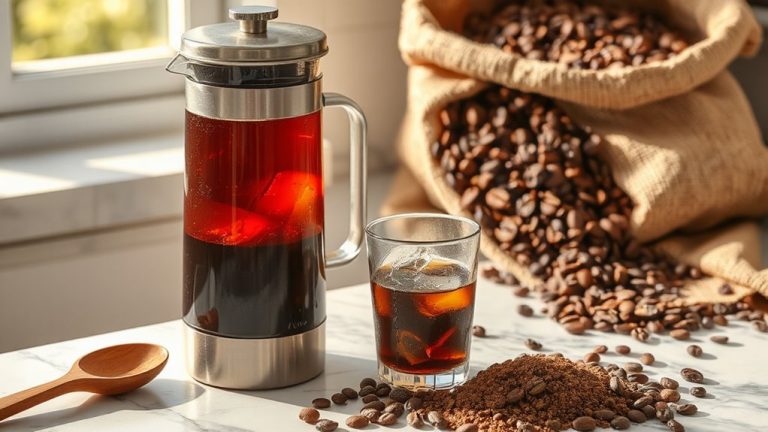
How long should you let your cold brew steep to capture its best aroma? It depends on your taste preference and bean type, but aroma peaks around 12 to 24 hours. Steeping for 12 hours yields a brighter, more aromatic profile with lighter body-ideal if you prefer nuanced, floral, or fruity notes. At 24 hours, extraction deepens, boosting body and bitterness while some volatile aroma compounds fade. For ideal flavor timing, 16–18 hours often strikes a balance, especially with medium-roast beans. Use a coarse grind and filtered water to reduce sediment. A French press or dedicated cold brew maker simplifies timing and filtering. If you like punchy aroma with clean finish, lean toward 12 hours. For richer, heavier tones with mellow scent, 24 hours may suit better. Test both and record your results-your ideal aroma window is likely in between.
Match Your Beans to Time and Temp for More Aroma
Ever wonder why the same steep time delivers wildly different aromas with various beans? The answer lies in how you match your beans to time and temp. Bean origin plays a big role-Ethiopian beans, for example, often carry floral and citrus notes that shine with a 16-hour steep at 4°C. Meanwhile, a Brazil-sourced bean might need 20 hours for its nutty, chocolatey tones to fully emerge. Roast level matters too. Light roasts preserve volatile aromatics but can taste underdeveloped if steeped too long, while dark roasts release deeper, smokier scents but risk bitterness past 18 hours. Adjust your steep accordingly: lighter roasts often peak earlier, around 14–16 hours, while medium to dark can go longer. Pair origin and roast wisely with time and temperature, and you’ll pull out richer, more balanced aromas every time. For Colombian beans, a 17-hour steep at 6°C helps unlock their bright, balanced profile with notes of red fruit and caramel, showcasing the quality of Finest Colombian Coffee Beans.
Why Your Cold Brew Has No Smell (And How to Fix It)
Why does your cold brew seem to have no scent at all? It likely comes down to two key factors: bean freshness and water quality. Stale beans lose volatile compounds responsible for aroma, while hard or impure water masks delicate scents during steeping. To fix this, use beans roasted within the past two weeks and store them airtight. Filter your water-try a Brita or reverse osmosis system-to remove chlorine and minerals that dull scent. Grind just before steeping to preserve aroma potential. For optimal results, consider using coffee specifically roasted for cold brew, as these beans are engineered to enhance smoothness and aromatic depth in low-temperature extractions.
| Issue | Solution |
|---|---|
| Stale beans | Use freshly roasted beans (within 14 days) |
| Poor bean storage | Keep in an airtight container, away from light |
| Hard water | Filter water before brewing |
| Bean freshness & water quality ignored | Prioritize both for full aroma development |
How to Save Delicate Aromas in Cold Brew
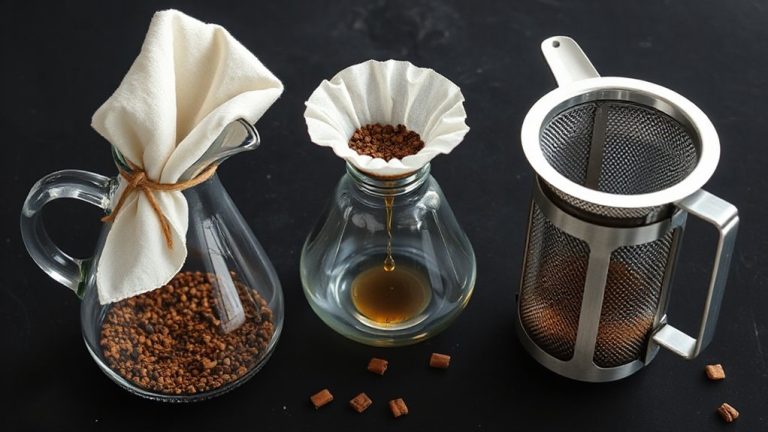
While cold brewing naturally suppresses some of the volatile aromatics found in hot coffee, you can still preserve delicate scent notes by controlling key variables during preparation. Use coarsely ground, freshly roasted beans-light to medium roasts work best for volatile retention. Steep for 12–16 hours at 4–8°C; longer or warmer increases aroma oxidation, dulling bright, floral, or fruity notes. Avoid metal or plastic containers-use glass or stainless steel to minimize reactivity. After steeping, separate grounds immediately to halt extraction and limit exposure. If storing, keep cold and consume within 72 hours to maintain freshness. Consider serving without dilution first to fully appreciate preserved aromas before adjusting strength. Cold brew isn’t just smooth-it can be complex and layered, if you treat the process like a precision task, not a set-and-forget. Your nose will notice the difference.
On a final note
You can boost your cold brew’s aroma by adjusting time and temperature. Steeping 12 hours gives brighter notes; 24 hours brings deeper, smoother scents. Use freshly ground beans and filter cold brew quickly to save delicate aromas. Light roasts work better with shorter steeps; dark roasts suit longer ones. Try a Toddy for smoothness or a French press for more complexity. Small changes make a real difference.