Espresso Grinder Calibration: Aligning Burr Sets for Uniform Particle Size
Your espresso’s inconsistency often comes from misaligned or worn burrs, not your technique. Check for uneven puck erosion or shot times varying more than 3–4 seconds. Use a feeler gauge, brass brush, and torque wrench to realign burrs-especially on high-use grinders like the EK43. Clean debris, reinstall burrs flat, and test with repeat shots at the same dose. Proper alignment means tighter shot consistency. You’ll want to know the exact steps to do this right the first time.
Notable Insights
- Worn or misaligned burrs cause inconsistent grind size, leading to variable espresso extraction and flavor instability.
- Use feeler gauges to accurately measure and set the gap between burrs for precise calibration.
- Clean burrs with a brass brush before calibration to remove coffee oils and debris that affect performance.
- Reinstall burrs flat and centered on the spindle, then hand-tighten the retaining nut to prevent misalignment.
- Test grind consistency by pulling repeated shots and checking for stable timing within a 24–28 second range.
Check If Your Grinder Needs Calibration
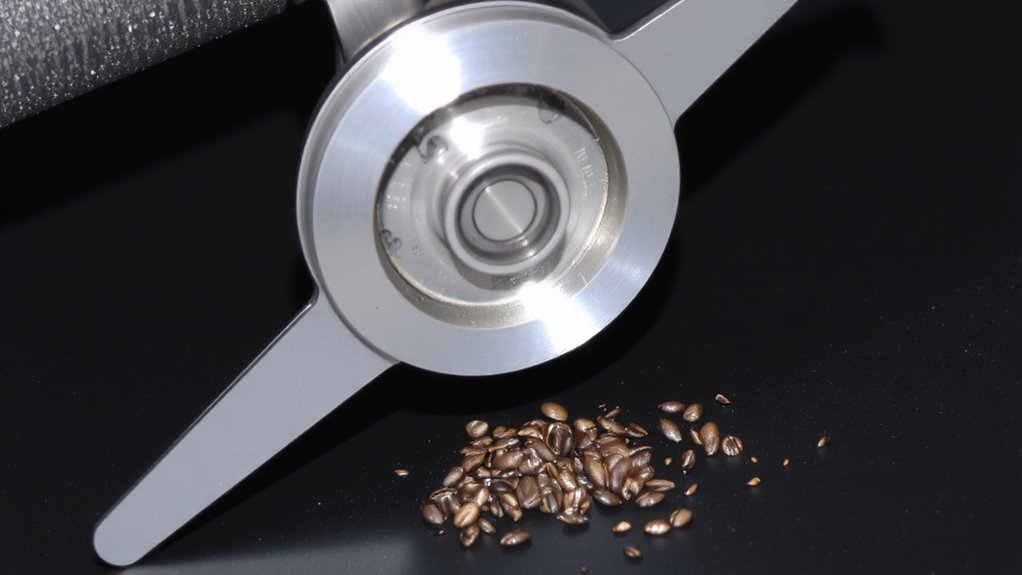
Why does your espresso taste off one day but perfect the next? It’s often because your grinder’s burrs aren’t delivering a consistent particle CAI size. Over time, grinder age wears down burrs, leading to uneven grinds and bitter or sour shots. If you pull shots daily, high usage frequency accelerates this wear. Even grinders under heavy home use-say, 2–3 shots daily-may need calibration every 3–6 months. You’ll notice changes: longer extraction times, increased puck channeling, or needing finer settings for the same results. Older grinders, especially blade or low-burr models, show these signs sooner. Stepless grinders may drift more than stepped ones. You don’t need to wait for total failure. If flavor fluctuates without changing beans or dose, it’s likely time to check calibration. Consistency depends on precise burr alignment-ignoring it only masks real issues. Upgrading to one of the best espresso grinders can significantly improve grind uniformity and reduce the need for frequent calibration.
What Tools You Need
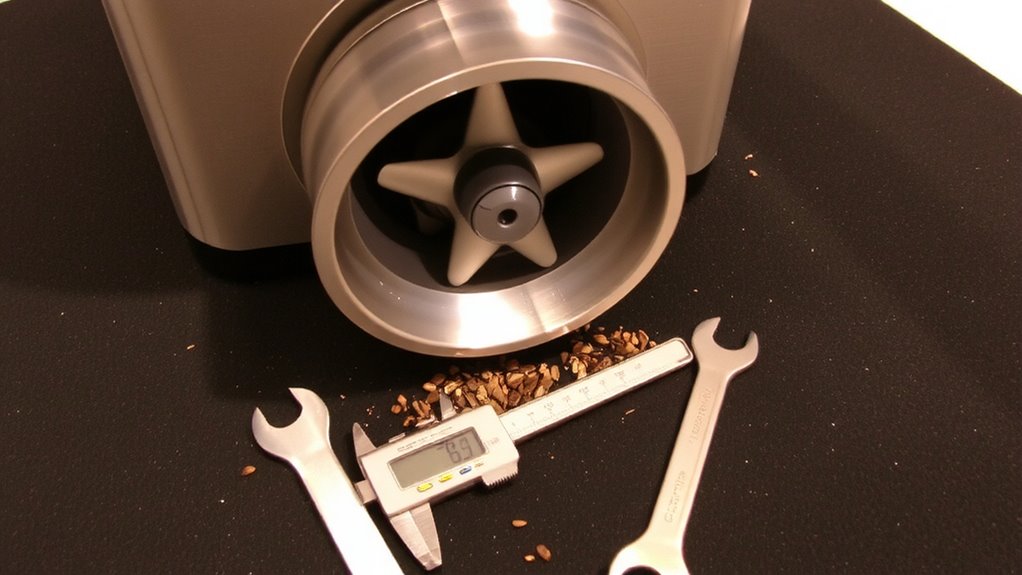
You’ve noticed your shots drifting in taste or extraction time despite keeping your dose and beans the same-now it’s time to check what you’re working with. For proper burr alignment, you’ll need a few key tools. Start with a set of feeler gauges to measure the space between burrs accurately. A brass brush keeps the burrs clean and free of coffee oil buildup, which can skew calibration. Use a torque wrench if your grinder model specifies bolt tensioning-some EK43 or Nuova Simonelli models require precise tightness. A decent loupe or magnifying glass helps inspect burr edges for damage or wear. These tools directly impact grind uniformity, ensuring each particle is as close in size as possible. Skipping proper tools risks inconsistent shots and false calibrations. You don’t need expensive gear, but reliable basics make the job repeatable and accurate. Regular cleaning with a coffee grinder cleaning brush ensures residual oils and fines don’t interfere with calibration accuracy.
Align the Burrs in 5 Simple Steps
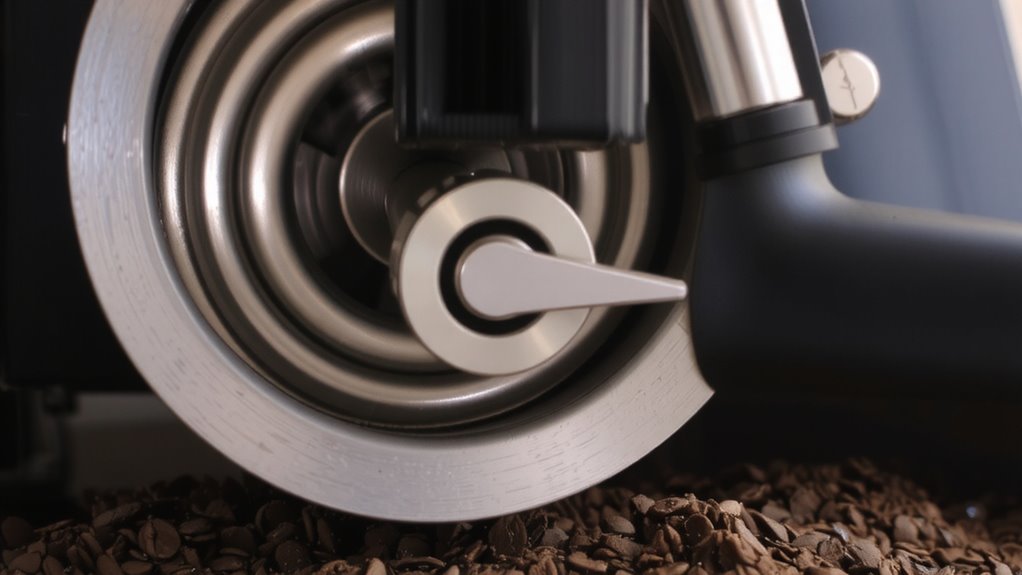
Start by powering down and unplugging your grinder-safety first. Remove the burrs carefully, checking for wear or debris that could affect burr alignment. Place them back, guaranteeing they sit flat and centered on the spindle. Hand-tighten the retaining nut, but don’t overtighten-this can warp the burrs and hurt particle uniformity. Rotate the outer burr gently; it should move smoothly without wobbling. If you spot uneven contact points, slightly adjust the inner burr’s position. Some grinders, like the Mazzer Super or Eureka Mignon, need only minor tweaks for proper alignment. Test alignment by spinning the burr set-any grinding or resistance means realignment is needed. Proper burr alignment guarantees even particle size, which is essential for balanced espresso extraction. Skipping this step risks channeling and poor flavor. Take your time-precision here improves performance every time you grind. For those using prosumer espresso grinders, regular calibration is key to maintaining optimal grind consistency.
Test Your Grind Consistency
How evenly does your grinder produce particles across each dose? To test grind consistency, pull several shots using the same dose, tamping pressure, and machine settings. Watch the shot timing-if it varies by more than 3–4 seconds between shots, your grind isn’t consistent. Uneven particles cause channeling, which ruins extraction. A consistent grinder, like a calibrated EK43 or Speedster, should deliver shot timing within a narrow window, say 24–28 seconds, when other variables are stable. Check the puck after pulling-you shouldn’t see large fines clumping or visible gaps. If tamping pressure feels uneven or extraction looks patchy, the issue may be inconsistent grind size, not your technique. Testing over multiple doses reveals whether the burrs distribute particles evenly. This step confirms whether your calibration actually improves real-world performance-don’t skip it.
How Often Should You Calibrate Your Grinder?
Regularly calibrating your grinder helps maintain shot quality, though the ideal frequency depends on usage and grinder type. As your grinder ages, wear on the burrs and motor can shift performance, making older grinders need calibration more often. Your usage frequency also plays a key role-daily use demands more frequent checks than occasional brewing.
| Grinder Age | Low Usage | High Usage |
|---|---|---|
| <1 year | Every 2 months | Monthly |
| 1–3 years | Monthly | Every 2–3 weeks |
| 4+ years | Every 3–4 weeks | Every 2 weeks |
Don’t wait for shot times to drift noticeably. Proactively checking alignment helps avoid inconsistency. If your grinder is over four years old or used heavily, stick to the tighter schedule. Consistent calibration keeps particle size uniform-and that means better espresso.
Keep Your Grinder Dialled In
What’s the secret to pulling the same great shot day after day? It’s keeping your grinder dialled in. Grind stability means every particle is consistent, shot after shot. Without it, you’ll get uneven extraction-some bits too fine, others too coarse-wrecking your flavor balance. That sweet, balanced espresso relies on a grinder that stays set, especially as it heats up during service. If your grinder drifts, even slightly, your shots will vary. Dial it in each morning, check it midday. Step, Eureka, or Mazzer-no grinder is immune to minor shifts. Clean it regularly, avoid sudden bean changes, and keep beans dry. Humidity and oil buildup hurt consistency. Make small tweaks, not big jumps. Track your dose, yield, and time. Stay observant. When grind stability holds, flavor balance follows. That’s how you serve quality, all day.
On a final note
You should check your grinder’s calibration every few weeks, especially if shots pull unevenly or taste off. Misaligned burrs create inconsistent particles that hurt extraction. Use a feeler gauge and spanner wrench to adjust the gap-many like the Weber Workshops tools for precision. After aligning, test with a few shots and adjust as needed. Keeping your burrs level guarantees even grinds, better flavor, and more consistent espresso over time.