French Press Coffee for Acid Reflux: Techniques to Reduce Stomach Irritation
Use low-acid beans from Brazil or Sumatra and choose a dark roast to reduce stomach irritation. Grind the coffee coarse to limit acid extraction and use water between 195–205°F-let it cool 30 seconds off the boil. Steep just 3–4 minutes in your French press. Add a pinch of baking soda or try oat milk to neutralize acidity. Pair with bananas or toast to ease digestion. There’s more to optimizing your cup for sensitive digestion.
Notable Insights
- Choose low-acid beans from Brazil or Sumatra and opt for a dark roast to minimize stomach-irritating acids.
- Use a coarse grind to reduce over-extraction of acidic compounds during French press brewing.
- Brew with water between 195–205°F to limit extraction of harsh, reflux-triggering elements.
- Limit brew time to 3–4 minutes to decrease contact time and lower acidity in the final cup.
- Add a pinch of baking soda or use oat milk to neutralize acidity and soothe the stomach.
Choose Low-Acid Beans to Ease Acid Reflux
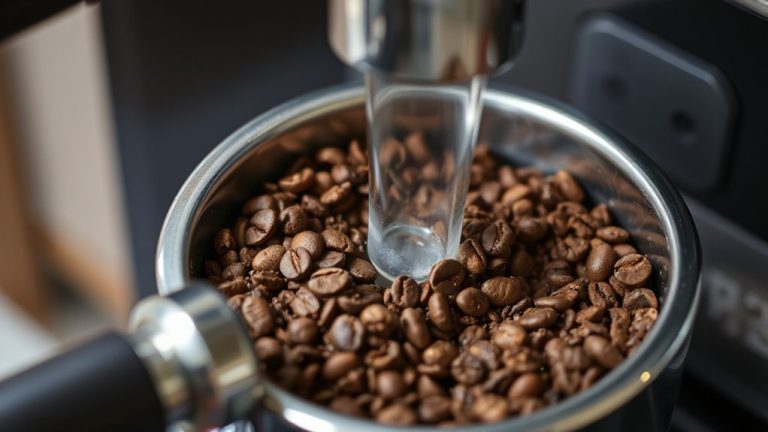
Low-acid coffee beans might be your best bet if acid reflux flares up every time you sip your morning brew. Choosing beans with a naturally lower acidity can make a real difference, and two key factors are bean origin and roast level. Beans from regions like Brazil or Sumatra tend to be less acidic than those from East Africa or Central America. Darker roast levels also reduce acid content-compared to light roasts, a full-city or French roast breaks down more chlorogenic acid during roasting. While some brands market “low-acid” blends, checking the roast level and origin on the label gives you more reliable clues. You don’t need specialty gear-just mindful bean selection. If reflux is a consistent problem, swapping to a dark-roasted, low-acidity bean from a low-elevation origin is a practical first step that costs little extra but may bring real relief. For reliable options, consider trying expert-recommended coffee beans known for balanced flavor and lower acidity.
Grind Coarser for a Smoother, Less Acidic Brew
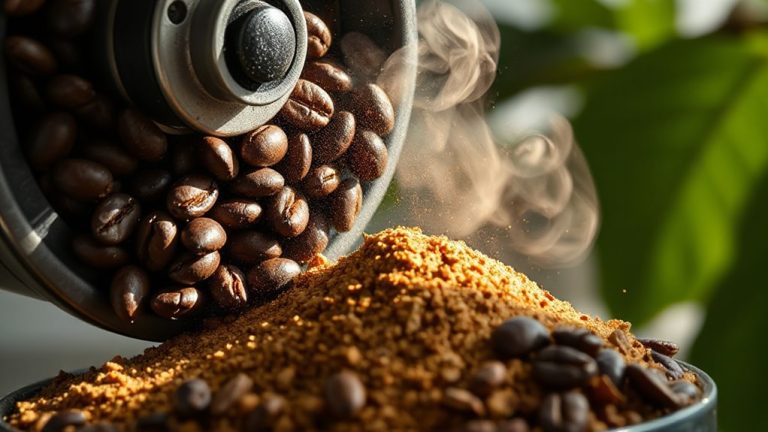
A coarse grind can make a noticeable difference in how acidic your French press coffee feels. When you use a coarser grind, you reduce over-extraction, which lowers the release of bitter and acidic compounds. This leads to a smoother taste and less stomach irritation. Fine grounds increase surface area, allowing more acids to dissolve into your cup-especially problematic for acid reflux sufferers. A burr grinder set to a coarse setting, like that for French press or cold brew, guarantees even particles and better control. Pre-ground coffee often isn’t coarse enough, so grinding your own beans is ideal. While a coarser grind may seem like a small change, it consistently delivers a gentler brew. It won’t eliminate acidity entirely, but paired with low-acid beans, it markedly reduces harshness. You’ll notice the difference not just in flavor, but in how your stomach feels afterward. For the most consistent results, consider using a Best Mill Grinders & Buying Guide to select a high-quality burr grinder tailored to coarse grinding needs.
Brew With Water Below Boiling (195–205°F)
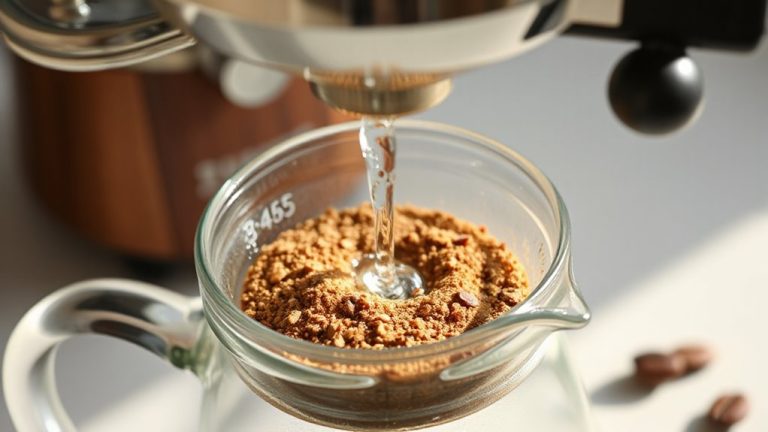
While boiling water might seem ideal for extracting rich flavor, using it in your French press can actually increase acidity and irritation for sensitive stomachs. You’ll get a smoother cup by controlling water temperature and staying within the ideal range of 195–205°F. This range extracts flavor without pulling out harsh compounds tied to acid reflux. Use a gooseneck kettle with a built-in thermometer or an electric variable-temperature model for accuracy. For precise pouring and optimal temperature control, consider using one of the best gooseneck kettles designed specifically for pour-over and French press brewing.
| Water Temperature | Effect on Brew |
|---|---|
| Below 195°F | Under-extraction, weak flavor |
| 195–205°F | Ideal range, balanced taste |
| 205–212°F | Increased acidity, bitterness |
| At boiling (212°F) | Harsh, stomach-irritating results |
Let the water cool 30 seconds off boil or use a digital kettle to hit the target. This simple step makes a real difference.
Reduce Brew Time to 3–4 Minutes
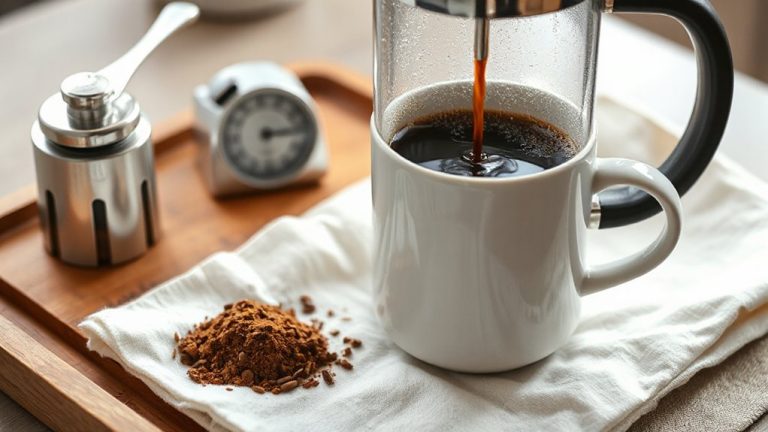
Cutting your brew time to just 3–4 minutes can make a noticeable difference if you’re prone to acid reflux. Shorter brew duration limits the contact time between water and grounds, reducing the extraction of acidic compounds. This simple adjustment gives you better extraction control, helping avoid over-extraction, which often increases bitterness and acidity. Most standard French press recipes call for 4–5 minutes, but dropping to 3–4 minutes eases the intensity without sacrificing body or flavor clarity. Use a timer to stay consistent-avoid guessing. If your coffee tastes weak, try a slightly finer grind instead of extending brew time. Keep in mind that lower water temperature (195–205°F) combined with shorter brew duration further limits acid release. This method works best with medium-coarse grounds and freshly ground beans. It’s a practical, low-cost tweak that fits most French presses, from Bodum to Espro.
Add a Pinch of Baking Soda to Neutralize Acidity
You’ve already trimmed the brew time to reduce acid extraction-now go a step further by tweaking the chemistry of your brew. Adding a small pinch of baking soda (about 1/8 teaspoon per cup) can help neutralize acidity. Baking soda benefits include its ability to act as a natural acid buffer, smoothing harsh flavors and making coffee easier on your stomach. It influences pH balance effects by slightly raising the pH of your brew, shifting it toward neutral. While it won’t alter caffeine content, it may reduce bitterness-especially useful with darker roasts. Use sparingly; too much creates a flat or soapy taste. Not all brands are equal: opt for aluminum-free baking soda to avoid unwanted additives. This method works with any French press, but stir well to dissolve fully. It’s a low-cost, simple fix worth testing if acid reflux persists despite other adjustments.
Best Foods to Pair With Coffee for Sensitive Stomachs
A smart pairing can make all the difference when you’re enjoying French press coffee with a sensitive stomach. Try an oat milk pairing-its creamy texture and natural sweetness help buffer acidity without irritating your gut. Unlike dairy or almond milk, oat milk tends to be easier on digestion and stabilizes coffee’s pH subtly. Pair your cup with probiotic snacks like plain yogurt, kefir-based smoothies, or fermented vegetables. These support gut health and may reduce post-coffee discomfort over time. Avoid acidic fruits or spicy bites, which can worsen irritation. Instead, go for low-acid, high-fiber options like bananas, oatmeal, or whole grain toast. Together with the gentler extraction of French press coffee, these pairings minimize risk. An oat milk pairing combined with probiotic snacks isn’t just comforting-it’s a practical strategy. You don’t need special gear, just mindful choices that align with your stomach’s needs.
Why French Press Coffee Is Gentler on Your Stomach
While all coffee contains acids and compounds that can irritate the stomach, French press brewing tends to produce a smoother cup because it avoids paper filters and uses a coarser grind, both of which influence the final brew’s composition. The metal mesh filter lets beneficial oils pass through, which some studies suggest may reduce gastric irritation compared to paper-filtered methods. This is one of the key French press benefits for sensitive drinkers. Contrary to common brewing myths, the method doesn’t extract more acid-it actually produces a lower concentration of certain irritants due to shorter contact time and less fine particle sediment. The coarser grind also minimizes over-extraction of bitter, stomach-upsetting compounds. While not a cure, this method offers a practical tweak for those managing acid reflux. Just don’t use finely ground beans-the wrong grind can undo these advantages.
On a final note
You can enjoy French press coffee with acid reflux by choosing low-acid beans like Arabica or dark roasted varieties, grinding them coarser to reduce extraction of irritating compounds, and brewing with water between 195–205°F for just 3–4 minutes. Adding a pinch of baking soda neutralizes acidity. Pair your coffee with bland, non-spicy foods like oatmeal or toast. These steps help minimize stomach irritation without giving up your brew.