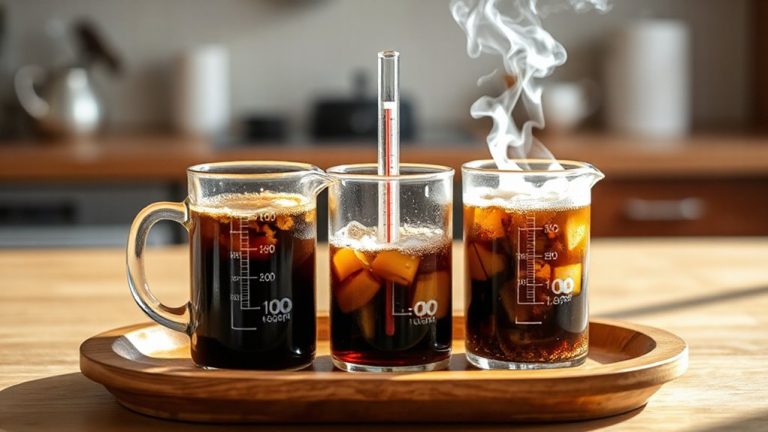
The Role of Bicarbonate in Water Chemistry and Its Effect on Coffee Acidity
Your water’s bicarbonate level acts as a buffer, softening coffee’s natural acidity during brewing. Too much flattens bright, fruity notes, leaving a dull cup; too little lets acid dominate, making coffee taste sour. Ideal levels (40–70 ppm as CaCO₃) balance extraction and preserve sweetness. Test with strips or a digital kit, or blend tap with distilled water. For consistent results, many use tailored water packs like Third Wave Water-knowing your bicarbonate is key to better brews.
Notable Insights
- Bicarbonate in water acts as a buffer, stabilizing pH and reducing acidity during coffee brewing.
- High bicarbonate levels mute bright, fruity coffee notes, leading to flat or dull flavor profiles.
- It counteracts coffee’s natural acids, decreasing perceived acidity for a smoother taste.
- Ideal bicarbonate range (40–70 ppm as CaCO₃) supports balanced extraction and flavor complexity.
- Excess bicarbonate can be mitigated by blending tap water with distilled or using specialized brewing water.
What Is Bicarbonate in Water?
Water’s ability to influence coffee’s taste hinges on what’s dissolved in it, and bicarbonate is one key player. You’ll find bicarbonate in tap water, where it forms part of the total dissolved solids that shape both water hardness and pH balance. It acts as a buffer, helping to stabilize pH and resist sudden shifts in acidity. When brewing coffee, this matters because water hardness affects extraction-too soft, and your coffee might taste sour; too hard, and it could turn bitter. Bicarbonate-rich water tends to mute acidity, which can dull bright, fruity notes in light roasts. If you’re using hard water with high bicarbonate, you might notice flatter-tasting coffee. For better control, consider filtered or specialized third-wave water that balances minerals. Not all water is the same-checking your source with a TDS meter helps you adjust wisely.
Why Does Bicarbonate Affect Coffee Taste?
You’ve probably noticed how the same coffee can taste different depending on where you brew it, and a big reason lies in the bicarbonate content of your water. Bicarbonate acts as a buffer, influencing how other minerals interact during brewing. High levels soften acidity and can mute bright, fruity notes, giving coffee a flat or dull taste. This is often linked to water hardness, since hard water usually contains more bicarbonate along with calcium and magnesium. While some mineral balance is essential for flavor extraction, too much bicarbonate overwhelms subtleties in the beans. For example, brewing with softened tap water might reduce scum on equipment but sacrifices taste clarity. Using filtered water with balanced bicarbonate-like Third Wave Water or a custom blend-gives more control. You don’t need lab-grade precision, but knowing your water’s profile helps replicate consistent, flavorful coffee at home or in cafes.
How Does Bicarbonate Change Coffee Acidity?
Why does your coffee sometimes taste sharp and bright, then flat and lifeless on another day? The answer often lies in your water’s bicarbonate levels. Bicarbonate buffers acidity, meaning it stabilizes the pH during brewing. When your water has high bicarbonate, it neutralizes some of the coffee’s natural acids, resulting in a smoother, less acidic cup. This affects flavor extraction-too little acidity and you lose bright, fruity notes; too much, and the coffee tastes harsh. Water hardness plays a key role here, as it typically includes both bicarbonate and minerals like calcium, which aid extraction. Balanced hardness-say, 50–150 ppm with moderate bicarbonate-helps pull out sweetness and complexity without flattening the acidity. You’re not just brewing coffee; you’re managing chemistry. Use a test strip or a water filter to control these variables and get consistent results.
Too Much Bicarbonate? Why Does Your Coffee Taste Flat?
Ever wonder why your morning brew sometimes lacks spark, tasting dull or muted despite using the same beans and grinder? The culprit might be too much bicarbonate in your water. High bicarbonate levels increase water hardness, which buffers acids in coffee, muting bright notes and flattening the cup. While some hardness helps extract flavor, too much throws off flavor balance, leaving you with lifeless coffee. This often happens with tap water in hardwater areas or when using certain mineral supplements. If your coffee tastes flat, test your water-ideal brewing water usually has moderate bicarbonate, around 40–75 ppm. You can adjust by blending tap with distilled water or using a tailored water recipe. Don’t guess-measuring guarantees consistency. Balancing bicarbonate isn’t about eliminating it; it’s about controlling it to let coffee shine.
Too Little Bicarbonate? Why Does Coffee Turn Sour?
What happens when your coffee tastes sharp or sour, even with a proper grind and fresh beans? You’re likely dealing with too little bicarbonate in your water. Low bicarbonate means poor buffering, so acids in the coffee overwhelm your palate. This often occurs with soft water, which lacks sufficient minerals to balance acidity. While water hardness affects extraction, it’s the mineral balance-especially bicarbonate-that smooths out bright, sour notes. Without enough bicarbonate, even well-roasted beans can taste thin and unbalanced. You might mistake this for under-extraction, but adjusting grind or brew time won’t fix the root issue. Consider using water with moderate hardness and a bicarbonate level around 40–70 ppm. Brands like Third Wave Water offer balanced mineral profiles tailored for coffee. The result? Cleaner, rounder cups without harsh acidity-just more consistent, flavorful brews.
How to Test Bicarbonate Levels in Your Water
How do you know if your water’s bicarbonate levels are off? You’ll want to test its alkalinity buffering, since bicarbonate is the main contributor. Start with a quality test strip that measures both general water hardness and total alkalinity, like those from General Hydroponics or API. Dip it in your water, wait a few seconds, and compare the color. If alkalinity is low (under 40 ppm as CaCO₃), your water won’t buffer acids well, which can make coffee taste sour. High alkalinity (over 100 ppm) might make coffee flat or bitter. For more precision, use a digital titration kit like the Hanna HI98107, though it costs more. Regular tap water varies, so test after any filtration. Testing lets you act-no guesswork-so you can match water to your coffee’s needs.
Adjust Brewing for High or Low Bicarbonate
If your water’s bicarbonate level skews high or low, your coffee’s flavor shifts-sometimes dramatically-so adjusting your brewing method can help compensate. High bicarbonate increases alkalinity, muting acidity and making coffee taste flat; this often comes with high water hardness, which can also slow extraction. To counter it, use slightly hotter water (just under 205°F) or a longer brew time to improve clarity. If bicarbonate is too low, your coffee may taste sharp or sour, especially with soft water and poor mineral balance. In that case, consider adding a pinch of magnesium or using a balanced water blend like Third Wave Water. Avoid distilled water-it strips flavor. Instead, aim for moderate hardness (50–150 ppm) and a bicarbonate level around 40–70 ppm. Adjusting your grind finer or using a shorter contact time can also help.
On a final note
You need some bicarbonate in your water to balance coffee’s acidity, but too much makes it taste flat, while too little leads to sourness. Test your water with strips or a TDS meter. If bicarbonate is high, try filtered water with balanced minerals. If it’s low, add a pinch of baking soda-or use specialty brewing salts. Adjusting water lets you control flavor more reliably than changing beans or brew time.