Utilizing Medium Grind for Hybrid Immersion-Drip Systems Like Kalita Wave
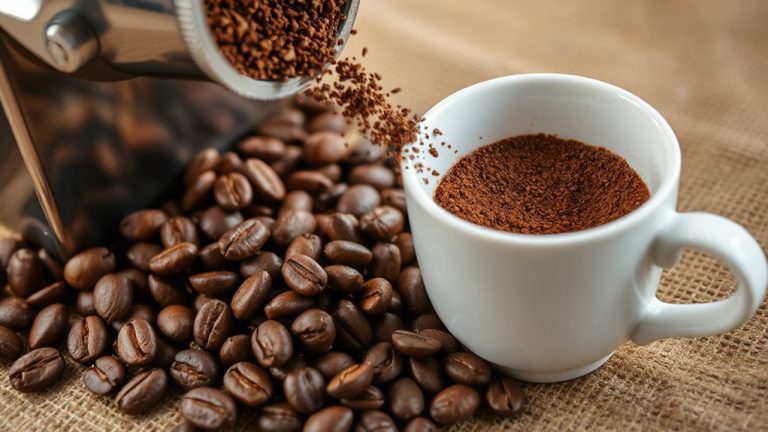
You’re using a medium grind to balance the Kalita Wave’s hybrid immersion-drip design, where even saturation meets controlled flow. Too fine, and you risk bitterness from over-extraction; too coarse, and the brew turns sour or weak. Aim for table salt texture-around 900–1,100 microns-starting at Baratza Encore setting 18–20. This grind size supports clarity and body while limiting channeling. Adjust in small steps based on taste, and you’ll dial in cleaner, more consistent results every time.
Notable Insights
- A medium grind (900–1,100 microns) optimizes extraction in Kalita Wave’s hybrid immersion-drip process.
- Use a grind setting of 18–20 on the Baratza Encore for balanced flavor and flow rate.
- The flat-bottom design and three holes require medium grind to prevent over- or under-extraction.
- Adjust grind size in half-notch increments to fine-tune contact time between 2:30 and 3:30 minutes.
- Medium grind enhances clarity and body while reducing channeling and extraction inconsistencies.
How the Kalita Wave Blends Immersion and Drip
While it might look like a flat-bottomed pour-over, the Kalita Wave actually combines elements of both immersion and drip brewing to give you more control over extraction. You get brief immersion when you saturate the grounds and let them bloom-this helps guarantee even wetting. After that, the brewed coffee drains through three small holes in the bottom, creating a controlled flow rate. Because the flat bed holds water more uniformly than conical brewers, you can fine-tune brew control by adjusting your pour speed and water distribution. This hybrid method reduces channeling and promotes consistent contact time. Compared to faster pour-overs like the V60, the Wave’s restricted flow rate slows extraction, making it more forgiving. It’s especially effective with a gooseneck kettle, letting you manage water placement and saturation with precision. The design strikes a balance-offering immersion-like stability with drip-like clarity, giving you practical, real-time influence over flavor outcomes without complexity. For optimal results, consider using one of the best gooseneck kettles for precision pouring.
Why Medium Grind Prevents Over-Extraction
Since the Kalita Wave’s design slows drainage through its three small holes, using a medium grind keeps extraction in check by balancing surface area and flow rate. If your grind’s too fine, water lingers too long, pulling out bitter, over-extracted flavors-even with proper water temperature. Too coarse, and you’ll get sour, weak coffee. A consistent medium grind guarantees even extraction, where grind consistency matters just as much as particle size. That stability helps maintain control, especially with water temperatures between 195°F and 205°F.
| Grind Size | Flow Rate | Risk of Over-Extraction |
|---|---|---|
| Fine | Slow | High |
| Medium | Moderate | Low |
| Coarse | Fast | Moderate |
This balance lets you brew confidently, without overshooting.
How Medium Grind Enhances Clarity and Body
A well-chosen grind size does more than just control bitterness-it shapes the entire mouthfeel and flavor clarity of your brew. With a medium grind in a hybrid system like the Kalita Wave, you get the best of both worlds: clean flavor clarity from controlled drip action and enough body from brief immersion. This grind size slows extraction just enough to enhance mouthfeel control without clogging the filter or stalling the brew. You’ll notice better flavor balance-bright notes stay defined, while deeper tones gain richness. Too fine, and you risk muddiness; too coarse, and the body thins out. The medium setting, around 900–1,100 microns, works reliably with most Kalita recipes and grinders like the Baratza Encore or Comandante C40. It’s not perfect for every bean, but it’s a strong starting point that delivers consistency, clarity, and satisfying body in every cup.
How to Set the Right Medium Grind for Kalita
Your grinder’s setting is the most critical factor in nailing a balanced Kalita Wave brew. Aim for a medium grind-similar to table salt-to guarantee even extraction without overdoing resistance. If your particles are too fine, water pools; too coarse, and it rushes through. With Kalita’s flat bed and small drainage holes, consistent grind size matters more than in pour-overs like V60. You don’t need tamping pressure-just a gentle shake to level the bed. Pair your grind with a stable water temperature around 195–205°F. Lower temps can mute brightness; higher ones risk bitterness. Start at a medium setting on a burr grinder (like Baratza Encore’s 18–20), then tweak based on taste. Adjust in small increments-half a notch at a time-and document results. Fine-tuning here beats changing multiple variables at once. For optimal results, consider using one of the best coffee grinders for espresso and pour-over to ensure precision and consistency in every dose.
Fixing Under- and Over-Extraction With Medium Grind
You’ll know your medium grind isn’t hitting the mark when the brew tastes sour or hollow-that’s under-extraction-or when it’s harsh and bitter, a sign of going too far. If you’re under-extracting, your grind is likely too coarse, reducing contact time and limiting flavor development. Fine-tune it slightly finer to extend extraction. Over-extraction often means the grind’s too fine, letting water move too slowly and pulling out unpleasant compounds. Adjust coarser to reduce contact time. With Kalita Wave’s hybrid design, turbulence control matters-consistent pour technique helps maintain even saturation without channeling. Too much agitation worsens over-extraction; too little leads to under-extracted spots. A medium grind balances flow and resistance, but small tweaks make big differences. Always change one variable at a time-grind size first-then monitor contact time, which should stay between 2:30 and 3:30 for best results.
Which Beans Shine With Medium Grind on Kalita
Why do some beans seem to sing on the Kalita while others fall flat-even with a solid medium grind? It often comes down to origin and processing. Lightly roasted African beans, like Ethiopian Yirgacheffe, shine with bright, floral notes when brewed medium-fine to medium. Central Americans, such as Guatemalan or Honduran beans, offer balanced profiles with chocolate and nutty tones that suit the Kalita’s even extraction. You’ll get the most clarity from seasonal varieties, which are fresher and reflect current harvests. These beans often come from farms practicing ethical sourcing, ensuring quality from crop to cup. Avoid dense, dark-roasted beans-they can turn flat or ashy. For best results, grind fresh and adjust slightly based on roast date. The Kalita rewards beans with acidity and complexity, especially when they’re recent and responsibly grown. Exploring top-rated origins can lead to discovering the best coffee beans from around the world.
On a final note
You’ll get balanced results in a Kalita Wave by using a medium grind-fine enough for clarity, coarse enough to avoid bitterness. It slows flow just right, blending immersion’s body with drip’s brightness. If your coffee tastes sour, go slightly finer; if it’s harsh, go coarser. Always adjust based on bean age and roast. A good burr grinder makes this reliable. Medium is a smart starting point, not a rule.