Customizing Coarse Grind for Oversized Travel French Press Models
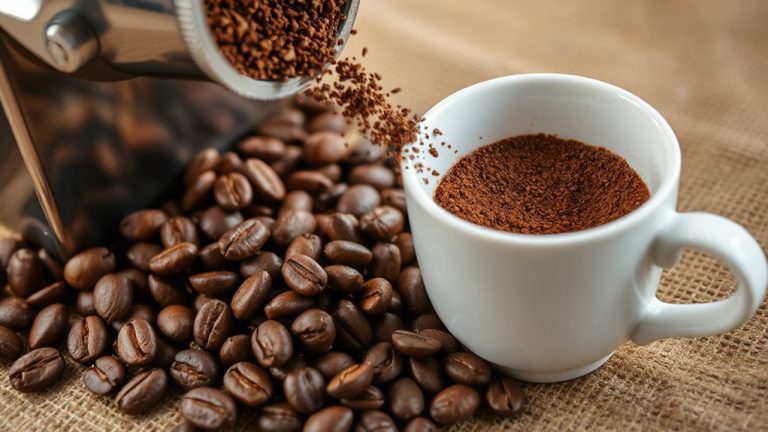
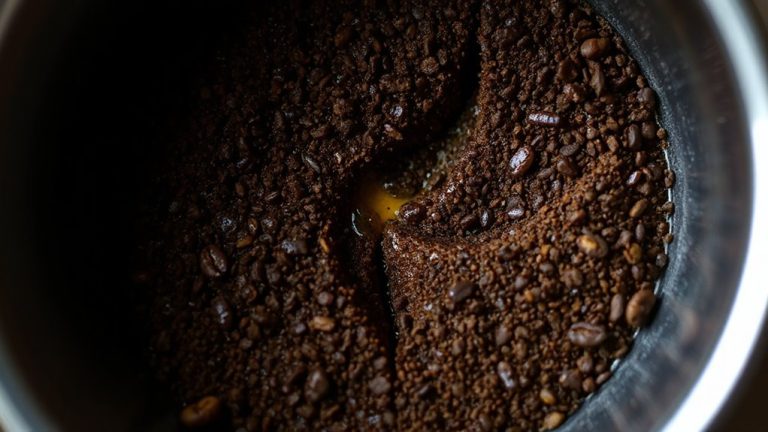
Use a coarse, even grind-like rustic breadcrumbs-to match your oversized travel French press and avoid sludge. Pair it with a burr grinder like the 1ZPresso Q2 or Fellow Opus for consistency. If using a fine mesh filter, a slightly finer coarse setting works, but stick to coarser for standard filters. Adjust slightly finer at high altitudes or in cold climates. Keep beans fresh and grind just before brewing-better control means better coffee every time.
Notable Insights
- Use a very coarse, uniform grind to prevent over-extraction and sludge in larger travel French presses.
- Match grind size to filter type: finer coarse for fine mesh, extra coarse for standard filters.
- Adjust grind slightly finer at high alt. or in cold environments to compensate for slower extraction.
- Opt for manual burr grinders like 1ZPresso Q2 for consistent coarse grind without power needs.
- Dial in grind using a sea salt to breadcrumb texture, adjusting based on 4-minute brew time results.
Choose the Right Coarse Grind for Your Travel French Press
While portability matters when picking a travel French press, the grind size you use affects your brew just as much. You need a coarse, even grind to prevent sludge and over-extraction. If the grind’s too fine, your coffee turns bitter, especially with longer brew time. Aim for grounds the size of breadcrumbs-this helps water extract evenly without clogging the mesh filter. Darker roasts from dense coffee origin regions like Ethiopia or Colombia often need slightly coarser grinding to balance their oils and acidity. Lighter roasts, which are denser, might extract better with a touch finer, but still within coarse range. Always grind fresh; pre-ground coffee loses flavor fast. For most travel models, a consistent electric burr grinder like the Capresso or hand grinder like the Hario gives better results than blade versions. Match your grind to your brew time-typically four minutes-for clean, full-bodied coffee. The Perfect French Press Coffee Grind Guide recommends adjusting grind size based on brew time and equipment to optimize extraction.
Match Your Grind to Your French Press Design
How does your French press’s filter type shape the ideal grind size? If you’re using a travel French press with a fine mesh filter, you can go slightly finer in grind texture without over-extracting. These filters trap more silt, letting you shorten the brew time to around 3–4 minutes safely. But with standard or older models that have looser filters, you’ll want a coarser grind to prevent mud in your cup, especially if your brew time stretches to 4 minutes or more. A consistent coarse grind reduces clogging and keeps pressure steady when plunging. Stainless steel filters, like those in Bodum or Secura models, demand a uniform grind texture to work well-too fine and you’ll struggle to press. Always match your grind to your specific press’s design. It’s not just about size; it’s how the grinder and brewer work together for a clean, grit-free result. For those avoiding plastic, consider French presses made with durable glass or stainless steel construction, such as those featured in the Best Plastic-Free French Press Picks.
Pick a Portable Grinder for Coarse Coffee
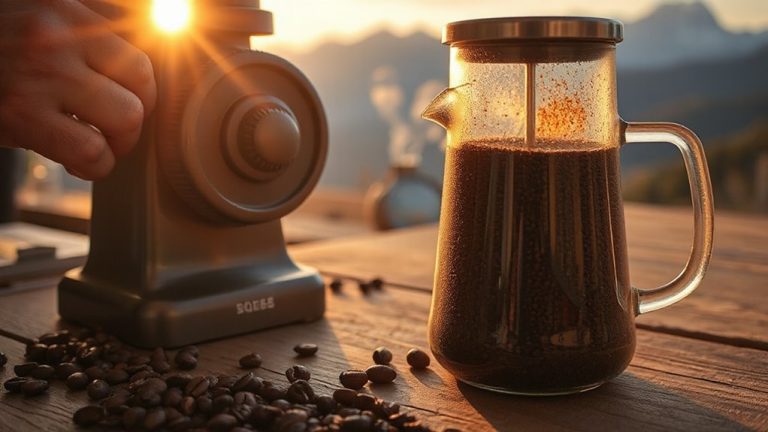
Your French press’s filter design affects how fine or coarse your grind should be, but having the right portable grinder makes it possible to hit that target consistently no matter where you brew. When choosing, you’ll face the manual vs electric decision. Manual grinders, like the 1ZPresso Q2, are compact, never run out of power, and offer full control, but take more effort and time. Electric options, such as the Fellow Opus, deliver speed and consistency, but rely on battery life, which can be limiting on longer trips. If you prioritize convenience and speed, electric is strong-but always check how long the battery lasts on a single charge. For backpackers or minimalists, manual wins for reliability. Consider where you’ll use it most: a sturdy manual grinder suits remote spots, while electric fits campers with power access. Pick based on your routine, not hype. For those seeking precision and durability, the best manual coffee grinders combine top picks and features that cater to travel-friendly coarse grinding.
Dial in Your Coarse Grind: Step by Step
If you’ve chosen a reliable portable grinder, you’re set up to fine-tune your coarse grind with confidence. Start with a medium-coarse setting, then adjust based on your brew time and grind texture. Aim for a consistent particle size-like sea salt-to guarantee even extraction. Too fine, and your coffee over-extracts, becoming bitter; too coarse, and it under-extracts, tasting weak. Monitor your brew time: ideally, it should be 4 minutes. Adjust the burr setting in small increments to hit that sweet spot.
| Setting | Grind Texture |
|---|---|
| 1 | Fine sand |
| 3 | Mixed granules |
| 5 | Coarse sea salt |
| 7 | Rustic breadcrumbs |
Check texture under light, tweaking until uniform. A stable grind texture keeps brew time predictable and flavor clean.
Fix Bitter, Weak, or Sandy Coffee Instantly
Grind size mistakes are the usual culprit behind bitter, weak, or sandy-tasting French press coffee-each flaw pointing straight to extraction issues. If your coffee tastes bitter, the grind is likely too fine, over-extracting during the standard 4-minute brewing time. Go coarser. Weak coffee? The grind’s probably too coarse, under-extracting-even with good water quality, short brewing time won’t fix it. Extend steep time slightly or adjust grind finer. Sandy grit at the bottom means particles are breaking down too much; use a burr grinder for consistency. Water quality matters: hard water amplifies bitterness, while soft, neutral water improves balance. Always use fresh, coarse grounds tailored to your French press size. Avoid blade grinders. For best results, use medium-coarse to coarse settings, like those from a Baratza Encore. Clean your press regularly. These tweaks fix most off-flavors fast-no gear upgrade needed.
Adjust Your Grind for Altitude and Temperature
Though brewing at high altitudes or in colder environments doesn’t change your French press setup, it does affect how water interacts with coffee grounds-so you’ll need to tweak your grind to compensate. At higher elevations, boiling point drops-water is less hot, slowing extraction. That’s where altitude effects matter: under-extracted coffee tastes sour or weak. To fix that, go slightly finer than coarse, but not medium, so water has more contact with grounds. In cold temps, water cools faster, reducing extraction time. The temperature impact means even a coarse grind might need adjusting. Try a notch finer if your brew falls flat. But don’t overdo it-too fine and you’ll get silt or bitterness. A burr grinder lets you make small, repeatable changes. For travel models like the Espro Travel or Zassenhaus Elegance, test grinds at home first. Adjustments depend on your beans and water too-monitor results, not just theory.
Keep Your Coarse Grind Consistent on the Road
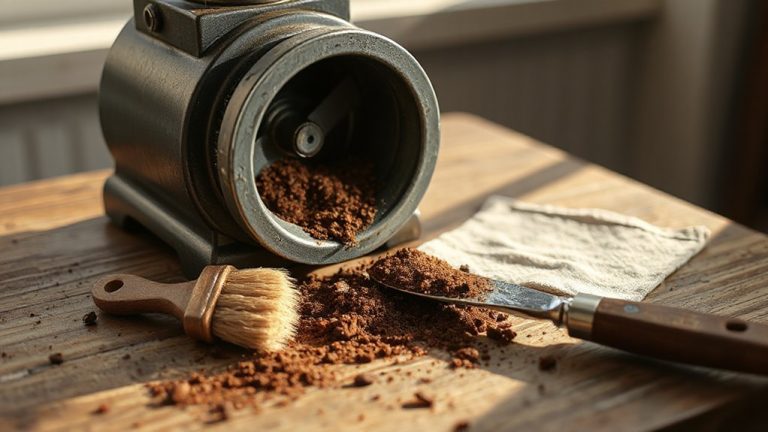
Most travelers who rely on French press brewing know that a consistent coarse grind makes or breaks their coffee on the road. To maintain grind freshness, grind beans just before brewing whenever possible-pre-ground coffee loses flavor fast. If you must prep ahead, use airtight containers for travel storage to slow oxidation. Stainless steel canisters with silicone seals, like those from Airscape, work better than zip bags. Portable burr grinders, such as the 1Zpresso Q2, deliver uniform coarse particles and fit easily in luggage. Blade grinders are cheaper but create uneven results, hurting extraction. For long trips, pack whole beans in vacuum-sealed portions to preserve quality. Avoid humid climates when storing pre-ground coffee-even short exposure degrades taste. Adjust grind size slightly if your travel location has different humidity or altitude. Consistency hinges on gear choice and smart habits. Stick to routines that prioritize freshness and stable travel storage, and your French press coffee will stay reliable anywhere.
On a final note
Choose a burr grinder like the 1ZPresso Q2 or Koios P1 for consistent coarse grinds on the go. Match grind size to your French press-too fine causes bitterness, too coarse leads to weak coffee. Adjust slightly for altitude or cold temps. Stick to a 1:15 coffee-to-water ratio, steep 4 minutes, then press firmly. Clean your press after each use. With the right grind and routine, even travel models deliver solid, reliable coffee anywhere.