Why Your Espresso Machine Is Leaking Water From the Back
Your espresso machine might leak from the back due to worn seals, loose fittings, or excessive pressure stressing internal parts. Common culprits include cracked hoses, failing gaskets around the group head or steam wand, or a malfunctioning pressure relief valve. Budget models and older machines often degrade faster. Check for dampness near connections and the pump after drying the area. Replacing damaged parts usually stops the leak-knowing exactly where it’s coming from helps you fix it right.
Notable Insights
- Excessive pump pressure can stress seals and connections, causing leaks from the machine’s back.
- A malfunctioning pressure relief valve may release water rearward when internal pressure builds too high.
- Worn group head or steam wand gaskets often lead to leaks, especially after repeated heat exposure.
- Cracked hoses or loose fittings in the rear can result in water seepage during operation.
- Aging machines over five years may develop leaks due to deteriorated components and seal failure.
Why Your Espresso Machine Leaks From the Back
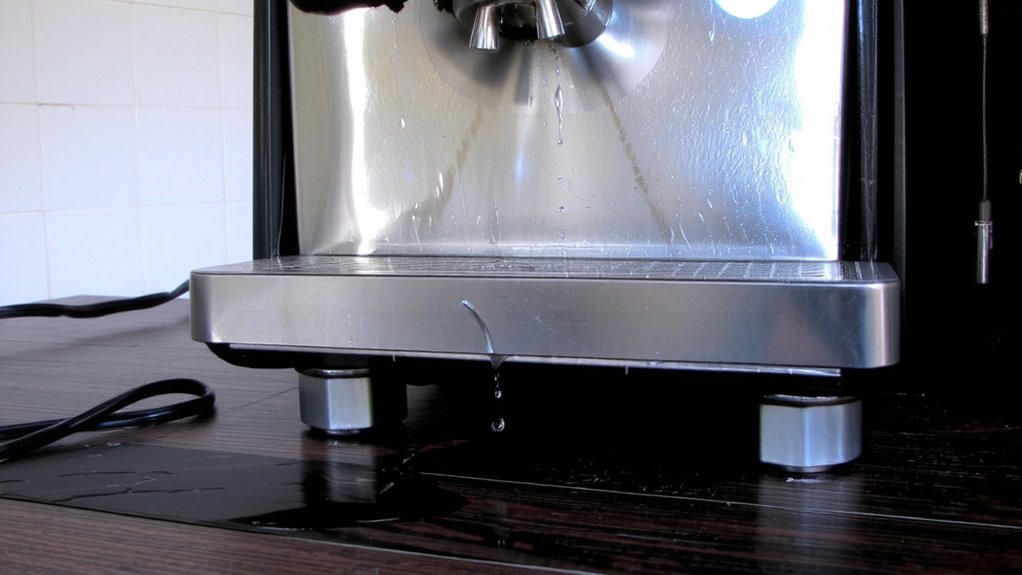
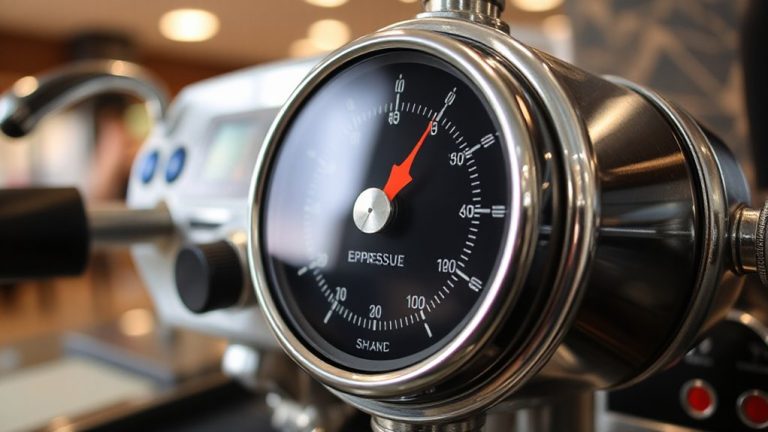
Why is your espresso machine leaking from the back? It’s likely due to internal issues involving water pressure or steam buildup. When the pump forces water through the system, excessive pressure can stress seals and connections, especially in cheaper or aging units. If the pressure relief valve isn’t working right, that force has to go somewhere-often leaking out the rear. Steam buildup from the boiler, particularly during or after steaming milk, increases internal temperature and pressure. If the machine can’t vent this safely, moisture escapes through the back. Machines like the Gaggia Classic or Breville Bambino are prone to this if maintenance is skipped. You’re not doing anything wrong-it’s usually worn gaskets, clogged lines, or faulty valves. Regular cleaning and checking for blockages help reduce risks. Leaks aren’t just messy; they signal stress on components. Catching it early prevents bigger issues.
Common Causes of Back Leaks
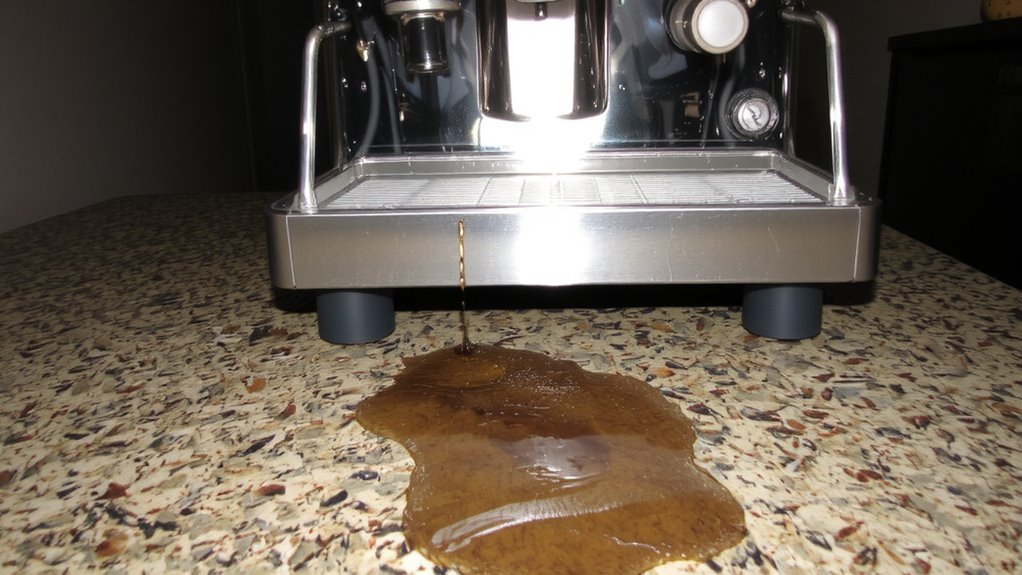
When your espresso machine starts dripping from the back, the issue usually comes down to a few common mechanical failures rather than user error. Over time, high water pressure can weaken internal seals or O-rings, especially in older models where machine age has degraded rubber components. The group head gasket or steam wand seals often fail, letting water escape rearward during operation. If your machine uses a thermoblock or boiler system, expanding water pressure during heat-up may force leaks from loose or corroded fittings. Cheaper materials in budget machines also wear faster under daily stress. You might notice drips after brewing or steaming, signaling a compromised seal. While sudden leaks can stem from pressure spikes, gradual seepage usually points to wear. Machines over five years old are especially prone, as consistent heating cycles deteriorate internal parts. Regular maintenance helps, but age and constant pressure eventually demand part replacement to stop rear leaks.
How to Find the Leak’s Source
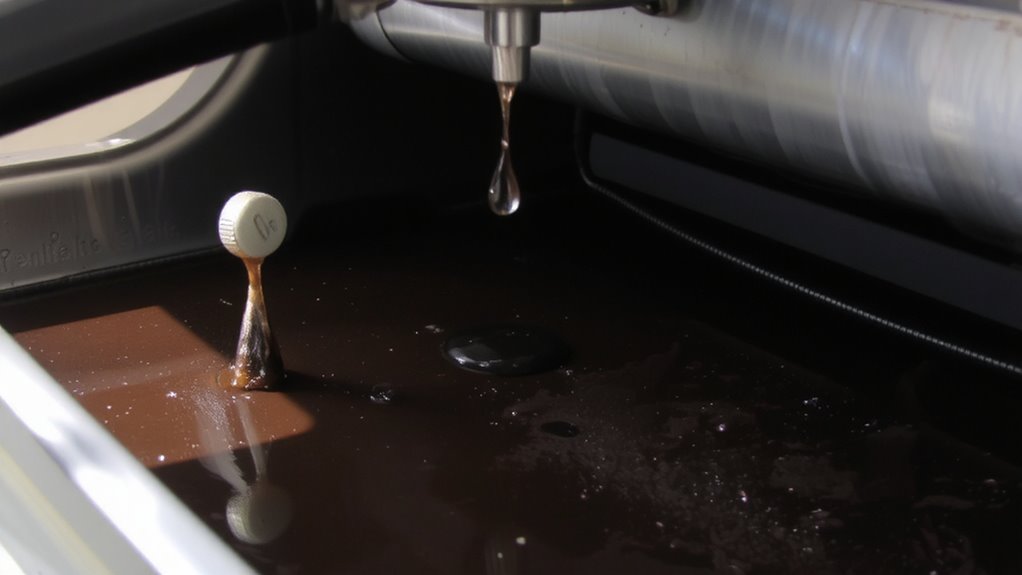
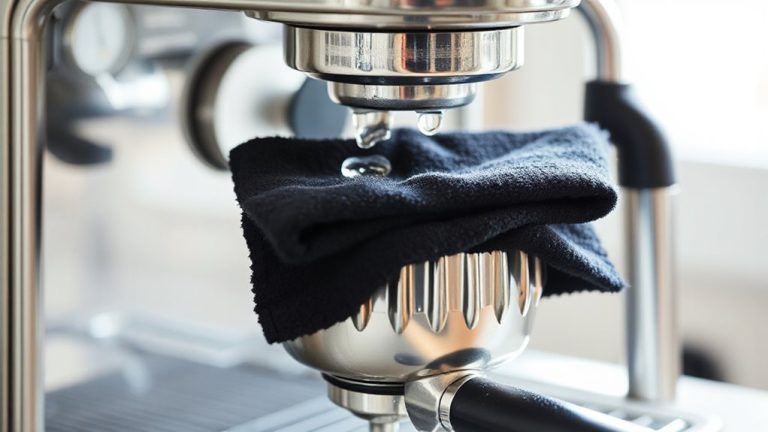
If you’re dealing with a leak, the first step is pinpointing exactly where it’s coming from, since different drip locations point to different fixes. Start by turning off and unplugging the machine, then gently dry the back with a towel. Run the machine briefly and watch closely-does water seep near the group head, portafilter, or drip tray? Leaks at the rear often trace back to internal tubing or fittings. High water pressure can stress older components, especially in machines over five years old. Consider your machine age: older models are more prone to wear. Check for dampness around quick-connect joints or the pump area. If the leak pulses during brewing, it’s likely pressure-related. Use a flashlight to inspect hidden zones. Don’t rely on guesses-trace each possible exit point methodically. Accurate diagnosis saves time and prevents unnecessary repairs.
Fix Cracked Hoses and Loose Fittings
A steady drip from your espresso machine often leads straight to the hoses and fittings-two common culprits behind internal leaks. Over time, water pressure and constant machine vibration can weaken rubber or plastic hoses, leading to cracks you might not immediately see. Start by inspecting all visible hoses for splits or brittleness, especially near connections. If you find any damage, replacing the hose is usually the safest fix. Tighten loose fittings gently with a wrench; over-tightening can make leaks worse. Use only compatible replacement parts-universal tubing might not handle high water pressure well. Stainless steel braided hoses are more durable and resist bursting. Secure loose fittings to reduce stress from machine vibration. Even small shifts during operation can loosen connections over time. Check fittings again after a few brewing cycles. Prevent future issues by inspecting hoses and fittings every few months, especially in busy setups.
Replace Worn Seals and Gaskets
One of the most overlooked causes of leaks in espresso machines is worn seals or gaskets, especially those around the group head, portafilter, and steam wand. Over time, heat and pressure lead to seal degradation, letting water escape where it shouldn’t. Gasket erosion is common in machines used daily-rubber dries out, cracks, or compresses, losing its ability to form a tight seal. If you notice dripping from the back after brewing, inspect these parts first. Most machines use standard-sized gaskets, so replacements from brands like La Marzocco or Rocket are easy to find. Replacing them isn’t hard: just disassemble the part, remove the old gasket, and press in the new one. Make sure the groove is clean. Use food-safe lubricant sparingly. Fresh seals can stop leaks fast-and keep your machine running like it should.
When to Call a Technician
You’ve checked the usual spots-worn seals, loose fittings, clogged drip trays-and replaced gaskets like the group head and steam wand rings, but the leak persists. At this point, it’s time to call a technician. If you notice water near electrical components or the machine behaves erratically-like failing to heat or power on-electrical malfunctions could be the culprit. These aren’t safe to handle yourself. Likewise, internal corrosion in the boiler or water lines can cause hidden leaks that you can’t fix with basic maintenance. Older machines, especially those over five years with heavy use, are more prone to this kind of damage. A certified technician can diagnose issues behind panels, test wiring, and inspect the internal frame. Skip unqualified repairs-missteps risk further damage or safety hazards. When leaks stem from deep internal faults, professional service isn’t just helpful-it’s necessary.
On a final note
If your espresso machine leaks from the back, check hoses, fittings, and seals first-common fixes you can handle. Tighten loose connections, replace cracked tubing, or swap worn gaskets like those on the group head or boiler. But if leaks stem from internal components like the heat exchanger or pump, call a technician. Skipping pro help risks damage. Always unplug the machine before inspecting. Prevent future leaks with regular maintenance and descaling every 3–6 months, depending on water hardness.